


 English
 Español
 Français
 Italiano
 Nederlands
 Polski
 Português
 Русский
 Türkçe
 Svenska
 Chinese
 Magyar
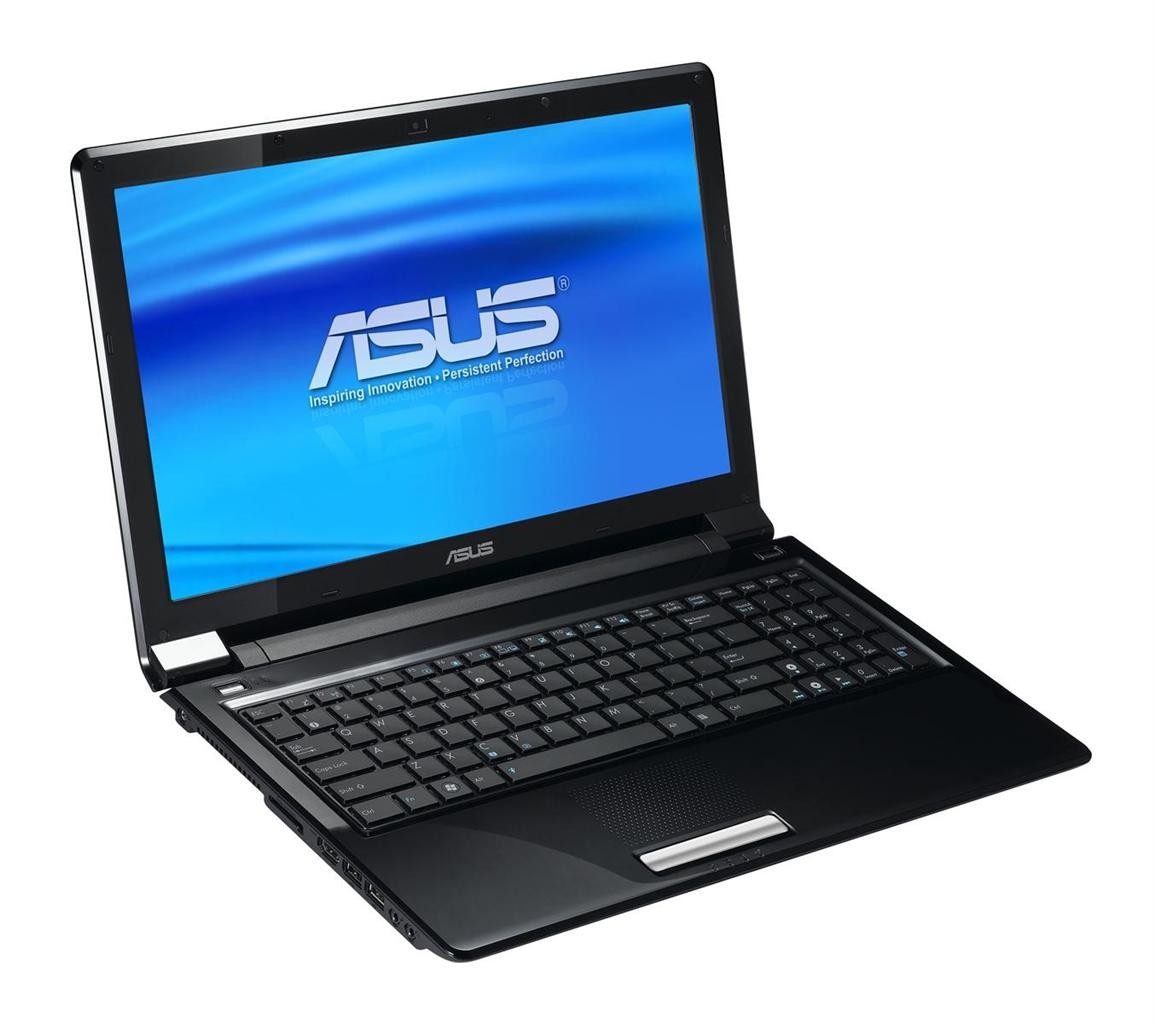
Asus UL50VF
Ausstattung / Datenblatt
Preisvergleich
Durchschnitt von 6 Bewertungen (aus 10 Tests)
Testberichte für das Asus UL50VF
Optim{us/al?} Das UL50VF ist die mit der automatischen Nvidia Grafikkartenumschaltung "Optimus" ausgestattete Variante des flachen 15.6" CULV Laptops von Asus. Das Notebook lockt mit einer langen Akkulaufzeit, hervorragenden Emissionswerten und für einen 15-Zoller besonders leichten Gewicht. Ob das Gesamtpaket überzeugt und wie sich Optimus im Praxiseinsatz schlägt, erfahren Sie in folgendem Testbericht.
Quelle: Notebookcheck
 Archive.org version
Das Asus UL50VF-A1 ist ein flaches und relativ leichtes 15.6" Multimedia-Notebook. Der Aluminiumdeckel wertet das Gehäuse des UL50 deutlich auf und ist ein deutlicher Pluspunkt. Die Hochglanzoberflächen auf der Innenseite sind jedoch praktisch immer verschmiert und eher als unnützer Modetrend einzustufen. Das spiegelnde 15.6" Display ist der Schwachpunkt des Notebooks, denn es weist nur geringe Kontraste und Blickwinkel auf.
Einzeltest, online verfügbar, Lang, Datum: 25.02.2010
Bewertung: Gesamt: 83%
Ausländische Testberichte
Quelle: Inside HW
 EN→DE Archive.org version
The specific category that this notebook falls into makes it more difficult to compare it to other models on the market, especially as far as pricing goes. You’re likely to find faster notebooks than this one with a similar price tag, but the advantages offered by this model are currently unique. NVIDIA certainly deserves all possible commendations for its Optimus technology, making it the main contributor to the award bestowed upon this notebook.
Einzeltest, online verfügbar, Mittel, Datum: 13.04.2010
Bewertung: Preis: 70% Leistung: 70%
Quelle: Legit Reviews
EN→DE Archive.org versionFor the seamless use of discrete NVIDIA graphics, the integration of NVIDIA Optimus in the ASUS UL50Vf creates a perfect match for a notebook and users by only using discrete graphics performance when they need it.
Einzeltest, online verfügbar, Mittel, Datum: 30.03.2010
Leistung: 80%
Quelle: Computer Shopper
EN→DE Archive.org versionIf you value graphics performance (for photo editing, games, and like) as much as you do battery life, Nvidia, in concert with Asus, finally has a solution. The $849 UL50Vf offers solid graphics performance for midrange gamers. The standout part of this laptop, though: Nvidia's Optimus technology, which automatically balances graphics speed and battery life.
Einzeltest, online verfügbar, Lang, Datum: 01.03.2010
Bewertung: Gesamt: 83%
Quelle: Notebookreview.com
EN→DE Archive.org versionThe ASUS UL50Vf is an unremarkable 15-inch notebook with some remarkable technology inside. Nine hours of battery life and the best switchable graphics solution currently on the market make this notebook a very compelling laptop. Unfortunately, the flexible plastic construction, low-resolution display, and a price tag above $800 make this a less than exciting purchase.
Einzeltest, online verfügbar, Lang, Datum: 09.02.2010
Bewertung: Preis: 40% Leistung: 80% Bildschirm: 40% Mobilität: 90% Gehäuse: 40%
Quelle: PC Mag
EN→DE Archive.org versionIntel's consumer ultra-low voltage (CULV) processors were initially used primarily in 13-inch systems like the Asus UL30A-A1 and Toshiba Satellite T135-S1305WH, but they are finding their way into larger laptops now. CULV processors require less cooling, so manufacturers are able to pare down the cooling methods that make other, more powerful laptops bulky and heavy. The Asus UL50VF-A1 is a gorgeous 15-inch laptop runs on a slower-than-average processor, but it can harness the strengths of two graphics cards and a new Nvidia technology.
Einzeltest, online verfügbar, Länge unbekannt, Datum: 09.02.2010
Bewertung: Gesamt: 80%
Quelle: Laptop Mag
EN→DE Archive.org versionThanks to Nvidia’s smart Optimus technology, the $849 UL50VF-A1 offers both long battery life and graphics muscle. Best of all, this notebook is smart enough switch between integrated and discrete graphics mode based on what you’re doing. We wish ASUS wrapped this technology in a less glossy chassis, but overall the UL50VF-A1 is a strong 15.6-inch notebook.
Einzeltest, online verfügbar, Lang, Datum: 08.02.2010
Bewertung: Gesamt: 70%
Quelle: Jambitz
 ES→DE Archive.org version
Einzeltest, online verfügbar, Kurz, Datum: 25.02.2010
Bewertung: Gesamt: 80%
Quelle: Mobilport
 HU→DE Archive.org version
Einzeltest, online verfügbar, Mittel, Datum: 29.10.2009
Bewertung: Mobilität: 80% Ergonomie: 50%
Quelle: Notebook.cz
 CZ→DE Archive.org version
Einzeltest, online verfügbar, Mittel, Datum: 18.02.2010
Bewertung: Mobilität: 80% Gehäuse: 80% Emissionen: 80%
Kommentar
NVIDIA GeForce G210M: Die GeForce G210M besitzt, wie die alte GeForce G 110M 16 Shaderkerne jedoch konnte sie dank 40nm Prozess bei selben Stromverbrauch deutlich höher getaktet werden (bei um 50% verringertem Stromverbrauch ohne Last).
Diese Karten können nur sehr alte und sehr anspruchslose 3D Spiele flüssig darstellen. Anwendungen wie Office, Internet surfen, Bildbearbeitung oder (SD) Videoschnitt sind jedoch ohne große Einschränkungen möglich.
» Weitere Informationen gibt es in unserem Notebook-Grafikkartenvergleich und der Benchmarkliste.
Intel Core 2 Duo: Core Duo Nachfolger mit längerer Pipeline und 5-20% Geschwindigkeitszuwachs bei 0.5 - 3 Watt mehr Stromverbrauch.
Der Notebook Core 2 Duo ist baugleich mit den Desktop Core 2 Duo Prozessoren, jedoch werden die Notebook-Prozessoren mit niedrigeren Spannungen und geringerem Frontsidebus Takt betrieben. Von der Leistung bleiben gleichgetaktete Notebooks deswegen (und auch wegen der langsameren Festplatten) 20-25% hinter Desktop PCs.
SU7300: Langsam getakteter Core 2 Duo Prozessor mit 3 MB Level 2 Cache und geringem TDP von 10 Watt.» Weitere Infos gibt es in unserem Prozessorvergleich Vergleich mobiler Prozessoren und der Prozessoren Benchmarkliste .
15.60":
15 Zoll Display-Varianten sind der Standard und werden für mehr als die Hälfte aller Notebooks verwendet.
Der Grund der Beliebtheit mittelgrosser Displays ist, dass diese Größe einigermaßen augenschonend ist, hohe Auflösungen oftmals erlaubt und damit Detailreichtum am Bildschirm bietet und dennoch nicht allzu viel Strom verbraucht und die Geräte noch halbwegs kompakt sein können - also schlicht der Standard-Kompromiss.
» Prüfen Sie in unserer DPI Liste, welche Displays wie fein aufgelöst sind.
2.367 kg:
Dieser Gewichtsbereich ist typisch für Laptops und der Mittelweg zwischen Portabilität, passabler Bildschirmgröße und Leistung.
Asus: ASUSTeK Computer Inc. ist ein großer taiwanesischer Hersteller von Computer-Hardware mit Sitz in Taipeh, gegründet 1989. Unter dem Markennamen Asus fertigt das Unternehmen eine breite Palette von Produkten, darunter Laptops, Desktops, Motherboards, Grafikkarten, Monitore, Smartphones und Netzwerkgeräte, Komplettsysteme und PC-Bauteile für Endkunden.
Unter dem Markennamen ROG (Republic of Gamers) stellt ASUS Gaming-Laptops her, die bei Spielern für ihre leistungsstarken Spezifikationen, dedizierten Grafikkarten, Displays mit hoher Bildwiederholrate und fortschrittlichen Kühlsystemen bekannt sind.
Über das Gaming hinaus werden eine breite Palette von Notebooks für unterschiedliche Anforderungen und Budgets geboten: von ultraschlanken und leichten Ultrabooks bis hin zu vielseitigen 2-in-1-Convertibles und budgetfreundlichen Optionen. 2023 hatte Asus einen Weltmarktanteil von 7% am PC-Markts.
Die Kundenzufriedenheit mit ASUS-Notebooks betrifft Leistung, die Funktionen und das gute Preis-Leistungs-Verhältnis der ASUS-Notebooks. Wie bei jeder Marke gibt es jedoch gelegentlich Berichte über Probleme wie Überhitzung, Treiberkompatibilität oder Probleme mit der Verarbeitungsqualität.
79.83%: Weltbewegend ist diese Bewertung nicht. Diese Bewertung muss man eigentlich als unterdurchschnittlich ansehen, denn es gibt etwa ebenso mehr Geräte mit schlechtere Beurteilungen als Besseren. Eine Kaufempfehlung kann man nur mit viel Wohlwollen darin sehen, es sei denn es handelt sich um Websites, die generell streng urteilen.
» Lesen Sie auch unsere Notebook-Kaufberatung.