

 English
 Español
 Français
 Italiano
 Nederlands
 Polski
 Português
 Русский
 Türkçe
 Svenska
 Chinese
 Magyar
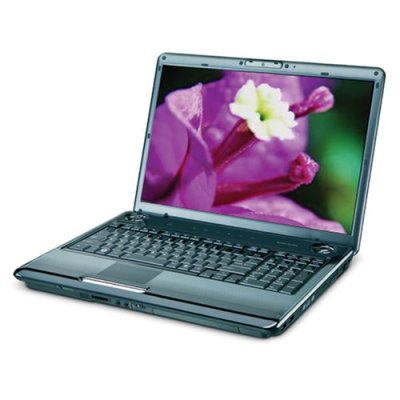
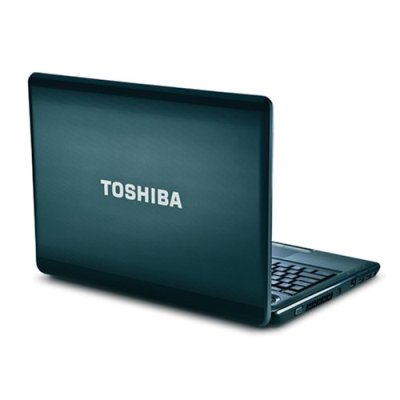
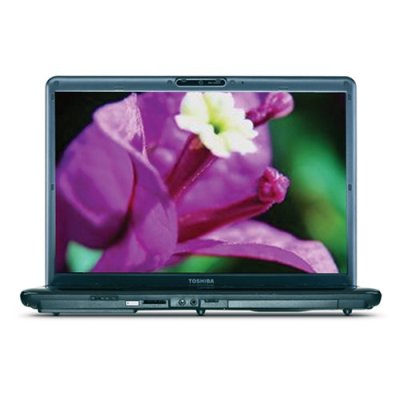
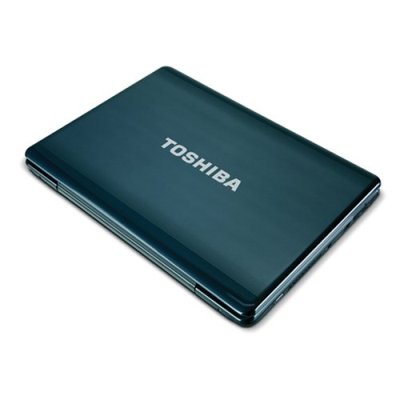
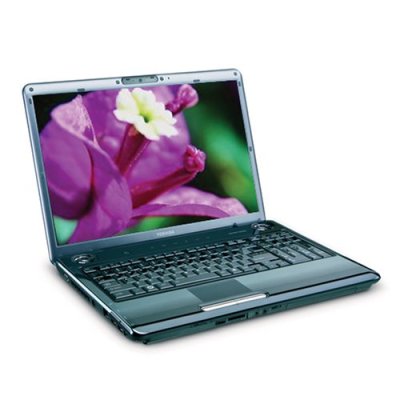
Toshiba Satellite M305
Ausstattung / Datenblatt
Preisvergleich
Durchschnitt von 5 Bewertungen (aus 6 Tests)
Testberichte für das Toshiba Satellite M305
Quelle: PC Mag
 EN→DE Archive.org version
Finding a laptop versatile enough to fulfill your portability needs on the road and your more intense computing needs at home is a tall order. The Toshiba Satellite M305-S4835 ($1,050 street) tries to straddle both worlds. Whether you carry it on the road or leave it at home, this mainstream laptop has what it takes to excel in any environment.
3.5 von 5, Mobilität mäßig, Leistung schlecht
Einzeltest, online verfügbar, Kurz, Datum: 14.11.2008
Bewertung: Gesamt: 70% Leistung: 40% Mobilität: 60%
Quelle: Laptop Logic
EN→DE Archive.org versionIf you're looking for a laptop slightly smaller than the run of the mill 15.4 inchers out there - and don't mind the glossy keyboard and lackluster 3d performance - the M305 is a very nice option for the budget minded individual looking for productivity on the mobile computing road. Just make sure to pick up an external mouse, and pick up another battery and you will find a decent productivity laptop.
(von 5): 3.3, Ausstattung 4, Mobilität 3, Leistung 1, Preis gut, Display sehr gut
Einzeltest, online verfügbar, Lang, Datum: 25.09.2008
Bewertung: Gesamt: 66% Preis: 80% Leistung: 20% Ausstattung: 80% Bildschirm: 90% Mobilität: 60%
Quelle: Laptop Logic
EN→DE Archive.org versionThe Toshiba Satellite M305 didn’t exactly wow me, but it didn’t leave me unimpressed. It wasn’t the lightest, it isn’t the fastest – but what it does offer at this price point is decent connectivity, a nice screen, impressive (although unnecessary) glossy looks, and a decent form factor for a business minded consumer. I’d love to see the updated unit with a dedicated graphics option, a thinner bezel, a little better battery life, a docking station capability that isn’t USB based, and a lot less bloatware – otherwise, this is a pretty worthy somewhat road companion, especially ticking under the $1,000 mark.
3 von 5, Preis gut, Display gut, Leistung schlecht, Mobilität schlecht
Einzeltest, online verfügbar, Lang, Datum: 29.05.2008
Bewertung: Gesamt: 60% Preis: 80% Leistung: 40% Bildschirm: 80% Mobilität: 40%
Quelle: Notebookreview.com
EN→DE Archive.org versionApproaching this review, I wasn't particularly excited about what the M305 had to offer: it seemed like a fairly run-of-the-mill notebook in a visual package that I found fairly unappealing. If my expectations were mixed, the Satellite has consistently impressed in almost every area, proving itself to be a powerful computing companion (assuming you don't need the resources that dedicated graphics provide) and a pleasant machine to use. The Fusion Finish remains controversial, but while I'm still not keen on the looks (and can't stand its tendency to come away covered in smudges seemingly from a single touch), there's no question in my mind about the finish's durability or functionality. Likewise for the odd looking but great feeling glossy keyboard. If I was an open skeptic going in, the M305 has largely won me over with good performance, solid construction, a great screen, and a respectably strong battery. If it doesn't - beyond the visual, at least - exactly jump off the page, given its street price right at $1,000 as tested, the M305 isn't a bad deal to boot, making it a reliable, affordable choice for general users looking for style and portability.
Verarbeitung mäßig, Display gut, Emissionen mangelhaft
Einzeltest, online verfügbar, Mittel, Datum: 13.05.2008
Bewertung: Bildschirm: 80% Gehäuse: 60% Emissionen: 50%
Quelle: Digital Trends
EN→DE Archive.org versionThe M305 certainly has a lot to offer folks who are looking for a semi-portable notebook. At just 5.2 lbs. it’s relatively light, small and would easily slip into a backpack. We love the elegant design and white lights that accent the black and grey colors – it’s a very attractive notebook, and clearly the company’s paying more attention to style as indicated by the M305 and the Qosmio. There were several small things that bothered us such as the webcam and facial recognition software, but the biggest gripe we have is with the bloatware. We really wish Toshiba would at least give customers the option to have it removed or just put it all on a CD that the user could browse at he or she’s leisure instead of mucking up the desktop with links to trialware.
7 von 10, Emissionen sehr gut
Einzeltest, online verfügbar, Lang, Datum: 13.05.2008
Bewertung: Gesamt: 70% Emissionen: 90%
Quelle: CNet
EN→DE Archive.org versionToshiba's new Satellites, including the 14-inch M305, offer a reasonable mix of performance and price, but are weighed down by excessive out-of-the-box advertising links.
6.9 von 10
Einzeltest, online verfügbar, Mittel, Datum: 12.05.2008
Bewertung: Gesamt: 69%
Kommentar
Intel Graphics Media Accelerator (GMA) X3100: Integrierte shared Memory Grafikkarte von Intel, die im 965GM und GL960 Chipsatz eingebaut ist. Dank voll programmierbarer Pipeline DX 10 fähig (mit Treibern seit 15.9.0.1472). Gute Performance für eine integrierte Grafikkarte, jedoch trotzdem kaum spielefähig.
3D Spiele sind auf diesen Vertretern nur in Ausnahmen spielbar, grundsätzlich sind die Grafiklösungen hierfür jedoch nicht geeignet. Office Programme und Internet surfen dürfte jedoch ohne Problem möglich sein.
» Weitere Informationen gibt es in unserem Notebook-Grafikkartenvergleich und der Benchmarkliste.
Intel Core 2 Duo: Core Duo Nachfolger mit längerer Pipeline und 5-20% Geschwindigkeitszuwachs bei 0.5 - 3 Watt mehr Stromverbrauch.
Der Notebook Core 2 Duo ist baugleich mit den Desktop Core 2 Duo Prozessoren, jedoch werden die Notebook-Prozessoren mit niedrigeren Spannungen und geringerem Frontsidebus Takt betrieben. Von der Leistung bleiben gleichgetaktete Notebooks deswegen (und auch wegen der langsameren Festplatten) 20-25% hinter Desktop PCs.
T8100: Ehemaliger Mittelklasse Core 2 Duo basierend auf den Penryn Kern mit VT-x Virtualisierungsfunktionen.» Weitere Infos gibt es in unserem Prozessorvergleich Vergleich mobiler Prozessoren und der Prozessoren Benchmarkliste .
14.10":
14 Zoll Display-Grösse stellt ein Mittelding zwischen den kleinen Subnotebook-Formaten und den Bildschirmen der 15 Zoll-Standard-Laptops dar.
Der Grund der Beliebtheit mittelgrosser Displays ist, dass diese Größe einigermaßen augenschonend ist, gute Auflösungen mit brauchbaren Detailgrößen liefern und dennoch nicht allzu viel Strom verbraucht und die Geräte noch halbwegs kompakt sein können.
Früher waren 14 Zoll-Geräte sehr selten, jetzt stellen sie nach den 15-Zollern den Standard bei Laptops dar.
» Prüfen Sie in unserer DPI Liste, welche Displays wie fein aufgelöst sind.
2.4 kg:
Dieser Gewichtsbereich ist typisch für Laptops und der Mittelweg zwischen Portabilität, passabler Bildschirmgröße und Leistung.
Toshiba: Die Toshiba Corporation ist ein japanischer Misch- bzw Technologiekonzern. Die Firma entstand 1939 und 1978 wurde Toshiba offizieller Firmenname. Zu den Produkten und Dienstleistungen des Unternehmens gehören Energie, industrielle und soziale Infrastruktursysteme, Aufzüge und Rolltreppen, elektronische Komponenten, Halbleiter, Festplatten, Drucker, Batterien, Beleuchtung, Logistik und Informationstechnologie. Toshiba war einer der größten Hersteller von Personal Computern, Unterhaltungselektronik, Haushaltsgeräten und medizinischen Geräten.
67%: Diese Bewertung ist schlecht. Locker drei Viertel der Modelle werden besser beurteilt. Das ist eher keine Kaufempfehlung. Auch wenn Verbalbewertungen in diesem Bereich gar nicht so schlecht klingen ("genügend" oder "befriedigend"), meist sind es Euphemismen, die eine Klassifikation als unterdurchschnittliches Notebook verschleiern.
» Lesen Sie auch unsere Notebook-Kaufberatung.