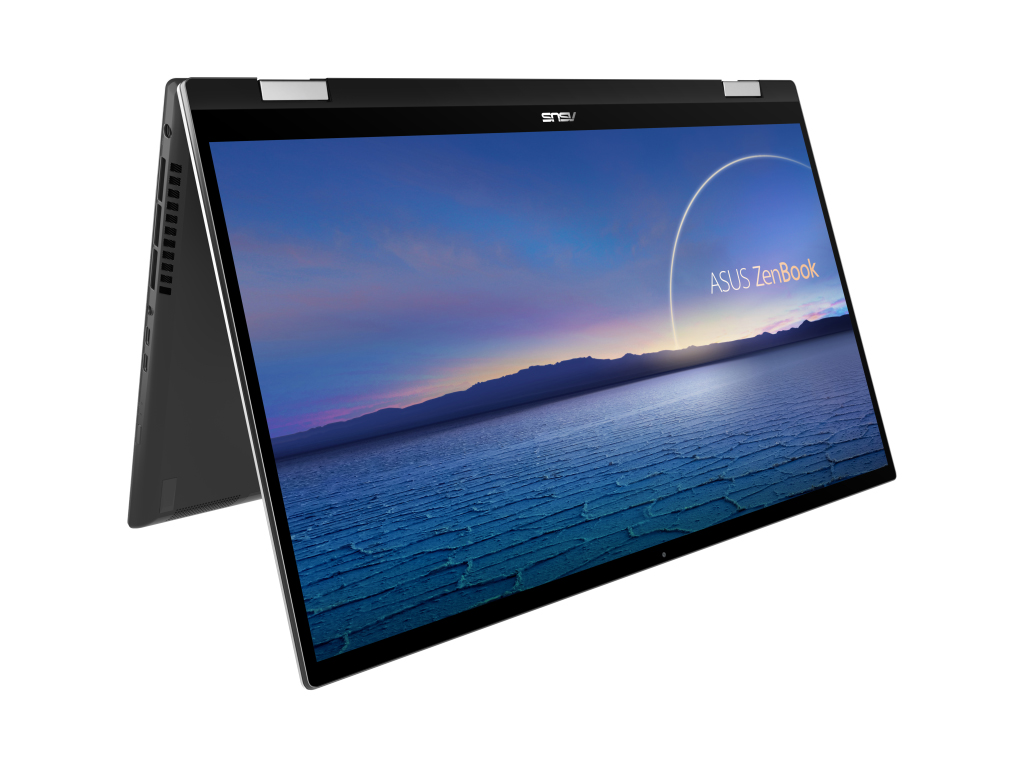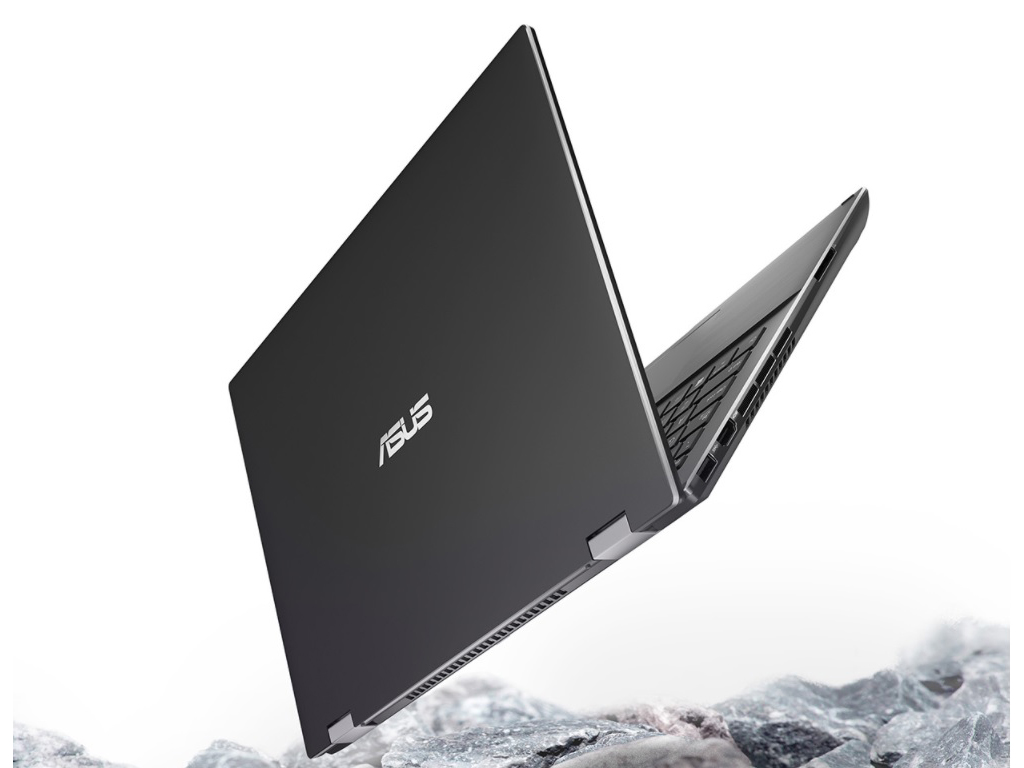




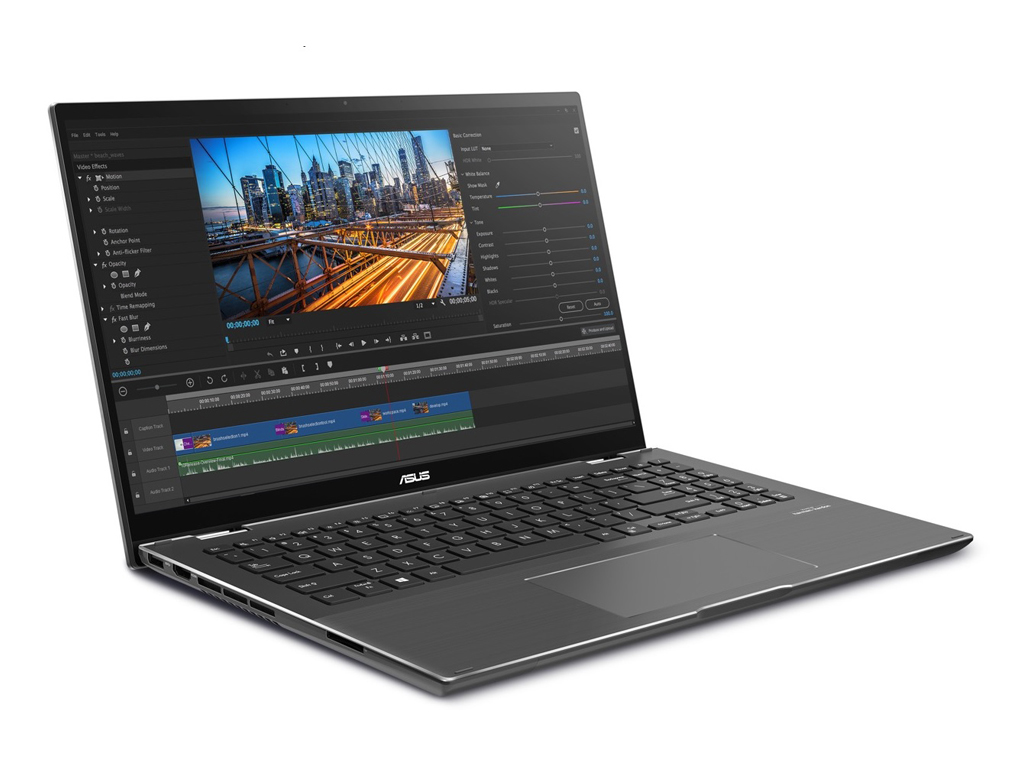
Asus ZenBook Flip 15 UX564PH-EZ007R
Ausstattung / Datenblatt
Preisvergleich
Durchschnitt von 1 Bewertungen (aus 2 Tests)
Testberichte für das Asus ZenBook Flip 15 UX564PH-EZ007R
Quelle: Laptop Media
 EN→DE Archive.org version
ASUS ZenBook Flip 15 UX564’s touchscreen IPS panel has a Full HD resolution and comfortable viewing angles. It covers 91% of the sRGB gamut, and its backlight doesn’t use PWM. Well, yes, even with our profile the colors were on the edge of being standard-matching, but it is good to know that you have some sort of customization options through their “My ASUS” app. Speaking of which, this program allows you to choose from a couple of fan profiles. You get Whisper mode, which allows for a nearly silent operation. Then, there is the Standard mode, which is pretty self-explanatory, and finally – the Performance mode. The latter provides the best possible cooling and performance, but as we found out – running Prime95 to stress test it, it wasn’t too hasty to spin the two fans. What we didn’t particularly like about the ZenBook Flip 15 UX564 is that it has its memory soldered to the motherboard. This prevents future upgrades, which is unfortunate. On the other hand, there is one M.2 PCIe x4 slot. Also, as some consolatio
Einzeltest, online verfügbar, Sehr Lang, Datum: 22.10.2021
Quelle: Htxt Africa
EN→DE Archive.org versionIf you want a large-sized notebook that is well equipped from a CPU perspective and even better from a GPU one, this particular model of ZenBook Flip 15 from Asus might be what you're looking for, especially if it will be the heart and soul of your new remote working setup.
Einzeltest, online verfügbar, Kurz, Datum: 28.04.2021
Bewertung: Gesamt: 80%
Kommentar
NVIDIA GeForce GTX 1650 Max-Q: Mid-Range Notebook-Grafikkarte basierend auf der Desktop GTX 1650 mit Turing Architektur. Bietet keine Raytracing und Tensor-Kerne im Gegensatz zu den stärkeren RTX 2000 Modellen. Im Vergleich zur normalen 1650, ist die Max-Q Variante niedriger getaktet bei deutlich niedrigerem Stromverbrauch (35 versus 50 Watt).
Diese Klasse ist noch durchaus fähig neueste Spiele flüssig darzustellen, nur nicht mehr mit allen Details und in hohen Auflösungen. Besonders anspruchsvolle Spiele laufen nur in minimalen Detailstufen, wodurch die grafische Qualität oft deutlich leidet. Diese Klasse ist nur noch für Gelegenheitsspieler empfehlenswert. Der Stromverbrauch von modernen Grafikkarten in dieser Klasse ist dafür geringer und erlaubt auch bessere Akkulaufzeiten.
» Weitere Informationen gibt es in unserem Notebook-Grafikkartenvergleich und der Benchmarkliste.
i7-11370H: Auf der Tiger-Lake-Architektur basierender ULV-SoC (System-on-a-Chip) für schlanke Notebooks und Ultrabooks. Integriert unter anderem vier CPU-Kerne mit 3 - 4,8 GHz und HyperThreading sowie eine starke G7 Grafikeinheit und wird in 10-Nanometer-Technik gefertigt (10nm SuperFin). » Weitere Infos gibt es in unserem Prozessorvergleich Vergleich mobiler Prozessoren und der Prozessoren Benchmarkliste .
 Als bevorzugte Quelle auf Google hinzufügen