




Xiaomi Redmi K90
Pro
Contra
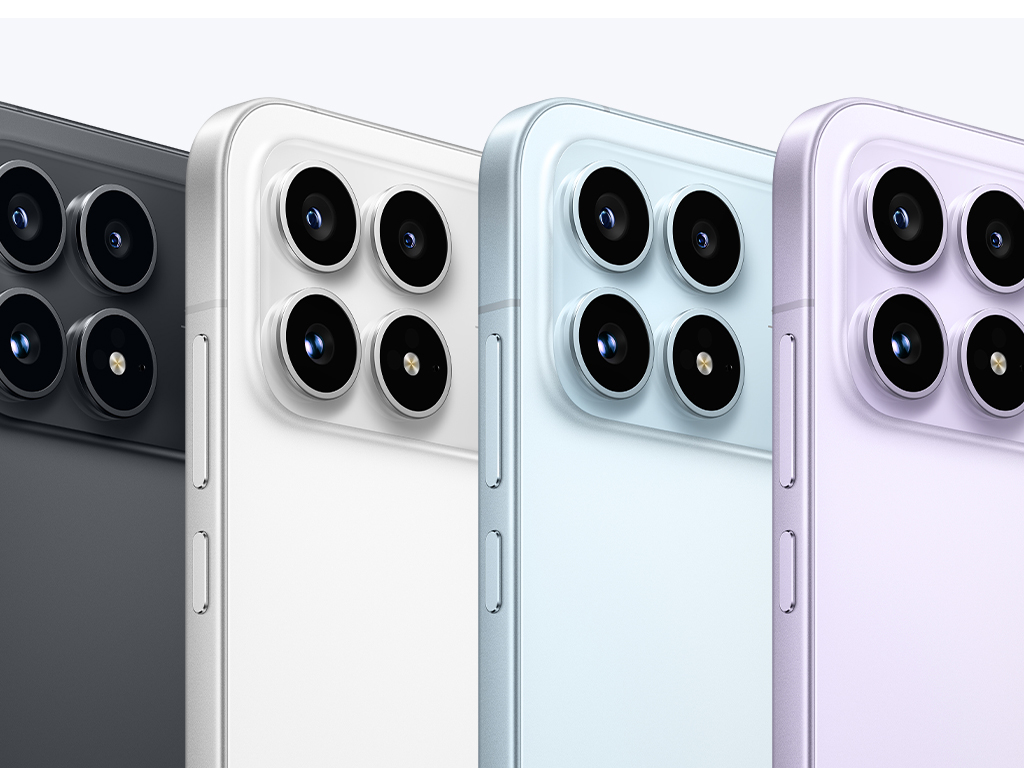
Das Xiaomi Redmi K90 ist ein Smartphone der oberen Mittelklasse, das darauf ausgelegt ist, Leistung auf nahezu Flaggschiff-Niveau zu einem wettbewerbsfähigen Preis zu bieten. Sein Snapdragon 8 Elite-Prozessor, die Adreno 830-Grafikkarte und bis zu 16 GB Arbeitsspeicher sorgen für eine starke Leistung sowohl beim Gaming als auch im Alltag. Das 6,59-Zoll-AMOLED-Display bietet eine Auflösung von 2510 × 1156 und eine flüssige Bildwiederholfrequenz von 120 Hz. Der 7.100-mAh-Akku stellt eine wesentliche Verbesserung dar und ermöglicht eine längere Nutzungsdauer. Das Kamerasystem auf der Rückseite umfasst zwei 50-MP-Sensoren, einen 2,5-fachen optischen Zoom und eine 8-MP-Ultraweitwinkelkamera. Mit Android 16, WLAN 7, 5G, bis zu 1 TB Speicherplatz und hochwertigen Designmerkmalen bietet das Redmi K90 ein hervorragendes Preis-Leistungs-Verhältnis.
Ausstattung / Datenblatt
Secondary Camera: 20 MPix
Preisvergleich
Testberichte für das Xiaomi Redmi K90
Quelle: Tech X Reviews

The mid-range phone market just got a massive wake-up call. The new OnePlus Ace 6T (globally launching as the OnePlus 15R) is putting up sales numbers that have genuinely shocked the tech community. In this video, we aren't just looking at specs on paper. We’ve brought back the Ace 6T to face off against its two biggest rivals: the iQOO Neo 11 and the Redmi K90 (Global: POCO F8 Pro).
Vergleich, online verfügbar, Mittel, Datum: 20.12.2025
Quelle: Tech X Reviews
The mid-range smartphone market is officially out of control right now.
Vergleich, online verfügbar, Mittel, Datum: 14.12.2025
Quelle: OI Spice Tech News
EN→DEThe Redmi K90, announced and released on October 23, 2025, enters the market as a powerful upper-midrange phone with a flagship feel. It has a sturdy aluminum frame with a glass front and carries an IP68 rating, making it resistant to dust and water. The front is dominated by a 6.59-inch AMOLED display with a sharp 1156 × 2510 resolution, 419 ppi density, HDR10+, Dolby Vision, and a super-bright 3500-nit peak. The 120Hz refresh rate and 2560Hz PWM dimming make the screen smooth and comfortable for long use. Available in Black, White, Blue, and Purple, the phone also includes reliable stereo speakers tuned by Bose, adding a premium touch to the multimedia experience. Performance is one of the K90’s strongest areas thanks to the Snapdragon 8 Elite chipset built on a 3nm process.
Einzeltest, online verfügbar, Sehr kurz, Datum: 21.11.2025
Quelle: Tech X Reviews
EN→DESo, for purchasing advice, this generation of the Redmi K90 is quite a big step up. Whether it’s the exterior design or the newly added telephoto lens, it will enhance the experience for existing K-series users. This is especially true for models from around the K70 generation. The battery in this new device has increased by a lot compared to before. The improvement in battery life after upgrading will be very significant.
Einzeltest, online verfügbar, Kurz, Datum: 08.11.2025
Quelle: Tech X Reviews
The Redmi K-series just got a serious glow-up. The new Redmi K90 feels completely different in the hand, borrowing design cues from flagships and finally adding one of the most-requested features we've been waiting for. This isn't just another spec bump; it's a major evolution for one of the most popular mid-range phones out there. After spending some time with the Redmi K90, it’s clear Xiaomi is aiming for the top spot in the value-for-money category.
Einzeltest, online verfügbar, Kurz, Datum: 08.11.2025
Quelle: Genk
 VN→DE
VN→DEEinzeltest, online verfügbar, Kurz, Datum: 02.11.2025
Kommentar
Qualcomm Adreno 830: Integrierte Grafikeinheit im Qualcomm Snapdragon 8 Elite SoC für Smartphones mit drei Slices mit je 1,1 GHz. Integriert 12 MB gemeinsamen Cache für die drei Slices. Laut Qualcomm um 40% schneller als die Vorgängergeneration (Adreno 750).
Diese Klasse ist noch durchaus fähig neueste Spiele flüssig darzustellen, nur nicht mehr mit allen Details und in hohen Auflösungen. Besonders anspruchsvolle Spiele laufen nur in minimalen Detailstufen, wodurch die grafische Qualität oft deutlich leidet. Diese Klasse ist nur noch für Gelegenheitsspieler empfehlenswert. Der Stromverbrauch von modernen Grafikkarten in dieser Klasse ist dafür geringer und erlaubt auch bessere Akkulaufzeiten.
» Weitere Informationen gibt es in unserem Notebook-Grafikkartenvergleich und der Benchmarkliste.
SD 8 Elite: High-End SoC (System on a Chip) für Smartphones welcher Ende 2024 vorgestellt wurde. Integriert zwei schnelle Oryon Gen 2 Prime Cores mit bis zu 4,32 GHz und 6 kleinere Oryon Gen 2 Performance Cores mit bis zu 3,53 GHz.» Weitere Infos gibt es in unserem Prozessorvergleich Vergleich mobiler Prozessoren und der Prozessoren Benchmarkliste .
Ähnliche Geräte mit den selben Spezifikationen
Geräte anderer Hersteller
Geräte mit der selben Grafikkarte
Geräte mit der selben Bildschirmgröße und/oder ähnlichem Gewicht
 Als bevorzugte Quelle auf Google hinzufügen


