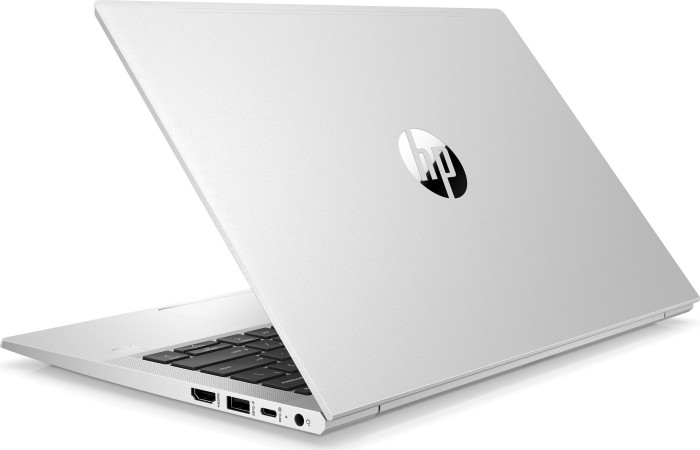




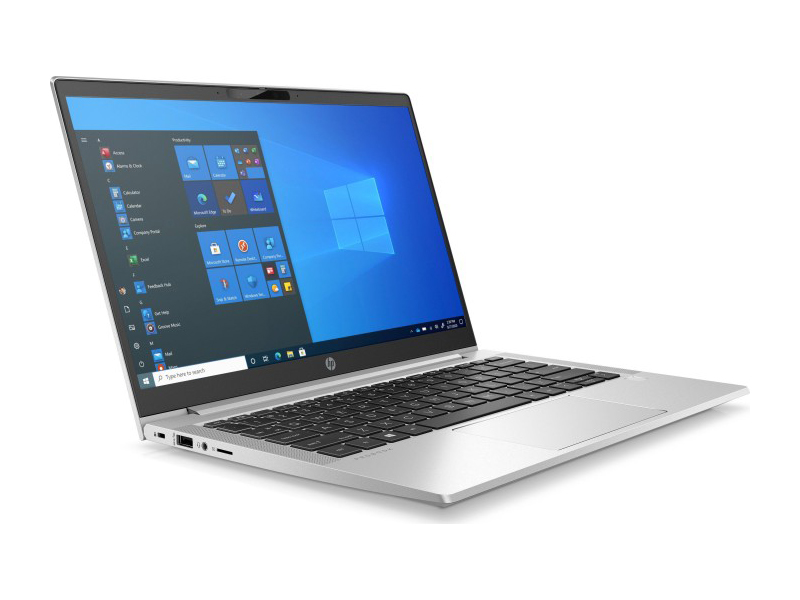
HP ProBook 430 G8-2W1H2EA
Ausstattung / Datenblatt
Preisvergleich
Testberichte für das HP ProBook 430 G8-2W1H2EA
Quelle: Ricks Tech

Support, online verfügbar, Kurz, Datum: 16.05.2025
Quelle: Laptop Media
EN→DE Archive.org versionBusiness notebooks are famous for their simplicity, good looks, and stability. Ultimately, this is a fitting description for the ProBook 430 G8. We were really impressed by its input devices, which are on point for a laptop in this category. In addition to that, there are features like the privacy shutter, fingerprint reader, and optional IR face recognition scanner, which will improve your security. Plus, you get a hardware TPM 2.0 module. HP ProBook 430 G8’s IPS panel (AUO AUOCB8F) has a Full HD resolution, comfortable viewing angles, and a very good contrast ratio. Thankfully, its backlight doesn’t use PWM for brightness adjustment. On the other hand, the color coverage is pretty limited at 56% of sRGB. To be frank, this is actually a decent panel for business computing. What is even more than decent, considering the 13-inch screen size, is the presence of memory upgrade options. You get two SODIMM slots for up to 32GB of DDR4, according to the manufacturer. In addition, there is a single M.2 PCIe x4 slot for fast storage.
Einzeltest, online verfügbar, Sehr Lang, Datum: 19.01.2022
Quelle: Laptop Media
Archive.org versionSupport, online verfügbar, Sehr kurz, Datum: 19.01.2022
Kommentar
Intel Iris Xe G7 80EUs: Integrierte Grafikkarte (in Tiger-Lake G4 SoCs) der Gen. 12 Architektur mit 80 EUs. Z.B. in Tiger Lake i5 CPUs verbaute iGPU.
Diese Klasse ist noch durchaus fähig neueste Spiele flüssig darzustellen, nur nicht mehr mit allen Details und in hohen Auflösungen. Besonders anspruchsvolle Spiele laufen nur in minimalen Detailstufen, wodurch die grafische Qualität oft deutlich leidet. Diese Klasse ist nur noch für Gelegenheitsspieler empfehlenswert. Der Stromverbrauch von modernen Grafikkarten in dieser Klasse ist dafür geringer und erlaubt auch bessere Akkulaufzeiten.
» Weitere Informationen gibt es in unserem Notebook-Grafikkartenvergleich und der Benchmarkliste.
i5-1135G7: Auf der Tiger-Lake-Architektur basierender ULV-SoC (System-on-a-Chip) für schlanke Notebooks und Ultrabooks. Integriert unter anderem vier CPU-Kerne mit 2,4 - 4,2 GHz und HyperThreading sowie eine starke G7 Grafikeinheit mit 80 Eus und wird in 10-Nanometer-Technik gefertigt (10nm+). » Weitere Infos gibt es in unserem Prozessorvergleich Vergleich mobiler Prozessoren und der Prozessoren Benchmarkliste .
 Als bevorzugte Quelle auf Google hinzufügen