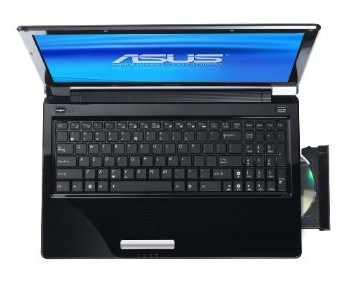




Asus UL50VS
Ausstattung / Datenblatt
Preisvergleich
Durchschnitt von 3 Bewertungen (aus 5 Tests)
Testberichte für das Asus UL50VS
Quelle: V3.co.uk
 EN→DE Archive.org version
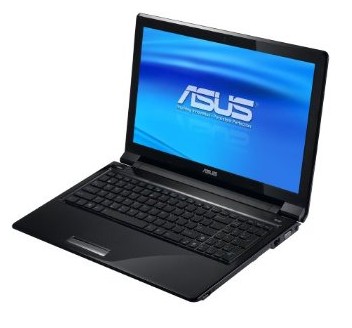
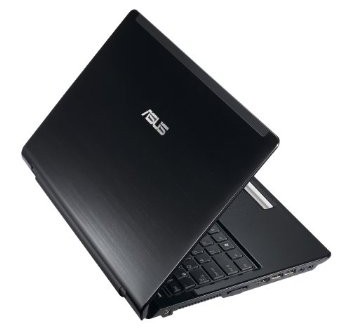
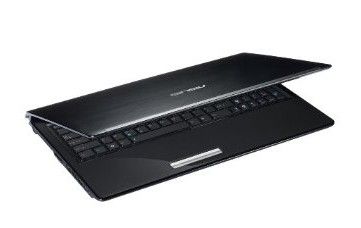
A decent 15.6in screen notebook with CPU overclocking, but grainy display and high price tag could put off some buyers. The UL50vs is a decent 15.6in screen notebook with slight CPU overclocking capabilities, a nice aesthetic finish, and good graphical display capabilities that the majority of people will find acceptable. However, there are flaws, such as the keyboard being off centre and the resolution of the screen not being anywhere near its potential.
Einzeltest, online verfügbar, Kurz, Datum: 12.01.2010
Bewertung: Gesamt: 60%
Quelle: Channel Web
EN→DE Archive.org versionA decent 15.6in screen notebook with CPU overclocking, but grainy display and high price tag could put off some buyers. The UL50vs is a decent 15.6in screen notebook with slight CPU overclocking capabilities, a nice aesthetic finish, and good graphical display capabilities that the majority of people will find acceptable. However, there are flaws, such as the keyboard being off centre and the resolution of the screen not being anywhere near its potential.
Einzeltest, online verfügbar, Mittel, Datum: 12.01.2010
Bewertung: Gesamt: 60%
Quelle: Computing
EN→DE Archive.org versionA decent 15.6in screen notebook with CPU overclocking, but grainy display and high price tag could put off some buyers. The UL50vs is a decent 15.6in screen notebook with slight CPU overclocking capabilities, a nice aesthetic finish, and good graphical display capabilities that the majority of people will find acceptable. However, there are flaws, such as the keyboard being off centre and the resolution of the screen not being anywhere near its potential.
Einzeltest, online verfügbar, Mittel, Datum: 12.01.2010
Bewertung: Gesamt: 60%
Quelle: Hispazone
 ES→DE Archive.org version
Einzeltest, online verfügbar, Mittel, Datum: 27.11.2009
Bewertung: Leistung: 90% Mobilität: 80%
Quelle: CDR-Hard
 CZ→DE Archive.org version
Einzeltest, online verfügbar, Lang, Datum: 18.01.2010
Bewertung: Preis: 80% Leistung: 60% Bildschirm: 40% Mobilität: 80% Emissionen: 80%
Kommentar
NVIDIA GeForce G210M: Die GeForce G210M besitzt, wie die alte GeForce G 110M 16 Shaderkerne jedoch konnte sie dank 40nm Prozess bei selben Stromverbrauch deutlich höher getaktet werden (bei um 50% verringertem Stromverbrauch ohne Last).
Diese Karten können nur sehr alte und sehr anspruchslose 3D Spiele flüssig darstellen. Anwendungen wie Office, Internet surfen, Bildbearbeitung oder (SD) Videoschnitt sind jedoch ohne große Einschränkungen möglich.
» Weitere Informationen gibt es in unserem Notebook-Grafikkartenvergleich und der Benchmarkliste.
Intel Core 2 Duo: Core Duo Nachfolger mit längerer Pipeline und 5-20% Geschwindigkeitszuwachs bei 0.5 - 3 Watt mehr Stromverbrauch.
Der Notebook Core 2 Duo ist baugleich mit den Desktop Core 2 Duo Prozessoren, jedoch werden die Notebook-Prozessoren mit niedrigeren Spannungen und geringerem Frontsidebus Takt betrieben. Von der Leistung bleiben gleichgetaktete Notebooks deswegen (und auch wegen der langsameren Festplatten) 20-25% hinter Desktop PCs.
SU7300: Langsam getakteter Core 2 Duo Prozessor mit 3 MB Level 2 Cache und geringem TDP von 10 Watt.» Weitere Infos gibt es in unserem Prozessorvergleich Vergleich mobiler Prozessoren und der Prozessoren Benchmarkliste .
 Als bevorzugte Quelle auf Google hinzufügen