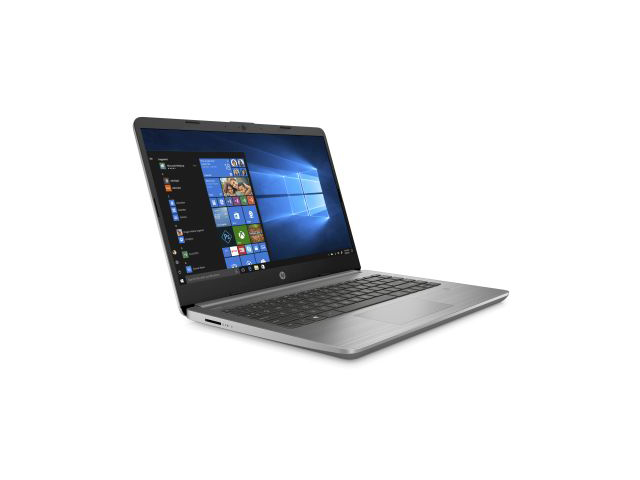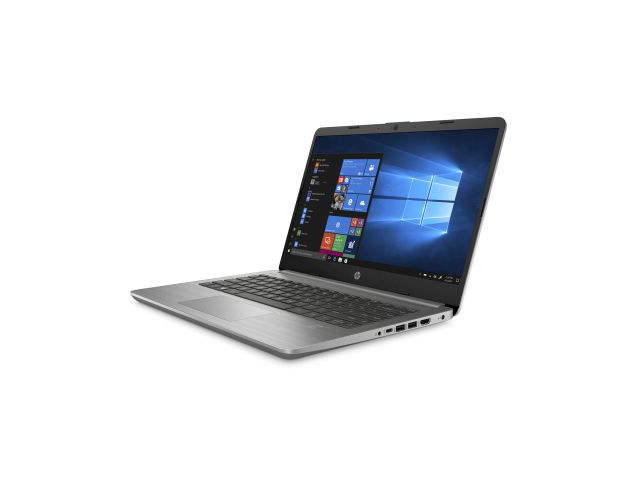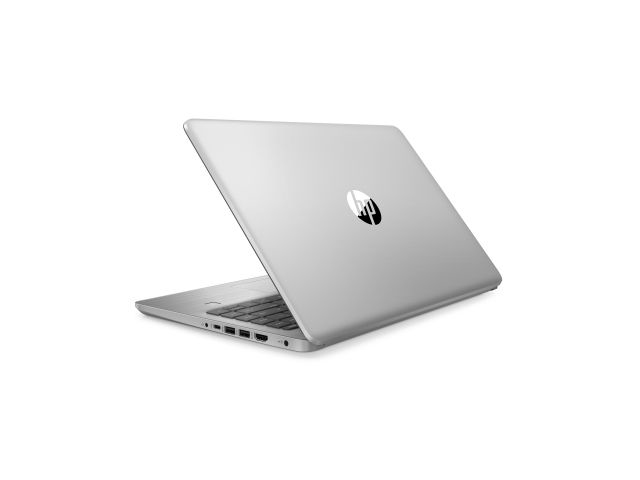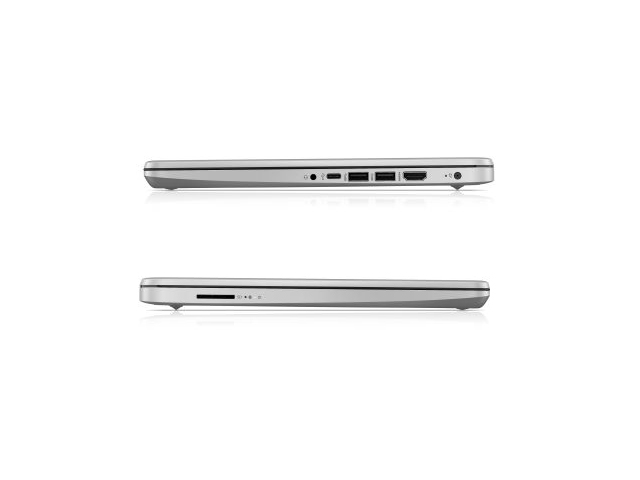




HP 340S G7-8VV95EA
Ausstattung / Datenblatt
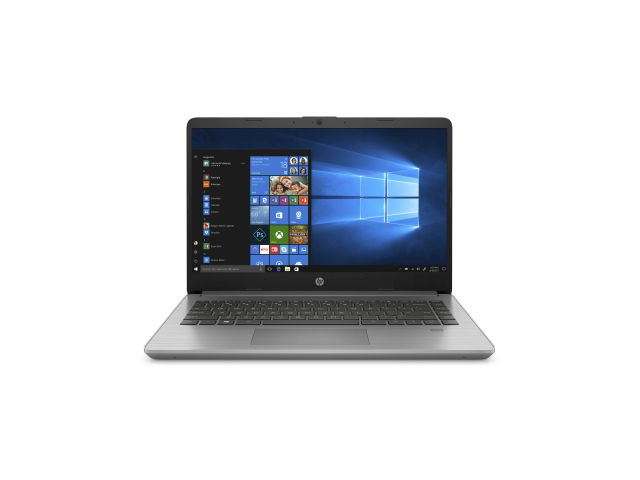
Preisvergleich
Testberichte für das HP 340S G7-8VV95EA
Quelle: Laptop Media
 EN→DE Archive.org version
What else is great is that you have the opportunity of upgrading it via its two RAM SODIMM slots, M.2 NVMe slot, and 2.5″ SATA drive bay. How many 14-inchers can boast with that? Well, yes, you need to do some gymnastics with a plastic pry tool in order to gain access to all of the screws, but at least the glue on the feet is not too hard and you don’t risk damaging them.
Einzeltest, online verfügbar, Sehr Lang, Datum: 19.03.2020
Quelle: Laptop Media
EN→DE Archive.org versionAt this price point, naturally, there is one thing that will suffer – build quality. While the HP 340S G7 is light and relatively thin, its plastic body produces a lot of noises when you handle it by the edge or try to twist it. We are not sure how it is going to impact the longevity of the components inside, but one would certainly want to be extra cautious with this one.
Einzeltest, online verfügbar, Sehr Lang, Datum: 11.02.2020
Kommentar
Intel UHD Graphics G1 (Ice Lake 32 EU): Integrierte Grafikkarte (in Ice-Lake G1 SoCs) der Gen. 11 Architektur mit 32 der 64 EUs (Shader-Cluster). Taktet mit 300 MHz Basistakt und 1050 bzw. 1100 MHz Boost (erste Modelle). Der Ice-Lake-Chip wird im modernen 10nm Verfahren bei Intel gefertigt und soll mit 7nm bei TSMC mithalten können.
Diese Klasse ist noch durchaus fähig neueste Spiele flüssig darzustellen, nur nicht mehr mit allen Details und in hohen Auflösungen. Besonders anspruchsvolle Spiele laufen nur in minimalen Detailstufen, wodurch die grafische Qualität oft deutlich leidet. Diese Klasse ist nur noch für Gelegenheitsspieler empfehlenswert. Der Stromverbrauch von modernen Grafikkarten in dieser Klasse ist dafür geringer und erlaubt auch bessere Akkulaufzeiten.
» Weitere Informationen gibt es in unserem Notebook-Grafikkartenvergleich und der Benchmarkliste.
i5-1035G1: Auf der Ice-Lake-Architektur basierender ULV-SoC (System-on-a-Chip) für schlanke Notebooks und Ultrabooks. Integriert unter anderem vier CPU-Kerne der Sunnycove Microarchitektur mit 1 (Basis) - 3,6 GHz und HyperThreading sowie eine starke UHD Graphics G1 Grafikeinheit und wird in 10-Nanometer-Technik gefertigt. » Weitere Infos gibt es in unserem Prozessorvergleich Vergleich mobiler Prozessoren und der Prozessoren Benchmarkliste .
 Als bevorzugte Quelle auf Google hinzufügen