




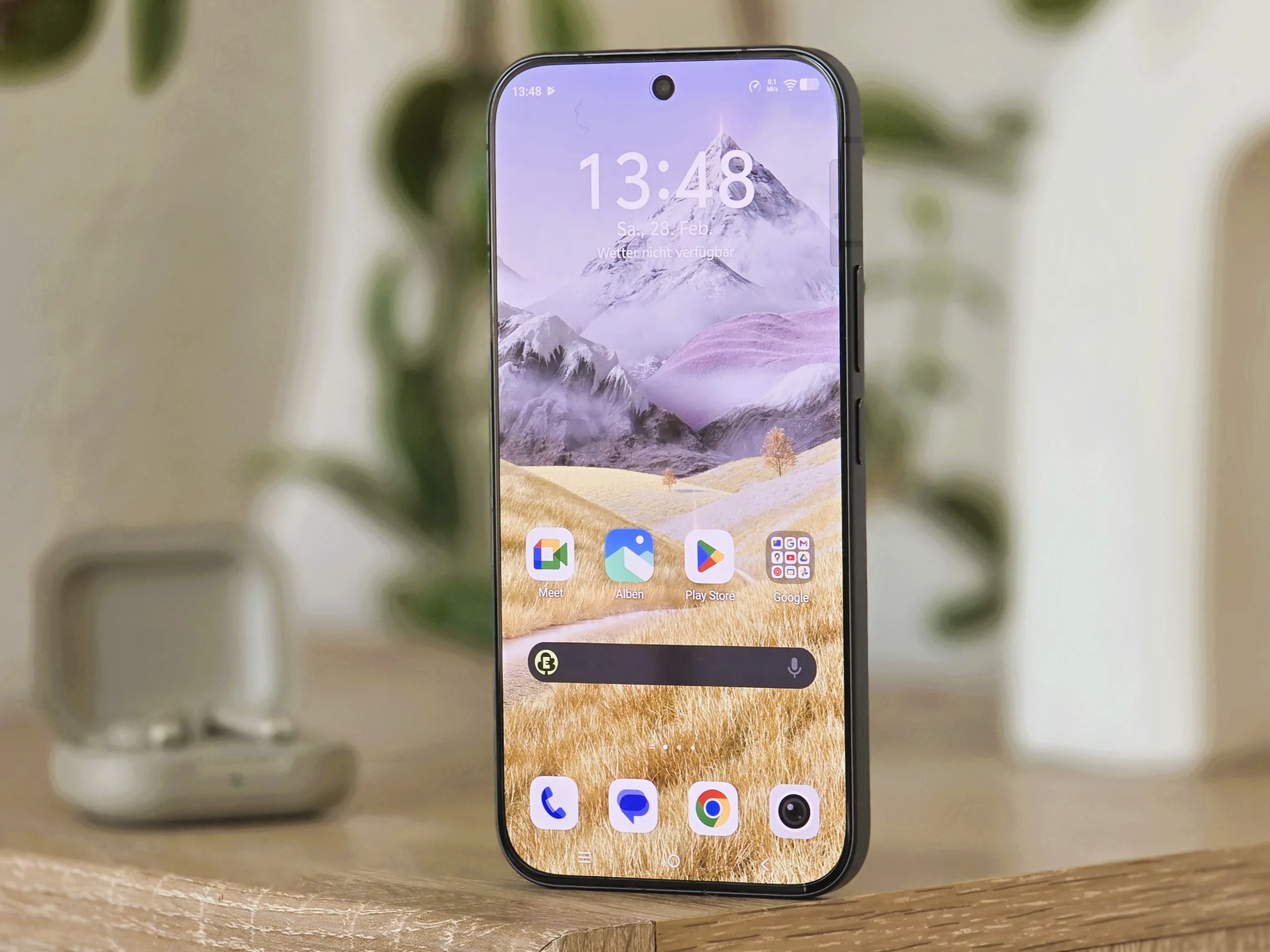
Pro
Contra
Das Vivo V70 ist als wertorientiertes Smartphone der oberen Mittelklasse mit einem hochwertigen Design und einem starken Kamerafokus positioniert. Es verfügt über ein 6,59 Zoll großes 1,5K OLED-Display mit HDR und einer Bildwiederholfrequenz von 120 Hz, das von einem Snapdragon 7 Gen 4, 8 GB RAM und 256 GB UFS 4.1 Speicher unterstützt wird. Sein auf Zeiss abgestimmtes Kamerasystem ist die Hauptattraktion, insbesondere das 50 MP Periskop-Teleobjektiv mit 3-fachem optischen Zoom. Die Kritiken loben durchweg die Fotoqualität, die wasserdichte Konstruktion, die schlanke Bauweise, das brillante Display und die lange Akkulaufzeit. Das Telefon eignet sich gut für den täglichen Gebrauch, auch wenn es sich nicht an Nutzer richtet, die ein Flaggschiff suchen. Zu den größten Nachteilen gehören die einfache 8-MP-Ultraweitwinkelkamera, das Fehlen von drahtlosem Laden, USB 2.0 Anschlüsse und die begrenzte Verfügbarkeit in einigen Märkten.

Ausstattung / Datenblatt
Secondary Camera: 50 MPix (f/2.0, AF)
Preisvergleich
Durchschnitt von 24 Bewertungen (aus 56 Tests)
Testberichte für das Vivo V70
Ein wasserdichtes Gehäuse, dünne Displayränder und eine exzellente Fotoqualität - damit möchte Vivo mit seinem neuen Mittelklasse-Smartphone bei den preisbewussten Käufern punkten. Wie sich die Zeiss-Kameras im unserem Testbericht schlagen und mit welchem Feature das V70 ein Redmi Note 15 Pro+ alt aussehen lässt, lesen Sie hier. Update: Bespielfotos
Quelle: Android Mag

Nachdem Vivo erst vor wenigen Monaten mit der X300-Serie sein Comeback auf dem deutschen Markt gefeiert hat, folgt nun mit dem V70 bereits das nächste Modell.
Einzeltest, online verfügbar, Sehr kurz, Datum: 18.07.2026
Bewertung: Gesamt: 79% Preis: 77% Leistung: 58% Ausstattung: 74% Bildschirm: 87% Mobilität: 65% Gehäuse: 80%
Quelle: A1 Blog
Das Vivo V70 ist für mich einer der Geheimtipps für das Jahr 2026: Besonders hervorzuheben sind das extrem helle 5.000 nits AMOLED Display und die hochwertige ZEISS-Triple-Kamera, bei der vor allem das 50-MP-Teleobjektiv durch seine Zuverlässigkeit bis hin zum 10-fachen Zoom beeindruckt. Mit dem neuen, flachen Design, einem schnellen Ultraschall-Fingerabdrucksensor und der robusten IP68/69-Zertifizierung fühlt sich das Gerät deutlich teurer an, als es tatsächlich ist.
Einzeltest, online verfügbar, Kurz, Datum: 05.03.2026
Ausländische Testberichte
Quelle: Htxt Africa
 EN→DE
EN→DEThe vivo V70 5G is the perfect smartphone for somebody who needs a high degree of performance and a camera that captures video and photos in the way you want them captured. Our only downside is that there isn’t a way to expand storage. Sure, card slots aren’t the norm, but 512GB at the high end means you’re going to be leaning on cloud storage which can get pricey if you take lots of photos. The operating system is very nice and doesn’t slow things down or bother you with constant notifications. Setting the phone up is quick and easy with options to transfer content from one phone to another with minimal fuss. Overall, this is a very good smartphone with very little to complain about. If we had to choose one downside it’d be the price. At close to R20 000, this is a tough pill to swallow especially when last year’s flagship devices can be found for that price or lower. It makes it tough to recommend the vivo V70, even as good as it is. But not impossible. This is a very good handset and if you aren’t a fan of flagship devices, this one gives you that experience without the bloated price tag.
Einzeltest, online verfügbar, Sehr kurz, Datum: 26.05.2026
Bewertung: Gesamt: 80%
Quelle: Android Headlines
EN→DEThe Vivo V70 appeals strongly to the senses, prioritizing a premium look and feel. Design-wise, the premium matte glass, the uniquely textured 3D logo, and the slim bezels—in addition to being symmetrical—make the phone feel significantly more expensive. Beyond its looks, the Vivo V70 delivers excellent daily performance. The decision to pair the Snapdragon 7 Gen 4 with ultra-fast UFS 4.1 storage and 12GB of LPDDR5X RAM was a success. You’ll find an extremely fluid user experience avoiding annoying load times or multitasking bottlenecks. The bright, 1,800-nit OLED display is perfectly visible even under intense sunlight.
Einzeltest, online verfügbar, Lang, Datum: 08.05.2026
Bewertung: Gesamt: 80%
Quelle: Gadgetbyte Nepal
EN→DESo, is the Vivo V70 a good phone for the price? For the most part, I think the answer is yes. There are definitely a few things that feel disappointing, especially the average performance, underwhelming haptics, and outdated 8MP ultrawide camera. But at the same time, Vivo has made several meaningful improvements this year. The Vivo V70 is clearly a better and more polished device than the V60. It also offers better value than some rivals like the Oppo Reno series or the Samsung Galaxy A57. Just like Vivo’s X-series has become genuinely competitive in the flagship segment, the Vivo V70 feels like an attempt to bring some of that same polish into the V-series as well.
Einzeltest, online verfügbar, Lang, Datum: 08.04.2026
Bewertung: Gesamt: 82% Leistung: 75% Bildschirm: 85% Mobilität: 85% Gehäuse: 90%
Quelle: Hitech Century
EN→DEBelying its premium aesthetic that befits a flagship design, vivo’s latest phone blends proven performance and a powerful camera system co-engineered with ZEISS, all at a modest price point that starts from RM1,999. We previously field tested the vivo V70 and shared our thoughts of its performance, design and overall capabilities as a smartphone in our review where it shined as a solid midrange phone that edges into flagship territory, particularly in its imaging capabilities. This time around, we’re taking a much closer look at what truly defines the vivo V70 – its 50MP ZEISS Super Telephoto camera that offers flagship-grade results at a fraction of the price of a premium flagship phone. That’s not all, the phone also leverages a potent array of AI-powered photography tools to help users capture the perfect shot even when the weather isn’t cooperating! After extensive testing across travel, low light, portraiture and golden hour scenarios, here’s our vivo V70 camera review where we share our thoughts on this midrange-priced phone with flagship-grade cameras.
Einzeltest, online verfügbar, Lang, Datum: 27.03.2026
Quelle: Amateur Photographer
EN→DEThe Vivo V70 is a solid mid-ranger phone, offering a decent array of specs for the price you pay. It’s also housed in an attractive looking phone, which is not always true of models at this price point, so it’s a good bonus, too. The biggest problem with the V70 is probably its lack of availability in all markets – you won’t find it in the US or the UK for example. Perhaps that will change in the future, but for those that can get hold of it, it’s a good buy. Image quality overall is pretty good, but there are some caveats to be aware of. Portrait mode isn’t the best out there, while the ultrawide lens leaves a lot to be desired. That said, it’s unusual to have a telephoto lens on a cheap phone – especially one which produces good results so that’s a big plus point for this phone. All in all, for a $450 phone, the V70 performs very well and I’d recommend it to anybody with a fairly low budget.
Einzeltest, online verfügbar, Mittel, Datum: 26.03.2026
Bewertung: Gesamt: 80%
Quelle: Petapixel
EN→DEOne of the biggest knocks against the Vivo V70 is that it doesn’t do much to separate itself from its predecessor, the V60, that released well under a year ago. However, what was good about the V60 then remains good about the V70 now, including its solid array of cameras and photo features. The ultra-wide camera is imperfect, but the main and telephoto cameras are very good, especially for the V70’s accessible price point. The move to OriginOS is a welcome one, and perhaps that alone is enough to separate the V70 from its predecessor. Even so, it’s a strong mid-range handheld that has a lot to offer photographers willing to veer off the well-trodden path of the major manufacturers.
Einzeltest, online verfügbar, Mittel, Datum: 25.03.2026
Quelle: The Times of India
EN→DEVivo V70 comes with a starting price tag of Rs 45,999. The smartphone is a complete package. It packs a powerful processor and a Zeiss Optics tuned camera which performs well in all the lighting conditions. Along with this, the upgraded and refreshed OS further improves the user experience. Not to forget the 6,500 mAh battery with 90W fast charging support is best for users who are constantly on the move. If you are out looking for a powerful smartphone which performs well in all the departments then Vivo V70 can be your pick.
Einzeltest, online verfügbar, Kurz, Datum: 22.03.2026
Bewertung: Gesamt: 76%
Quelle: Canbuyornot
EN→DERetailing at S$799 for the 12GB RAM and 256GB storage model, the Vivo V70 feels very competitive in its segment. However, it costs more than last year's S$699 Vivo V60. If you pre-order today from now to March 31, it will retail at S$749, and will also come with a pair of Vivo Buds Air 3 worth S$99. I'll have more to add once I'm done testing, but so far it's not too bad. But with the economy looking somewhat gloomy for the coming year, getting a great affordable mid-range phone may make a lot of sense.
Einzeltest, online verfügbar, Sehr kurz, Datum: 19.03.2026
Quelle: Manila Shaker
EN→DEOne thing about smartphones lately is their design. Some don’t even need a case because of their aesthetically pleasing look. But design is just one thing to consider when getting a new device. We also need to know its performance and whether it’s worth the money we spend, right?
Einzeltest, online verfügbar, Kurz, Datum: 14.03.2026
Quelle: Yugatech
The vivo V-series has always been about blending sleek design with strong camera capabilities. And one thing’s for sure, the new vivo V70 retains that formula while bringing some key upgrades here and there.
Einzeltest, online verfügbar, Lang, Datum: 13.03.2026
Quelle: Yugatech
EN→DESo, what do I think about the vivo V70? In its own right, the V70 delivers a balanced experience that emphasizes design, great cameras, and battery life. Its ZEISS optics with telephoto capabilities, and an efficient battery life are clear advantages that make it stand out in its class. However, it might be too pricey and it’s hard to justify for what it offers. Not to mention, the chipset is technically a carryover from its predecessor and the other improvements experience-wise were incremental to say the least.
Einzeltest, online verfügbar, Sehr Lang, Datum: 13.03.2026
Quelle: NLT
EN→DESo, should you buy the vivo V70? There is a tiny price hike over the previous generations and in many ways, the vivo V70 is similarto its predecessor. The big upgrade here, in my opinion, is that flat front and flat back design.
Einzeltest, online verfügbar, Mittel, Datum: 12.03.2026
Quelle: GSM Arena
EN→DEThe vivo V70 sticks closely to the formula that has defined the V series for years now - a well-rounded upper-midrange package with a clear focus on photography, wrapped in a sleek and modern design. And just like its predecessors, the V70 succeeds more often than it stumbles. The biggest step forward this year isn't raw hardware, but refinement. The new flat design and aluminum frame make the V70 feel more mature and premium than before, while the transition to OriginOS 6 globally elevates the daily user experience. Battery life is another clear highlight, with the fairly large Si/C cell delivering excellent endurance that comfortably ranks among the best in class. Performance remains very much in line with expectations for this tier. The Snapdragon 7 Gen 4 is fast enough for everyday use and feels snappy thanks to the UFS 4.1 storage, though it won't top the chart. Charging is similarly decent rather than class-leading, especially considering the proprietary nature of vivo's 90W solution.
Einzeltest, online verfügbar, Sehr Lang, Datum: 09.03.2026
Bewertung: Gesamt: 84%
Quelle: Techaeris
EN→DEThe midrange segment is pretty crowded with a nice handful of exceptional phones. The vivo V70 decided to join the party, and it is also an outstanding choice. But to be honest, there’s not a lot that makes this device stand above the rest. Perhaps the camera is a standout; it is better than some other competitors. Here are my key takeaways of the vivo V70. A great camera system, fantastic battery life, excellent ingress protection, and fabulous display are some of the best reasons to consider the vivo V70. But not all is perfect, and power users looking for peak performance should probably look towards the vivo X300 Pro or X300 Ultra for power.
Einzeltest, online verfügbar, Sehr Lang, Datum: 09.03.2026
Bewertung: Gesamt: 95% Preis: 100% Leistung: 90% Bildschirm: 95% Mobilität: 100% Gehäuse: 95%
Quelle: Hitech Century
EN→DEThe vivo V70 edges out from the plethora of midrange phones out there with a robustly built and premium looking chassis, a quality OLED display, good battery life, decent performance and a solid array of cameras that feature a flagship-grade ZEISS telephoto camera, making it a solid all-rounder for what you pay for. While it isn’t as compelling an upgrade for those who own the prior vivo V60, those looking for a solid midrange phone will find its design, performance and array of features an appealing proposition.
Einzeltest, online verfügbar, Sehr Lang, Datum: 07.03.2026
Bewertung: Gesamt: 84% Preis: 80% Leistung: 80% Bildschirm: 80% Mobilität: 80%
Quelle: Manila Shaker
EN→DEOur full review of the vivo V70 is now available to watch and read, where we shared our complete experience with the device. But in this article, we’ll focus on vivo V70’s ZEISS camera capabilities, new AI photo features, night photography, and more. With summer already in the Philippines, many Filipinos will likely be traveling and taking more photos. The question is whether the vivo V70 is a good device for capturing those moments.
Einzeltest, online verfügbar, Mittel, Datum: 06.03.2026
Quelle: Lowyat.net
EN→DEIt’s not too common that we’d say this for the series, but the answer is probably a yes. The vivo V70 has a starting price of RM1,999. While the configurations with more memory and storage goes up to RM2,599, if you don’t need that a mid-ranger for two grand is not too bad a deal, especially considering what’s to come. Of course, all this is actually contingent on its golden hour camera capabilities. Had the prior models had this following the launch of the X100 Pro, they would have probably have also gotten a recommendation. Conversely, had the V70 not have this feature, it would also not get a recommendation.
Einzeltest, online verfügbar, Sehr kurz, Datum: 05.03.2026
Quelle: Tech PP
EN→DEOverall, Vivo V70 once again stands on its core camera pillars, offering flagship-grade cameras. And now, with the new premium design, compact size, reliable day-to-day performance, and excellent battery life, and new Origin OS 6, the Vivo V70 ticks all the boxes for being a close-to-all-rounder phone with great cameras, except for people who want to trade performance for cameras. Vivo has clearly bumped up the price largely because the V70 finally feels like a premium phone. The design now feels more flagship-like, and also comes with a glass and metal body. The base variant now starts at 256GB and more. At the same time, smartphone prices have also gone up in 2026 due to component shortages, with many brands increasing pricing across segments.Because of that, the Vivo V series is no longer sitting safely in the mid-range zone.
Einzeltest, online verfügbar, Lang, Datum: 02.03.2026
Bewertung: Gesamt: 84% Preis: 80% Leistung: 80% Mobilität: 100% Gehäuse: 100%
Quelle: Tech PP
EN→DEOverall, Vivo V70 once again stands on its core camera pillars, offering flagship-grade cameras. And now, with the new premium design, compact size, reliable day-to-day performance, and excellent battery life, and new Origin OS 6, the Vivo V70 ticks all the boxes for being a close-to-all-rounder phone with great cameras, except for people who want to trade performance for cameras. Vivo has clearly bumped up the price largely because the V70 finally feels like a premium phone. The design now feels more flagship-like, and also comes with a glass and metal body. The base variant now starts at 256GB and more.
Einzeltest, online verfügbar, Lang, Datum: 02.03.2026
Bewertung: Gesamt: 84% Preis: 80% Leistung: 80% Mobilität: 100% Gehäuse: 100%
Quelle: Manila Shaker
EN→DEThe vivo V70 is priced at PHP31,999 for the 8GB + 256GB variant, PHP35,999 for the 12GB + 256GB model, and PHP39,999 for the 12GB + 512GB configuration. Overall, the vivo V70 presents itself as a well-balanced midrange device. It offers a vibrant display, a premium-looking design, capable cameras, and a large battery. However, for power users seeking maximum performance, there may be stronger options available in the market.
Einzeltest, online verfügbar, Kurz, Datum: 28.02.2026
Quelle: Yugatech
vivo is dropping a new model from its camera-centric series, the vivo V70. Notably, the ZEISS collaboration remains the main highlight here boasting new camera features to explore with. So, in this video, we’re taking a quick rundown of the things we like about this phone so far.
Einzeltest, online verfügbar, Mittel, Datum: 28.02.2026
Quelle: OI Spice Tech News
EN→DEThe Vivo V70 marks a significant step forward for the brand’s mid-range lineup, blending a premium design philosophy with top-tier durability. Announced in February 2026, the phone features a sleek unibody construction that’s both lightweight, starting at just 187 grams and incredibly tough. It boasts an IP68/IP69 rating, making it not only dust-tight and resistant to immersion in water but also capable of withstanding high-pressure water jets—a feature usually reserved for rugged devices. The sturdy design is backed by its EU “Class C” rating for surviving drops, which means it’s built to handle everyday accidents. It also has a “Class C” repairability score, showing that it’s easier to repair than most other similar products.
Einzeltest, online verfügbar, Sehr kurz, Datum: 26.02.2026
Quelle: Mark Ellis Reviews
EN→DEI seem to end all of these reviews the same way, but I can’t help it. The Vivo V70 is yet another solid mid-range phone that exceed it’s price tag in many areas. The highlights are easily the highly diverse camera system, especially the zoom capabilities, the crisp display and big battery life. If you’re looking for something more affordable, you could do a lot worse than this!
Einzeltest, online verfügbar, Kurz, Datum: 25.02.2026
Bewertung: Gesamt: 80%
Quelle: Digit.in
EN→DEThe Vivo V70 is a phone that knows exactly what it wants to be: a camera-first smartphone that no longer forces you to compromise elsewhere. It delivers excellent portrait photography, reliable low-light performance, a vibrant display, strong battery life, and fast charging, all wrapped in a slim and premium design. It may not score the best benchmark scores or feature the most aggressive specs, but in real-world usage, it feels polished, dependable, and thoughtfully tuned.
Einzeltest, online verfügbar, Kurz, Datum: 24.02.2026
Quelle: 91mobiles
EN→DEThe Vivo V70 is the brand’s latest premium mid-range offering, positioned close to sub-flagship territory. With this model, Vivo offers premium design and versatile cameras, while ensuring dependable day-to-day performance and consistent software support. These features are what we’ve been seeing in Vivo’s V-series, and the V70 echoes that in every way. We’ve already reviewed the Vivo V70 and compared it against its key rivals, and to simplify your decision-making, here’s a clear look at the reasons why you should consider buying it, and where you might want to look elsewhere.
Einzeltest, online verfügbar, Sehr kurz, Datum: 24.02.2026
Quelle: Business Standard
EN→DEThe Vivo V70 impresses with its premium matte-glass design, vibrant 1.5K OLED display, lasting battery life backed by 90W fast charging and a versatile camera system that delivers natural colours, strong detail up to 10x zoom, capable macro shots and 4K 60fps video on both front and rear cameras.
Einzeltest, online verfügbar, Kurz, Datum: 23.02.2026
Quelle: 91mobiles
EN→DEThe Vivo V70 is a well-balanced upper midrange smartphone that nails the essentials. Its premium flat-edge design and vibrant display give it a sleek, compact feel, making it comfortable to use without sacrificing screen quality. Performance is dependable for everyday tasks and casual gaming, though power users seeking maximum performance may want to consider alternatives like the OnePlus 15R (review), which starts at Rs 47,999. The cameras are feature-rich and versatile enough for most scenarios, even if they don’t lead the segment in outright image quality.
Einzeltest, online verfügbar, Mittel, Datum: 23.02.2026
Bewertung: Gesamt: 81% Leistung: 70% Bildschirm: 85% Mobilität: 83% Gehäuse: 80%
Quelle: Yanko Design
EN→DEThe vivo V70 in Golden Hour is one of the more cohesive mid-range phones available right now. The etched glass with its unexpected bluish shift, the aluminum frame, the ultrasonic fingerprint sensor, the bright 1.5K OLED, and the ZEISS telephoto and portrait system all work together in a way that makes the phone feel intentional rather than assembled from a spec sheet and a parts catalog. The 8MP ultra-wide and the absence of wireless charging are unfortunate blemishes on what is otherwise a remarkably well-rounded package. Both are real trade-offs rather than dealbreakers, though, and the vivo V70 earns its place as a phone that’s genuinely hard to fault for what it costs, especially if portrait photography, concert shooting, and long battery life are what matter most to you.
Einzeltest, online verfügbar, Lang, Datum: 19.02.2026
Bewertung: Preis: 70% Leistung: 80% Ergonomie: 70%
Quelle: Digital Camera World
EN→DEOf the Vivo V-series phones I've tested, the V70 is the most refined to date. Yes, it heavily borrows some design cues from other phones, but I think it looks stylish, has a wealth of color options, and it feels more premium than its price tag. The spec sheet might also be a little disappointing to anyone considering this over the V60, but it has a noticeable bump in screen resolution, and still offers excellent battery life and decent long-term software support. For photographers, this is a serious mid-range option. The Zeiss-tuned camera system is very good, the telephoto a particular standout and genuinely impressive for this class, but the overall shooting experience is consistent and enjoyable.
Einzeltest, online verfügbar, Kurz, Datum: 19.02.2026
Bewertung: Gesamt: 80% Preis: 90% Leistung: 80% Gehäuse: 90%
Quelle: Mobygyaan
EN→DEThe V70 comes across as a very complete package; the highlights are easy to pinpoint – the 6.59-inch 1.5K AMOLED 5,000 nits display is sharp, bright, almost bezel-less, and highly immersive, while the ultra-slim Golden Grip design offers a premium smartphone experience. Add IP68 + IP69 durability and a premium build – the vivo V70 has one of the best designs in its class.
Einzeltest, online verfügbar, Sehr Lang, Datum: 19.02.2026
Quelle: Tech Spurt
Reviewing Motorola's Moto G77, a budget phone costing £250 in the UK, sporting a 108MP camera, Mediatek Dimensity smarts and some sleek design. But is the Motorola G77 one of the best affordable smartphones in 2026? Well, here's an in-depth look as we test the gaming chops, battery life and other bits. Check out my other budget phone reviews here on Tech Spurt for more ideas!The Moto G77 boasts the usual strengths of wallet-friendly phones from Motorola, including a lovely soft-touch design. It's thin and light, with good grip and impressive durability. Likewise, battery life is tops despite the capacity looking rather piddly vs some rivals. You've got a light, stock Android experience on the Motorola Moto G77, but performance can still be a little lethargic at times.
Einzeltest, online verfügbar, Sehr Lang, Datum: 16.02.2026
Quelle: Computerhoy
 ES→DE
ES→DEEinzeltest, online verfügbar, Lang, Datum: 20.03.2026
Bewertung: Gesamt: 87%
Quelle: Xataka
ES→DEEinzeltest, online verfügbar, Sehr Lang, Datum: 16.03.2026
Bewertung: Gesamt: 81% Leistung: 78% Bildschirm: 85% Mobilität: 90% Gehäuse: 83%
Quelle: Tudo Celular
 PT→DE
PT→DEEinzeltest, online verfügbar, Mittel, Datum: 07.04.2026
Bewertung: Gesamt: 70% Preis: 50%
Quelle: Igizmo
 IT→DE
IT→DEEinzeltest, online verfügbar, Mittel, Datum: 08.06.2026
Quelle: Ceotech
IT→DEEinzeltest, online verfügbar, Sehr kurz, Datum: 07.06.2026
Quelle: Batista70Phone
IT→DEVergleich, online verfügbar, Lang, Datum: 19.05.2026
Quelle: Wired IT
IT→DEEinzeltest, online verfügbar, Kurz, Datum: 05.05.2026
Bewertung: Gesamt: 70%
Quelle: Batista70Phone
IT→DEEinzeltest, online verfügbar, Sehr Lang, Datum: 27.04.2026
Bewertung: Gesamt: 89% Preis: 83% Ausstattung: 84% Bildschirm: 90% Mobilität: 95% Gehäuse: 94%
Quelle: Smart World
IT→DEEinzeltest, online verfügbar, Kurz, Datum: 13.04.2026
Bewertung: Gesamt: 83% Preis: 60% Ausstattung: 75% Bildschirm: 85% Mobilität: 80% Gehäuse: 90% Ergonomie: 90%
Quelle: Tutto Android
IT→DEEinzeltest, online verfügbar, Kurz, Datum: 01.04.2026
Bewertung: Gesamt: 84%
Quelle: HDblog.it
IT→DEEinzeltest, online verfügbar, Mittel, Datum: 31.03.2026
Bewertung: Preis: 54% Ausstattung: 61%
Quelle: Tabletowo
 PL→DE
PL→DEEinzeltest, online verfügbar, Lang, Datum: 06.04.2026
Bewertung: Gesamt: 80%
Quelle: PurePC
PL→DEEinzeltest, online verfügbar, Sehr Lang, Datum: 03.04.2026
Quelle: MobilArena HU
 HU→DE
HU→DEEinzeltest, online verfügbar, Sehr Lang, Datum: 27.04.2026
Bewertung: Preis: 60% Bildschirm: 90% Mobilität: 90% Gehäuse: 100%
Quelle: Zive
 CZ→DE
CZ→DEEinzeltest, online verfügbar, Mittel, Datum: 22.04.2026
Quelle: CNews.cz
CZ→DEEinzeltest, online verfügbar, Lang, Datum: 16.04.2026
Quelle: Smartmania.cz
CZ→DEEinzeltest, online verfügbar, Kurz, Datum: 01.04.2026
Bewertung: Gesamt: 84% Ausstattung: 75% Mobilität: 94% Gehäuse: 91%
Quelle: XT Mobile
 VN→DE
VN→DEVergleich, online verfügbar, Kurz, Datum: 29.04.2026
Quelle: XT Mobile
VN→DEEinzeltest, online verfügbar, Kurz, Datum: 02.04.2026
Quelle: VNReview
VN→DEVergleich, online verfügbar, Kurz, Datum: 25.03.2026
Quelle: The Gioididong
VN→DEEinzeltest, online verfügbar, Kurz, Datum: 14.03.2026
Quelle: Jagat Review
 ID→DE
ID→DEEinzeltest, online verfügbar, Mittel, Datum: 09.03.2026
Kommentar
Qualcomm Adreno 722: Eine relativ leistungsstarke iGPU für Android Tablets, Telefone und Handhelds, die zusammen mit dem Snapdragon 7 Gen 4 SoC debütierte und über eine unbekannte Anzahl von Unified Shadern verfügt (Stand: August 2025).
Diese Klasse ist noch durchaus fähig neueste Spiele flüssig darzustellen, nur nicht mehr mit allen Details und in hohen Auflösungen. Besonders anspruchsvolle Spiele laufen nur in minimalen Detailstufen, wodurch die grafische Qualität oft deutlich leidet. Diese Klasse ist nur noch für Gelegenheitsspieler empfehlenswert. Der Stromverbrauch von modernen Grafikkarten in dieser Klasse ist dafür geringer und erlaubt auch bessere Akkulaufzeiten.
» Weitere Informationen gibt es in unserem Notebook-Grafikkartenvergleich und der Benchmarkliste.
SD 7 Gen 4: Ein relativ leistungsstarkes SoC für Android Tablets, Telefone und Handhelds. Er debütierte im 2. Quartal 2025 als Nachfolger des 7 Gen 3 mit einer breiten Palette von Funktionen der neuesten Generation und beeindruckenden Leistungssteigerungen.» Weitere Infos gibt es in unserem Prozessorvergleich Vergleich mobiler Prozessoren und der Prozessoren Benchmarkliste .
Ähnliche Geräte mit den selben Spezifikationen
Geräte anderer Hersteller
Geräte mit der selben Bildschirmgröße und/oder ähnlichem Gewicht
 Als bevorzugte Quelle auf Google hinzufügen


