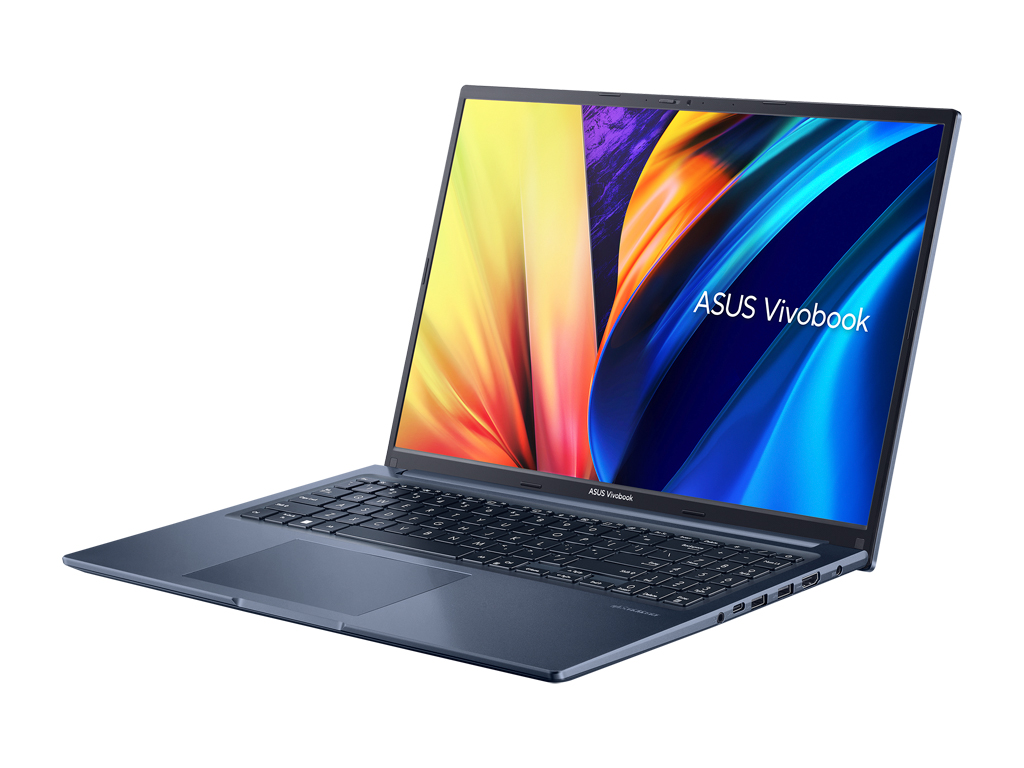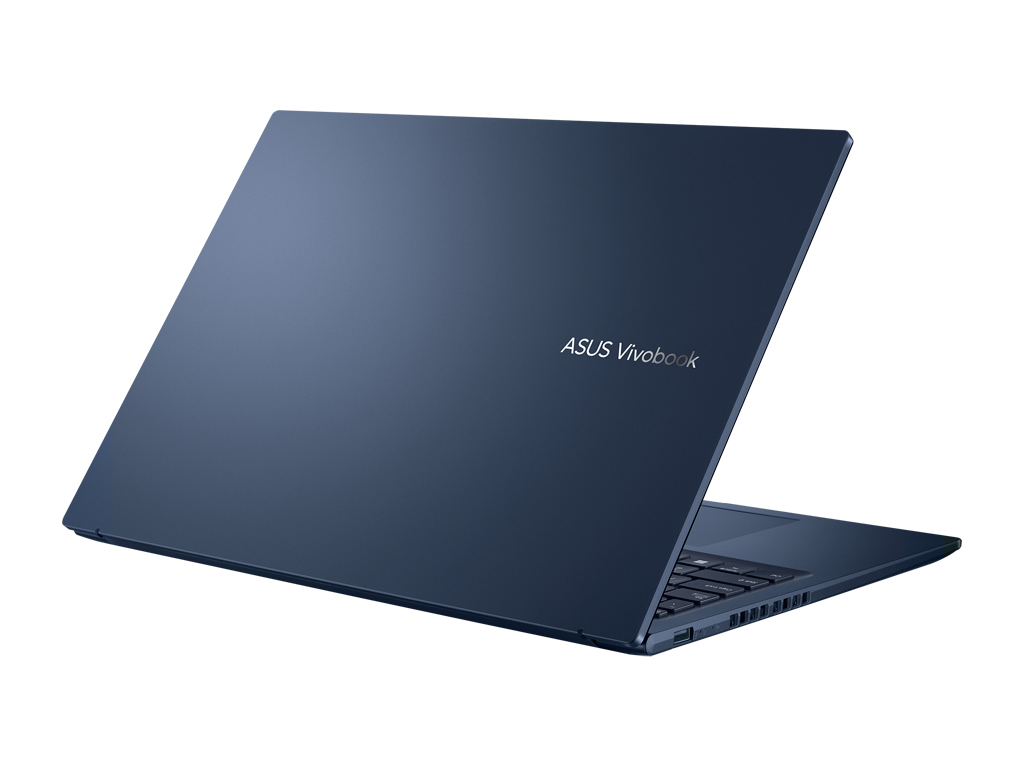




Asus Vivobook 16X M1603, R7 5800H
Ausstattung / Datenblatt
Preisvergleich
Testberichte für das Asus Vivobook 16X M1603, R7 5800H
Quelle: Laptop Media
 EN→DE
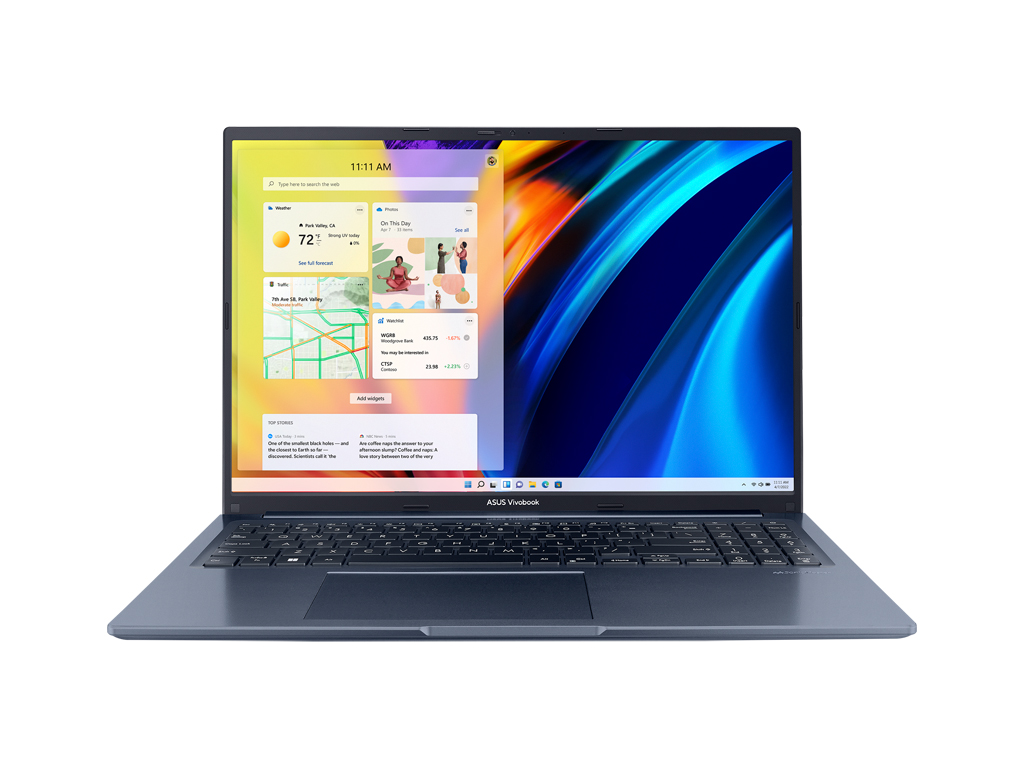
EN→DEWhen you want a laptop that has the performance of a big gaming machine, you need to make sacrifices. Especially if you want it to be affordable. Well, this is exactly the case with the Vivobook 16X (M1603). Its IPS panel has a WUXGA resolution, 16:10 aspect ratio, comfortable viewing angles, and a good contrast ratio. Its backlight doesn’t use PWM for brightness adjustment, but on the other hand, the color coverage is only 50% of the sRGB color gamut. Although the laptop is made out of plastic, it has one strong feature when it comes to the body – its coating. ASUS has covered all body panels with an antimicrobial layer, which attracts all microbes and then kills them off. Quite sadistic, but also beneficial. In addition to that, the port selection is robbed of an SD card reader, while the USB Type-C port can only be used for data transfers. Also, some of the memory (8GB to be precise) has been soldered to the motherboard. Further expansions are possible via the single SODIMM slot. In terms of battery, you get between 8 and 10 hours on a single charge, depending on your activities – watching videos, or browsing the Web. Using more demanding software, however, will drain it significantly more quickly, due to the power-hungry processor. Speaking of which, it is really powerful. Even though it is a couple of generations old, one can still reap the benefits of AMD’s bold design back in the day. So, if you are looking for a machine that is capable of delivering all you need, at a low price, and still allows you to play light games – get the Vivobook 16X (M1603). Don’t miss to check out the OLED version of this device.
Einzeltest, online verfügbar, Sehr Lang, Datum: 23.02.2023
Quelle: Laptop Media
Support, online verfügbar, Sehr kurz, Datum: 23.02.2023
Kommentar
AMD Vega 8: Integrierte Grafikkarte in the Ryzen APUs basierend auf der Vega Architektur mit 8 CUs (= 512 Shader) und einer Taktrate von bis zu 2.000 MHz.
Diese Klasse ist noch durchaus fähig neueste Spiele flüssig darzustellen, nur nicht mehr mit allen Details und in hohen Auflösungen. Besonders anspruchsvolle Spiele laufen nur in minimalen Detailstufen, wodurch die grafische Qualität oft deutlich leidet. Diese Klasse ist nur noch für Gelegenheitsspieler empfehlenswert. Der Stromverbrauch von modernen Grafikkarten in dieser Klasse ist dafür geringer und erlaubt auch bessere Akkulaufzeiten.
» Weitere Informationen gibt es in unserem Notebook-Grafikkartenvergleich und der Benchmarkliste.
R7 5800H: Mobile APU mit acht Zen 3 basierten Kernen welche mit 3,2 bis 4,4 GHz takten. Integriert eine Vega Grafikkarte mit 8 CUs und bis zu 2GHz Taktfrequenz.» Weitere Infos gibt es in unserem Prozessorvergleich Vergleich mobiler Prozessoren und der Prozessoren Benchmarkliste .
 Als bevorzugte Quelle auf Google hinzufügen