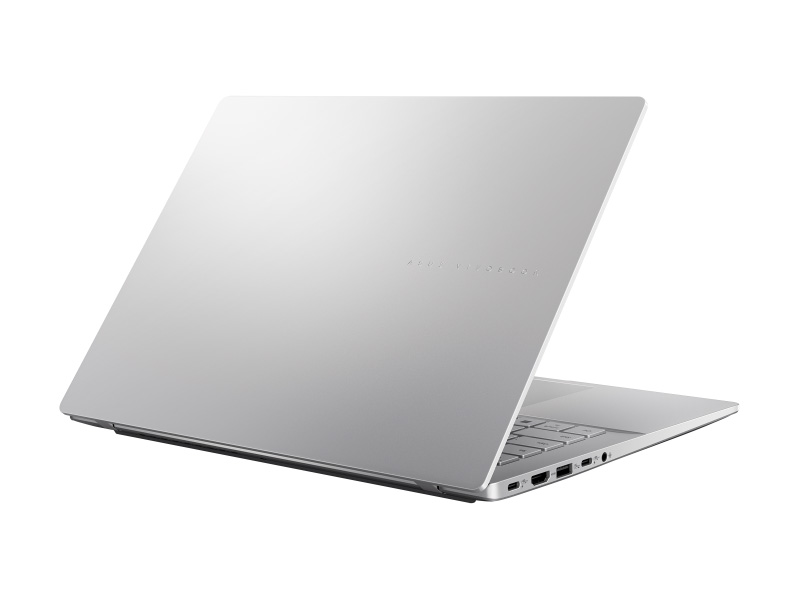




Asus Vivobook S14 S3407QA
Ausstattung / Datenblatt

Preisvergleich
Durchschnitt von 8 Bewertungen (aus 9 Tests)
Testberichte für das Asus Vivobook S14 S3407QA
Quelle: Root Nation
 EN→DE
EN→DEThis isn’t just a durable typing machine – it’s a reliable portable media center. You can run games, do basic video editing, and enjoy impressive battery life. The limitations, both in software compatibility and performance, are clear, but given the large audience for devices like the MacBook Air, there’s certainly a market for the ASUS Vivobook S14 S3407QA as well. Overall, it’s a device I can recommend. This isn’t just a durable typing machine anymore – it’s a reliable, portable media center. You can run games, handle basic video editing, and the battery life is strong. Limitations are clear, both in software compatibility and performance, but given the large audience for the MacBook Air, there’s likely a similar market for the ASUS Vivobook S14 S3407QA.
Einzeltest, online verfügbar, Lang, Datum: 09.09.2025
Bewertung: Gesamt: 90% Preis: 90% Bildschirm: 80% Mobilität: 100% Gehäuse: 90%
Quelle: Mezha EN
EN→DEASUS Vivobook S14 generally leaves a pleasant impression. It has everything that undemanding users with ordinary routine tasks need. Such a laptop will provide the needs for office work and media playback, is well suited for learning, will allow you to quickly get acquainted with the AI functions of Windows, while also providing excellent autonomy and quiet operation. However, all potential buyers will still have to take into account that the adaptation of “software” to ARM chips is not as fast as we would like. Therefore, before purchasing, you will still have to “run” through the list of all requirements for a new laptop and make sure that the corresponding versions of programs will work properly.
Einzeltest, online verfügbar, Sehr Lang, Datum: 04.08.2025
Bewertung: Gesamt: 80%
Quelle: Exhibit.tech
EN→DEThe Asus Vivobook S14 is a thoughtfully designed productivity laptop that punches above its weight in many areas. While the display isn’t suited for colour-critical work and there’s no discrete GPU, it shines as a dependable all-day performer for professionals, students, and hybrid workers. If your focus is on portability, daily reliability, light creative tasks, and clean design, this Vivobook should be high on your list.
Einzeltest, online verfügbar, Kurz, Datum: 30.05.2025
Bewertung: Gesamt: 81% Leistung: 80% Bildschirm: 70% Gehäuse: 85%
Quelle: Geektopia
 ES→DE
ES→DEEinzeltest, online verfügbar, Mittel, Datum: 10.11.2025
Bewertung: Gesamt: 83%
Quelle: Computerhoy
ES→DEEinzeltest, online verfügbar, Lang, Datum: 12.09.2025
Bewertung: Gesamt: 80%
Quelle: Geeknetic
ES→DEEinzeltest, online verfügbar, Sehr Lang, Datum: 05.09.2025
Bewertung: Gesamt: 80%
Quelle: Profesional Review
ES→DEEinzeltest, online verfügbar, Sehr Lang, Datum: 24.06.2025
Bewertung: Gesamt: 80% Preis: 75% Leistung: 70% Bildschirm: 74% Mobilität: 100% Gehäuse: 84%
Quelle: ITC UA
 RU→DE
RU→DEEinzeltest, online verfügbar, Sehr Lang, Datum: 03.09.2025
Bewertung: Gesamt: 80% Leistung: 80% Bildschirm: 70% Mobilität: 95% Gehäuse: 75% Ergonomie: 75%
Quelle: Overclockers RU
RU→DEEinzeltest, online verfügbar, Sehr Lang, Datum: 27.08.2025
Kommentar
Qualcomm Adreno X1-45 1.7 TFLOPS: Die Qualcomm Snapdragon X Adreno X1-45 ist die schwächste GPU in the Snapdragon X Plus SoCs mit nur 1,7 statt 3,8 TFLOPS an Leistung. Wahrscheinlich wird dies durch weniger Taktraten und / oder weniger Kerne erreicht.
Durch aktuell eingeschränkten Treibersupport und Spieleunterstüztung ist die 3D-Leistung und Kompabilität in Spielen jedoch nicht vergleichbar mit Nvidia und AMD iGPUs.
Diese Klasse ist noch durchaus fähig neueste Spiele flüssig darzustellen, nur nicht mehr mit allen Details und in hohen Auflösungen. Besonders anspruchsvolle Spiele laufen nur in minimalen Detailstufen, wodurch die grafische Qualität oft deutlich leidet. Diese Klasse ist nur noch für Gelegenheitsspieler empfehlenswert. Der Stromverbrauch von modernen Grafikkarten in dieser Klasse ist dafür geringer und erlaubt auch bessere Akkulaufzeiten.
» Weitere Informationen gibt es in unserem Notebook-Grafikkartenvergleich und der Benchmarkliste.
SD X1-26-100: Eine erschwingliche ARM-Architektur Prozessor (SoC) für den Einsatz in Windows-Notebooks. Der 8-Kern Snapdragon X Chip verfügt über 8 Oryon CPU-Kerne, die mit bis zu 2,98 GHz laufen, zusammen mit der 1,7 TFLOPS X1-45 Adreno iGPU und der 45 TOPS Hexagon NPU. Der superschnelle LPDDR5x-8448 Speichercontroller, den wir von anderen Snapdragon X Chips kennen, USB 4.0 Unterstützung, TB 4 Unterstützung und PCIe 4 Unterstützung sind ebenfalls an Bord.» Weitere Infos gibt es in unserem Prozessorvergleich Vergleich mobiler Prozessoren und der Prozessoren Benchmarkliste .
 Als bevorzugte Quelle auf Google hinzufügen