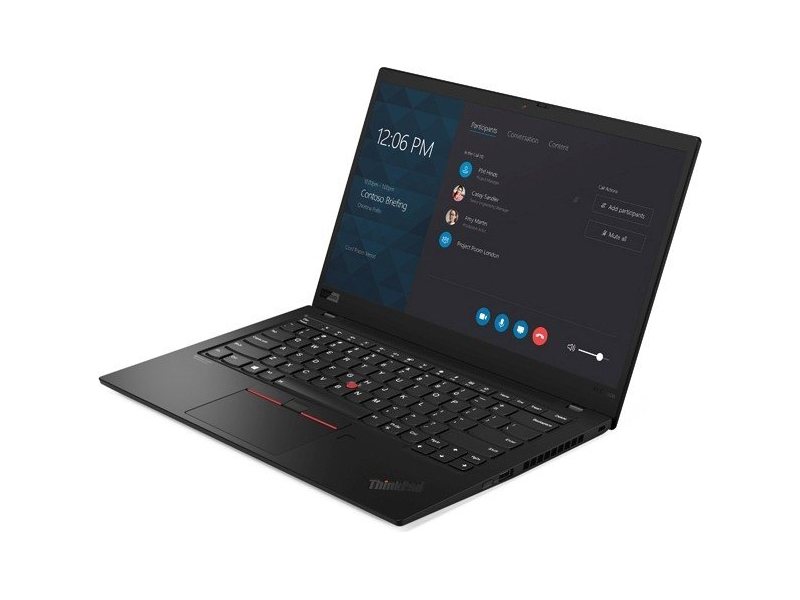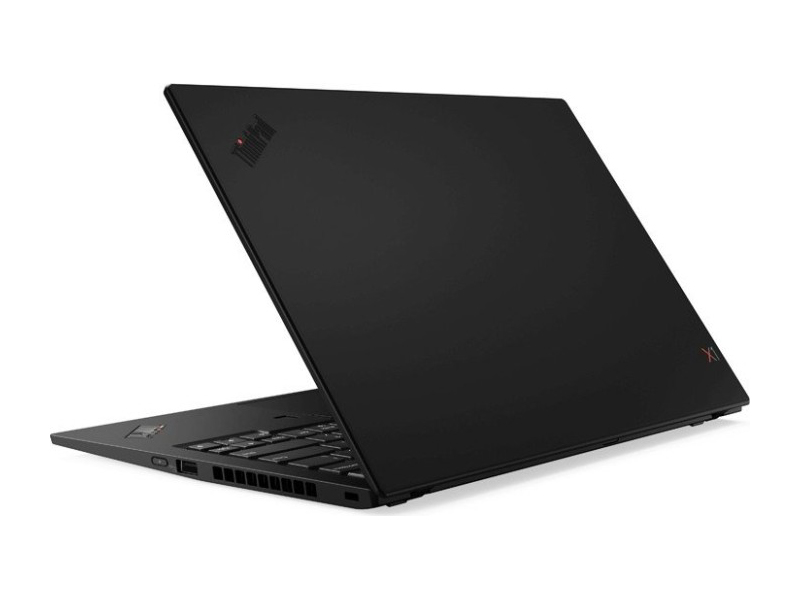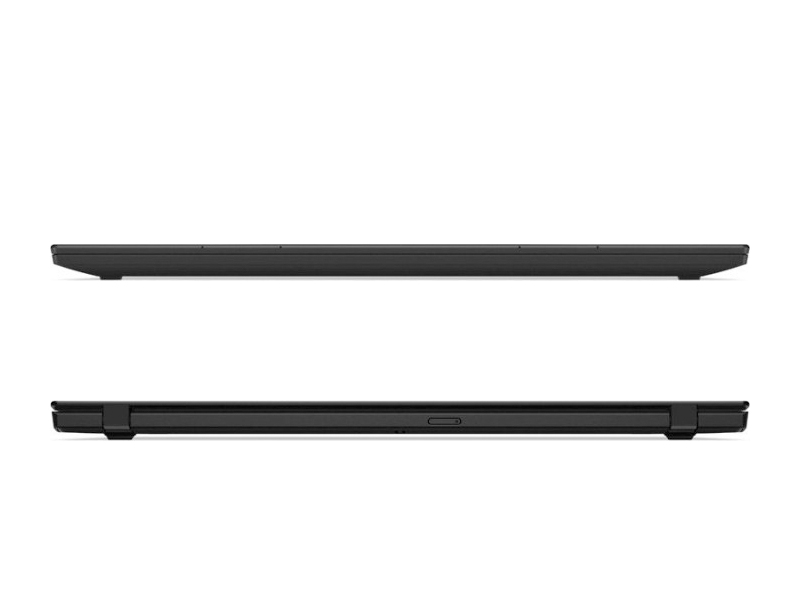




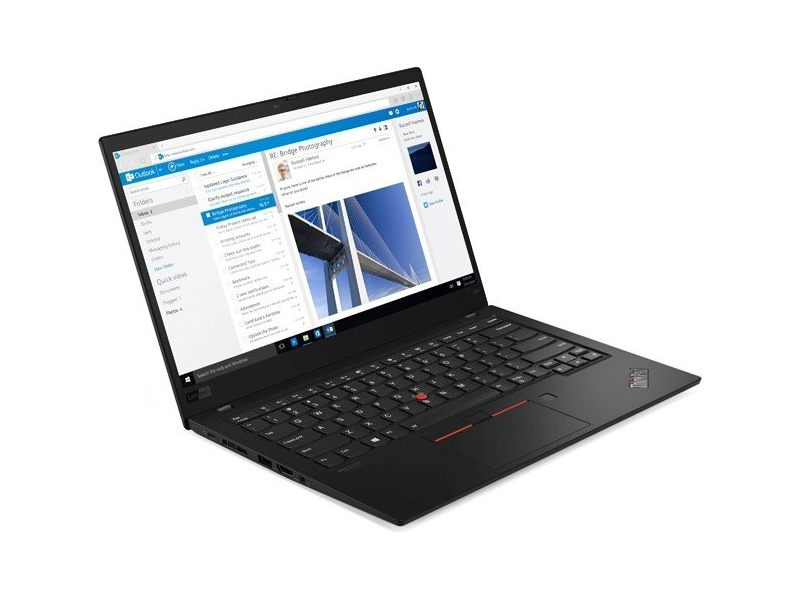
Lenovo ThinkPad X1 Carbon 2020-20U9005NUS
Ausstattung / Datenblatt
Preisvergleich
Durchschnitt von 1 Bewertungen (aus 3 Tests)
Testberichte für das Lenovo ThinkPad X1 Carbon 2020-20U9005NUS
Quelle: PC Mag
 EN→DE Archive.org version
Its slightly larger screen, slightly preferable keyboard, and HDMI port put us on Team X1 Carbon instead of Team XPS 13, but you can't go wrong with either. For the record, we're giving the Carbon Gen 8 only four and a half stars instead of a perfect five, because it's not perfect—it has no microSD card slot. Nor is it cheap, though it's not outrageously overpriced; a couple of hundred bucks over the ultraportable going rate seems a fair amount to pay for one of the finest, if not the finest, laptop experiences on the planet. You only live once.
Einzeltest, online verfügbar, Sehr Lang, Datum: 14.10.2020
Quelle: Laptop Mag
EN→DE Archive.org versionThe 8th Gen ThinkPad X1 Carbon is a minor update to an already fantastic laptop. The new 10th Gen Intel vPro CPUs deliver a slight performance boost, but not enough for me to recommend upgrading if you already own the 7th Gen model (especially the mid-cycle refresh with 10th Gen chips). If your business laptop is getting sluggish and it's time for a new one, the ThinkPad X1 Carbon should be at the top of your list. It has an ultraslim yet durable chassis, great display options, the best keyboard in its class and fast performance. The X1 Carbon also gets good battery life (on the 1080p model), although rivals like the Elite Dragonfly and ExpertBook B9450 last even longer on a charge. So although the ThinkPad X1 Carbon 8th Gen is practically identical to the previous version, it maintains its position as the best business laptop on the market — at least, for now.
Einzeltest, online verfügbar, Sehr Lang, Datum: 17.06.2020
Bewertung: Gesamt: 90%
Quelle: Nghenhin Vietnam
 VN→DE Archive.org version
Positive: Premium design; high performance; slim size; light weight; high mobility.
Einzeltest, online verfügbar, Lang, Datum: 17.09.2020
Kommentar
Intel UHD Graphics 620: Integrierte Grafikkarte (GT2-Ausbau, 24 EUs), welche in einigen Kaby-Lake-CPUs (Refresh, ULV-Modelle, 15 Watt TDP) verbaut wird. Technisch identisch zur HD Graphics 620 in den Kaby-Lake Modellen aus 2016.
Diese Klasse ist noch durchaus fähig neueste Spiele flüssig darzustellen, nur nicht mehr mit allen Details und in hohen Auflösungen. Besonders anspruchsvolle Spiele laufen nur in minimalen Detailstufen, wodurch die grafische Qualität oft deutlich leidet. Diese Klasse ist nur noch für Gelegenheitsspieler empfehlenswert. Der Stromverbrauch von modernen Grafikkarten in dieser Klasse ist dafür geringer und erlaubt auch bessere Akkulaufzeiten.
» Weitere Informationen gibt es in unserem Notebook-Grafikkartenvergleich und der Benchmarkliste.
i5-10310U: Auf der Comet Lake-Architektur basierender ULV-SoC (System-on-a-Chip) für schlanke Notebooks und Ultrabooks. Integriert unter anderem vier CPU-Kerne mit 1,7 - 4,4 GHz (unverifiziert) und HyperThreading sowie eine Grafikeinheit und wird in 14-Nanometer-Technik (14nm++) gefertigt. Unterstützt bis zu LPDDR3-2133/DDR4-2666 Dual-Channel Hauptspeicher. Per cTDP up/down kann der Stromverbrauch und die Leistung vom Notebookhersteller von 10 auf 25 Watt eingestellt werden. Die CPU unterstützt vPro. Bietet im Vergleich zum höher getakteten i7-10610U auch nur 6 statt 8 MB L3 Cache.» Weitere Infos gibt es in unserem Prozessorvergleich Vergleich mobiler Prozessoren und der Prozessoren Benchmarkliste .
 Als bevorzugte Quelle auf Google hinzufügen