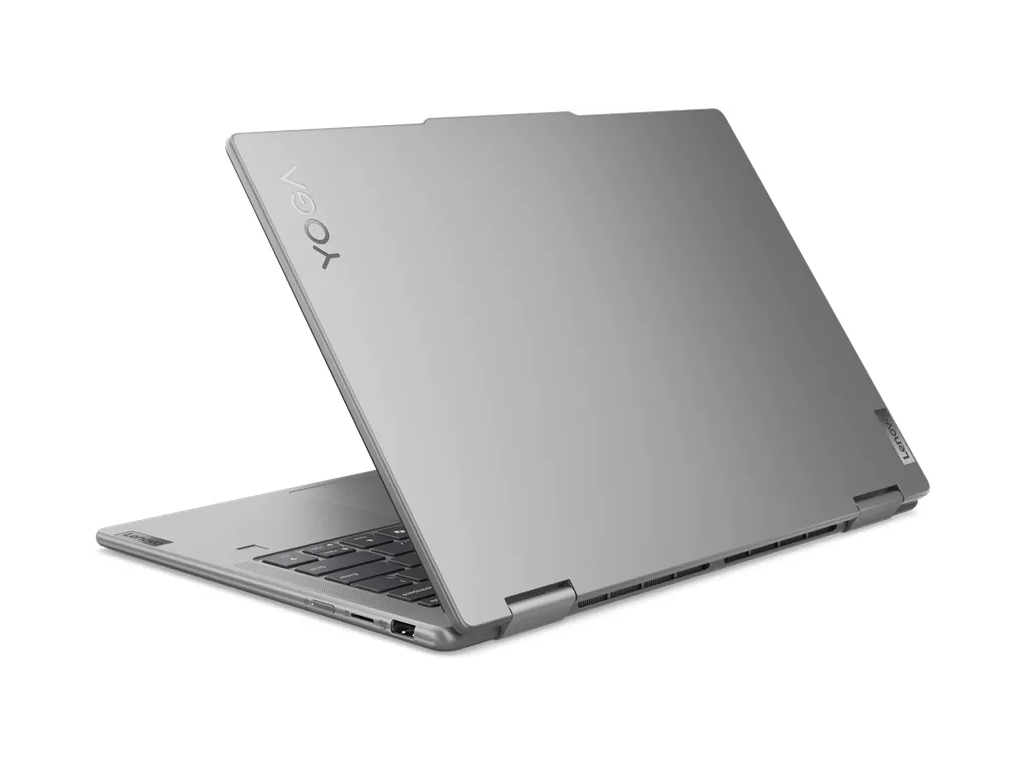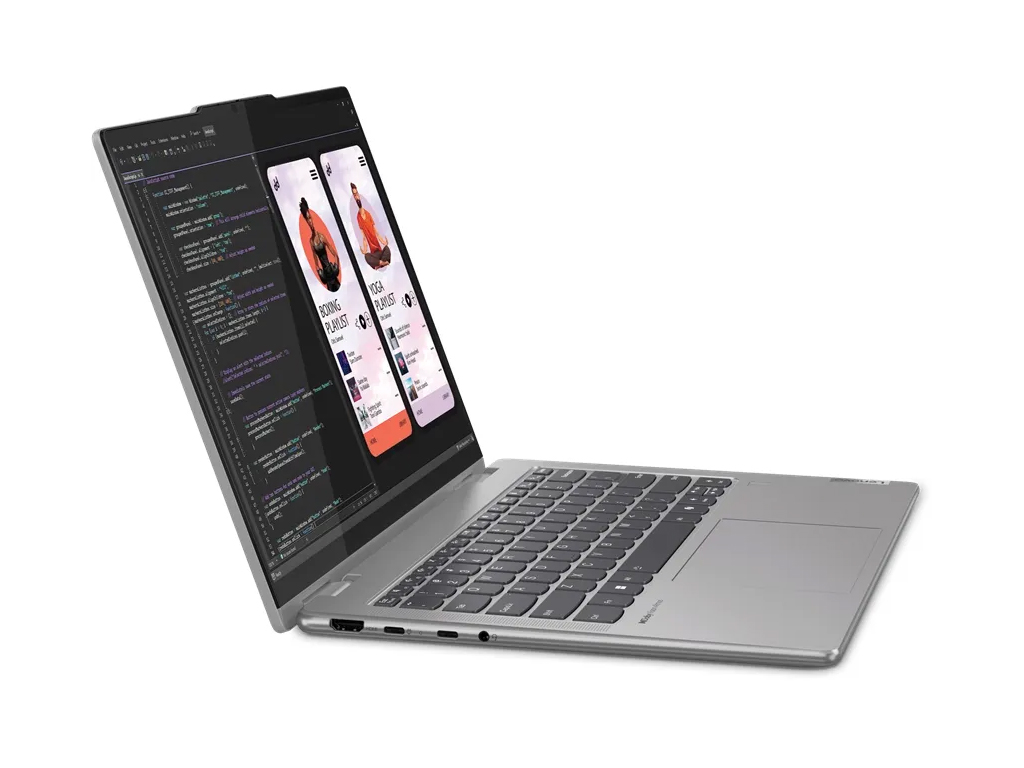




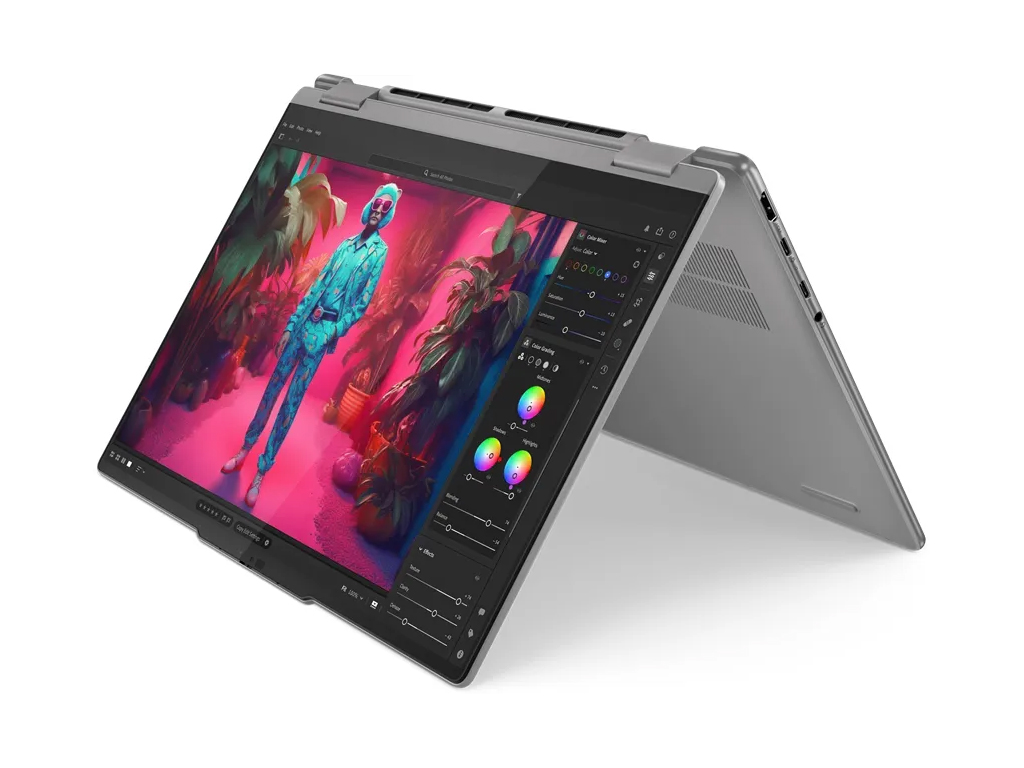
Lenovo Yoga 7 14APH9
Ausstattung / Datenblatt
Primary Camera: 2 MPix
Preisvergleich
Durchschnitt von 1 Bewertungen (aus 5 Tests)
Testberichte für das Lenovo Yoga 7 14APH9
Quelle: Laptop Media

Support, online verfügbar, Sehr kurz, Datum: 18.06.2024
Quelle: Digital Trends
EN→DEI liked the Yoga 7 14 Gen 9 quite a bit throughout most of this review. Its performance and battery life are fine for anyone with less money to spend, and in fact, the Yoga is faster and longer-lasting than many laptops that cost a lot more. It’s also well-built and has a very good keyboard. The one weakness, poor display colors, might not matter to most productivity users. The display isn’t bad, exactly — it’s just not as good as some others. But overall, the Yoga 7 14 Gen 9 is relatively easy to recommend at $699. I just wouldn’t spend any more.
Einzeltest, online verfügbar, Mittel, Datum: 18.06.2024
Bewertung: Gesamt: 70%
Quelle: Laptop Media
EN→DEMost of the things that we said about the Intel-based Yoga 7i 2-in-1 (14″, Gen 9) are also valid for the AMD-powered Yoga 7 2-in-1 Gen 9 (14 AMD). That’s a multipurpose small transformer with snappy hardware and NVMe. Speaking of which, the 1TB SK Hynix HFS001TEJ4X112N SSD may be fast but it also gets toasty during benchmarking, unlike the CPU whose temperature is always within reasonable limits. This reminds us that the processor can maintain decent clocks in short and medium loads but the frequencies drop down below the official base values in longer stress. Aside from that, this small fella always feels fast, especially for normal home or office usage.
Einzeltest, online verfügbar, Sehr Lang, Datum: 18.06.2024
Quelle: Laptop Media
Support, online verfügbar, Sehr kurz, Datum: 18.06.2024
Quelle: Laptopmedia CN
 zh-CN→DE
Positive: Slient system; metal case; good speakers; USB-C charging port; excellent ergonomics; optional Lenovo stylus. Negative: Non-expandable RAM; no Thunderbolt 4 port.
Einzeltest, online verfügbar, Sehr Lang, Datum: 18.06.2024
Kommentar
AMD Radeon 760M: Integrierte Grafikkarte in den Rembrandt Ryzen APUs basierend auf der RDNA 3 Architektur mit 8 CUs (= 512 Shader) und einer Taktrate von bis zu 2.800 MHz.
Diese Klasse ist noch durchaus fähig neueste Spiele flüssig darzustellen, nur nicht mehr mit allen Details und in hohen Auflösungen. Besonders anspruchsvolle Spiele laufen nur in minimalen Detailstufen, wodurch die grafische Qualität oft deutlich leidet. Diese Klasse ist nur noch für Gelegenheitsspieler empfehlenswert. Der Stromverbrauch von modernen Grafikkarten in dieser Klasse ist dafür geringer und erlaubt auch bessere Akkulaufzeiten.
» Weitere Informationen gibt es in unserem Notebook-Grafikkartenvergleich und der Benchmarkliste.
AMD Hawk Point (Zen 4/4c): Refresh of the Phoenix series with higher clocks on the AI engine. Includes Ryzen 8000 and Ryzen 200 parts.
R5 8640HS: High-End-Mobil-6-Kern Prozessor mit 12 Threads. Taktet mit maximal 5 GHz auf einem Kern. Nutzt die Zen 4 Architektur und hat einen konfigurierbaren TDP von 35-54 Watt. Technisch identisch zum Ryzen 7 7640HS, jedoch mit höher getakteten Ryzen AI Engine und dadurch deutlich gesteigerter AI Leistung.» Weitere Infos gibt es in unserem Prozessorvergleich Vergleich mobiler Prozessoren und der Prozessoren Benchmarkliste .
 Als bevorzugte Quelle auf Google hinzufügen