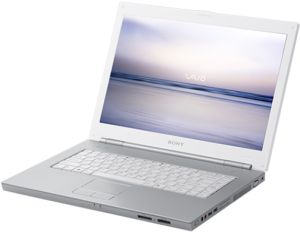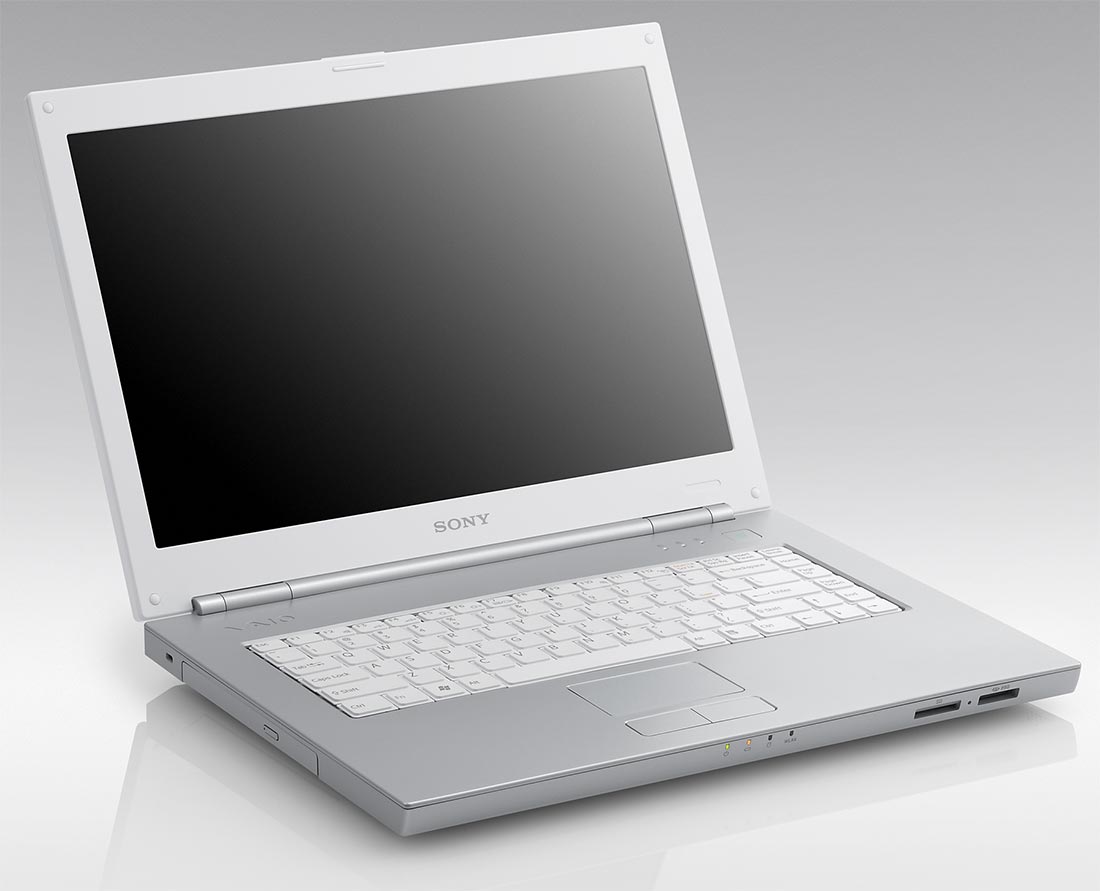




Sony Vaio VGN-N31M
Ausstattung / Datenblatt

Preisvergleich
Durchschnitt von 1 Bewertungen (aus 1 Tests)
Testberichte für das Sony Vaio VGN-N31M
Quelle: Pocket Lint
 EN→DE Archive.org version
We’re great fans of Sony’s ultraportable and high-end notebooks but we’ve never been too taken with the company’s entry-level machines. The main problem is they tend not to live up to the build quality or innovation of the more expensive machines. However, the VAIO VGN-N31M/W may be about to change all that. With a street price of £699 (inc. VAT) this is about right for a mainstream machine capable of handling a wide range of tasks. The look of the notebook is impressive. The white plastic case with silver keyboard is certainly striking and the feel of it when closed is solid and robust. Most of this rigidity is in the lid, which neatly protects the screen. Open the lid up though and you’ll find the body of the machine isn’t quite so solid.
7 von 10, Preis/Leistung gut, Mobilität gut, Ausstattung mäßig, Display schlecht
Einzeltest, online verfügbar, Kurz, Datum: 05.11.2007
Bewertung: Gesamt: 70% Preis: 80% Ausstattung: 60% Bildschirm: 40% Mobilität: 80%
Kommentar
Intel Graphics Media Accelerator (GMA) 950: Integrierter (onboard) Grafikchip auf Mobile Intel 945GM/C/Z/ME/ML Chipsätzen und Nachfolger des GMA 900. Kein Hardware T&L (für manche Spiele benötigt). Für Spiele kaum geeignet.
3D Spiele sind auf diesen Vertretern nur in Ausnahmen spielbar, grundsätzlich sind die Grafiklösungen hierfür jedoch nicht geeignet. Office Programme und Internet surfen dürfte jedoch ohne Problem möglich sein.
» Weitere Informationen gibt es in unserem Notebook-Grafikkartenvergleich und der Benchmarkliste.
Intel Core 2 Duo: Core Duo Nachfolger mit längerer Pipeline und 5-20% Geschwindigkeitszuwachs bei 0.5 - 3 Watt mehr Stromverbrauch.
Der Notebook Core 2 Duo ist baugleich mit den Desktop Core 2 Duo Prozessoren, jedoch werden die Notebook-Prozessoren mit niedrigeren Spannungen und geringerem Frontsidebus Takt betrieben. Von der Leistung bleiben gleichgetaktete Notebooks deswegen (und auch wegen der langsameren Festplatten) 20-25% hinter Desktop PCs.
T5300: Die T-Varianten sind die Standardversion für Notebooks und verbrauchen etwa 30-39 Watt.» Weitere Infos gibt es in unserem Prozessorvergleich Vergleich mobiler Prozessoren und der Prozessoren Benchmarkliste .
 Als bevorzugte Quelle auf Google hinzufügen