

Notebookcheck Logo

Xiaomi Notebook Pro 120G

Ausstattung / Datenblatt
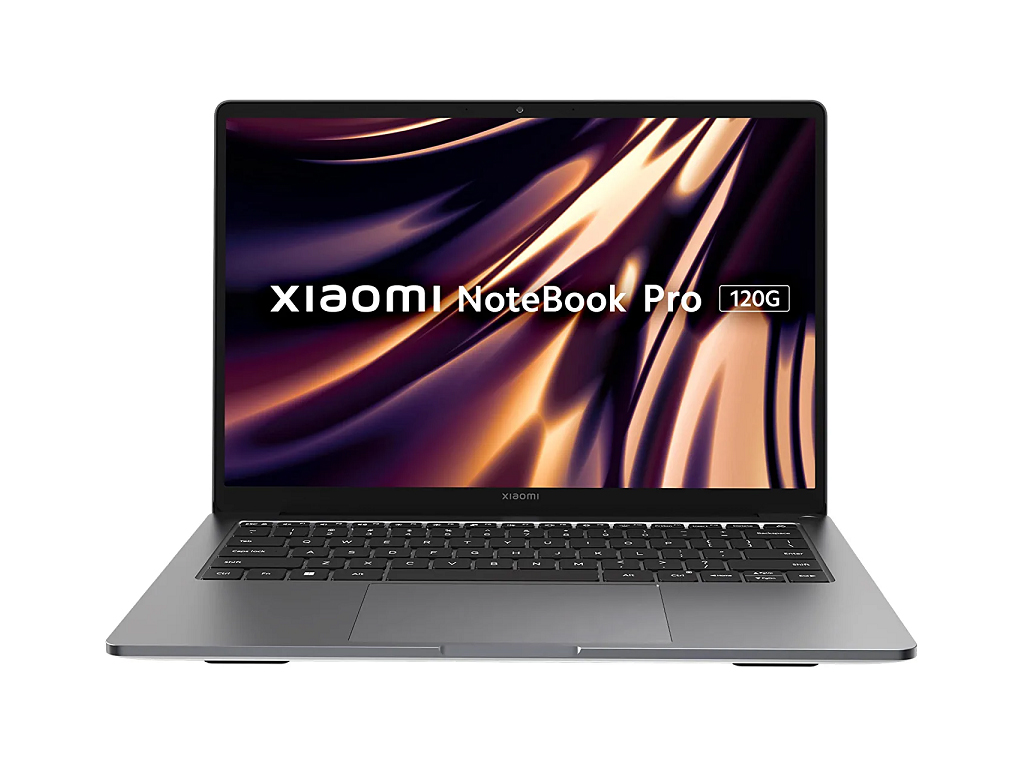
Xiaomi Notebook Pro 120G
Xiaomi Notebook Pro 120G
Prozessor
Intel Core i5-12450H 8c/12t 8 x 1.5 - 4.4 GHz, Alder Lake-H
Grafikkarte
NVIDIA GeForce MX550, Kerntakt: 1320 MHz, GDDR6
RAM
16 GB 
, DDR-5200
Bildschirm
14.00 Zoll 16:10, 2560 x 1600 Pixel 216 PPI, 60 Hz
Massenspeicher
512GB
Anschlüsse
1 USB 3.0 / 3.1 Gen1, 1 USB 3.1 Gen2, 1 Thunderbolt, 1 HDMI, Audio Anschlüsse: 3.5mm
Netzwerk
802.11 a/b/g/n/ac/ax (a/b/g/n = Wi-Fi 4/ac = Wi-Fi 5/ax = Wi-Fi 6/), Bluetooth 5.2
Abmessungen
Höhe x Breite x Tiefe (in mm): 15.9 x 315.6 x 220.4
Akku
56 Wh
Betriebssystem
Microsoft Windows 11 Home
Kamera
Webcam: HD 720p
Sonstiges
Lautsprecher: Stereo, Tastatur: Chiclet, Tastatur-Beleuchtung: ja
Gewicht
1.4 kg


Preisvergleich

Bewertung: 70% - Befriedigend
Durchschnitt von 2 Bewertungen (aus 2 Tests)
Preis: 70%, Leistung: 80%, Ausstattung: - %, Bildschirm: 80% Mobilität: 70%, Gehäuse: 80%, Ergonomie: - %, Emissionen: - %

Testberichte für das Xiaomi Notebook Pro 120G

70% Xiaomi Notebook Pro 120G Review: All About That Display
Quelle: NDTV Gadgets Englisch EN→DE Archive.org version
The Xiaomi Notebook Pro 120G seems better suited for work than entertainment, and for those who just want a compact PC at home or in the office, not a laptop to use on the go. There are a lot of compelling bullet points on its product listing, most notably the high-res, high-refresh-rate, 16:10 display. Xiaomi has chosen well in terms of core hardware too. However, actual usage revealed a few weak spots – the keyboard, trackpad, port selection, fan noise, and battery life. These might not seem like huge deals, but if you aren't satisfied with even one of these things, long-term usage can become frustrating. Priced at Rs. 76,999, this version of the Xiaomi Notebook Pro 120G is not as easy to recommend as its predecessors. You could get a competent gaming laptop, or a much lighter ultraportable, or a 2-in-1 with a touchscreen for the same amount. The MacBook Air (M1) is also available for not too much more. Any potential buyer will have to consider whether they want the very specific combination of features and the performance that the Notebook Pro 120G offers.
Einzeltest, online verfügbar, Mittel, Datum: 11.11.2022
Bewertung: Gesamt: 70% Preis: 70% Leistung: 80% Bildschirm: 80% Mobilität: 70% Gehäuse: 80%
70% Xiaomi Notebook Pro 120G review: a well-built all-rounder
Quelle: 91mobiles Englisch EN→DE Archive.org version
The Xiaomi Notebook Pro 120G is priced at Rs 74,999, and for its asking price, brings quite a bit to the table. It has a few niggles like thermal management and screen brightness as well, but on the positive side, stands out in many other aspects. Its classy design, good colour reproduction, ergonomic keyboard, decent performance and 100W charging are some of the advantages. The laptop works well as a daily workhorse for office and college use, and the dedicated Nvidia MX 550 graphics combined with the 120Hz, colour-accurate screen lend it some cred as a laptop that can serve up basic gaming, colour correction and light editing work as well. The Notebook Pro 120 model that bears the same specs except for the dedicated graphics is cheaper by Rs 5k, but I think that difference is marginal at this price range, so the 120G does come across as a compelling option.
Einzeltest, online verfügbar, Kurz, Datum: 28.09.2022
Bewertung: Gesamt: 70%

Kommentar

NVIDIA GeForce MX550: Dedizierte Grafikkarte der Einstiegsklasse welche auf den TU117 basiert und GDDR6 Grafikspeicher

Diese Klasse ist noch durchaus fähig neueste Spiele flüssig darzustellen, nur nicht mehr mit allen Details und in hohen Auflösungen. Besonders anspruchsvolle Spiele laufen nur in minimalen Detailstufen, wodurch die grafische Qualität oft deutlich leidet. Diese Klasse ist nur noch für Gelegenheitsspieler empfehlenswert. Der Stromverbrauch von modernen Grafikkarten in dieser Klasse ist dafür geringer und erlaubt auch bessere Akkulaufzeiten.

» Weitere Informationen gibt es in unserem Notebook-Grafikkartenvergleich und der Benchmarkliste.


i5-12450H: Auf der Alder-Lake-Architektur basierender High-End Mobilprozessor. Bietet 4 Performance-Kerne und 4 Effizienzkerne und kann 12 Threads gleichzeitig bearbeiten. Der maximale Turbo-Takt der P-Kerne beträgt 4,4 GHz. » Weitere Infos gibt es in unserem Prozessorvergleich Vergleich mobiler Prozessoren und der Prozessoren Benchmarkliste .


Google LogoAls bevorzugte Quelle auf Google hinzufügen
Mail Logo

Ähnliche Geräte mit den selben Spezifikationen

Geräte eines anderen Herstellers und/oder mit einer anderen CPU

HP Pavilion Plus 14-eh0754ng
GeForce MX550, Alder Lake-M i5-1235U

Geräte mit der selben Grafikkarte

Acer Aspire 5 A515-57G-57CW
GeForce MX550, Alder Lake-M i5-1235U, 15.60", 1.76 kg
Acer Aspire 5 A515-57G-74D3
GeForce MX550, Alder Lake-M i7-1255U, 15.60", 1.76 kg
HP 15-dw4020nu
GeForce MX550, Alder Lake-M i7-1255U, 15.60", 1.78 kg
Dell Latitude 15 5531, i5-12600H MX550
GeForce MX550, Alder Lake-P i5-12600H, 15.60", 1.79 kg

Geräte mit der selben Bildschirmgröße und/oder ähnlichem Gewicht

Xiaomi RedmiBook Pro 16 2024
Arc 8-Core, Meteor Lake-H Ultra 7 155H, 16.00", 1.867 kg

Laptops des selben Herstellers

Xiaomi Poco X8 Power Tests und Spezifikationen
Adreno 812, Snapdragon 6 SD 6 Gen 5, 6.83", 0.229 kg
Xiaomi Poco M8x: Tests und Spezifikationen
Adreno 629, Snapdragon 4 SD 4 Gen 5, 6.90", 0.232 kg
Xiaomi Poco X8 Tests und Spezifikationen
Adreno 710, Snapdragon 6 SD 6s Gen 4, 6.83", 0.223 kg
Xiaomi Poco F9 Pro – Tests und Spezifikationen
Adreno 840 V Series, Snapdragon 8 SD 8 Elite Gen 5 V Series, 6.59", 0.206 kg
Xiaomi Poco F9 Ultra – Tests und Spezifikationen
Adreno 840, Snapdragon 8 SD 8 Elite Gen 5, 6.90", 0.235 kg
Xiaomi Redmi 17 4G – Tests und Spezifikationen
Mali-G52 MP2, unknown, 6.90", 0.232 kg
Xiaomi Poco M8 Power – Tests und Spezifikationen
Adreno 613, Snapdragon 4 SD 4 Gen 4, 6.99", 0.225 kg
Xiaomi Redmi K100 Pro Max: Tests und Spezifikationen
Adreno 840, Snapdragon 8 SD 8 Elite Gen 5, 6.90", 0.238 kg
Xiaomi Redmi K100 Pro Tests und Spezifikationen
Adreno 840, Snapdragon 8 SD 8 Elite Gen 5, 6.59", 0.218 kg
Xiaomi Redmi 17 5G – Tests und Spezifikationen
Adreno 629, Snapdragon 4 SD 4 Gen 5, 6.90", 0.232 kg
Xiaomi Poco M8s Tests und Spezifikationen
Adreno 619, Snapdragon 6 SD 6s Gen 3, 6.90", 0.217 kg
Xiaomi Redmi A7 Tests und Spezifikationen
Mali-G57 MP1, T7250 (T615), 6.88", 0.193 kg
Xiaomi Redmi 17C: Tests und Spezifikationen
Mali-G52 MP2, Mediatek Helio G Helio G81 Ultra, 6.88", 0.206 kg
Xiaomi Redmi K90 Ultra – Tests und Spezifikationen
Adreno 830, Snapdragon 8 SD 8 Elite, 6.83", 0.227 kg
Xiaomi Redmi Turbo 5 Max Tests und Spezifikationen
Immortalis-G925 MC11, Dimensity 9000 Dimensity 9500s, 6.83", 0.219 kg
Xiaomi Redmi A3x Tests und Spezifikationen
GE8322 / IMG8322, unknown, 6.71", 0.193 kg
Xiaomi Redmi Note 17 Pro Max 5G – Tests und Spezifikationen
Adreno 812, Snapdragon 6 SD 6 Gen 5, 6.83", 0.225 kg
Xiaomi Redmi Note 17 Pro 5G – Tests und Spezifikationen
Adreno 710, Snapdragon 6 SD 6s Gen 4, 6.83", 0.223 kg
Xiaomi Redmi Note 17 5G: Tests und Spezifikationen
Adreno 613, Snapdragon 4 SD 4 Gen 4, 6.99", 0.225 kg
Xiaomi Redmi Note 17 – Tests und Spezifikationen
Adreno 610, Snapdragon SD 6s 4G Gen 2, 6.99", 0.224 kg
Xiaomi 18 Fold: Tests und Spezifikationen
ARM Mali G2-Ultra NX MP16, Xring Xiaomi Xring O3, 7.58", 0.219 kg
Xiaomi RedmiBook Pro 14 2026
Arc B390 Panther Lake iGPU, Panther Lake Ultra X7 358H, 14.00", 1.48 kg
Preisvergleich
Xiaomi Notebook Pro 120G
> Notebook Test, Laptop Test und News > Externe Tests > Xiaomi Notebook Pro 120G
Autor: Stefan Hinum (Update:  2.01.2023)