




Xiaomi Poco M8 5G
Pro
Contra
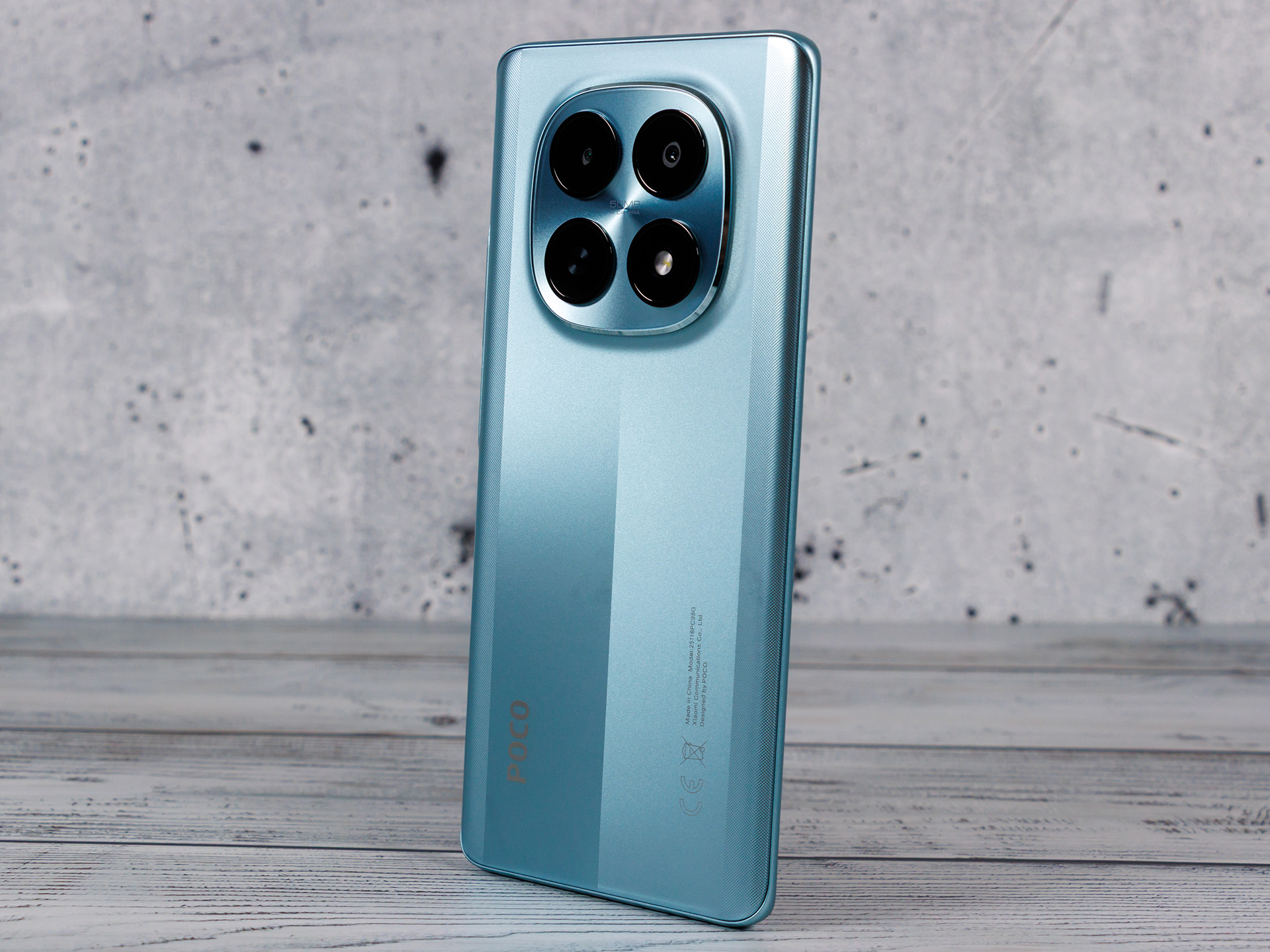
Das Xiaomi Poco M8 5G ist ein erschwingliches Allround-Gerät, das sich an Alltagsnutzer richtet. Sein 6,77-Zoll-AMOLED-Display mit 120 Hz ist hell, flüssig und optisch beeindruckend. Der Snapdragon 6 Gen 3 bietet zuverlässige Leistung im Alltag, auch wenn anspruchsvolle Gamer möglicherweise schnellere Alternativen bevorzugen. Ein 5520-mAh-Akku, 45-W-Ladefunktion und bis zu 512 GB erweiterbarer Speicher unterstreichen seine praktische Attraktivität. Kritiker bemängeln das einfache Kamerasystem, das Fehlen eines Ultraweitwinkelobjektivs und überflüssige Software. Insgesamt machen sein hochwertiges Erscheinungsbild, die langfristige Update-Politik und die ausgewogene Ausstattung es zu einem wettbewerbsfähigen 5G-Smartphone der unteren Preisklasse.
Ausstattung / Datenblatt
Secondary Camera: 20 MPix f/2.2, 1/4" sensor size, video recording up to 1080p@30fps
Preisvergleich
Durchschnitt von 17 Bewertungen (aus 33 Tests)
Testberichte für das Xiaomi Poco M8 5G
Helles Display, gute Akkulaufzeiten und solide Ausstattung: Das Xiaomi Poco M8 5G macht eigentlich alles richtig. Eigentlich, wäre da nicht die lästige Konkurrenz. Gegen die zieht das Poco-Phone nämlich oftmals einfach den Kürzeren. Zu allem Überfluss kannibalisiert sich Xiaomi auch noch selbst, denn das baugleiche Smartphone bekommt man aktuell unter anderem Namen mindestens genauso günstig.
Quelle: Smartzone

Das Poco M8 5G ist ein leicht abgespecktes Redmi Note 15 5G (zum Test), bietet dafür aber mindestens 8GB RAM und 256GB Festspeicher. Im Gegenzug verzichtet ihr auf die gute 108-Megapixel-Kamera mit OIS und die Ultraweitwinkelkamera. Doch auch die Hauptkamera des Poco M8 ist gar nicht so schlecht. Das Fazit des technischen Bruders gilt somit uneingeschränkt auch für dieses Smartphone. Sind eure Ansprüche an die Kamera nicht allzu hoch, ist das Poco M8 für rund 180€ die Empfehlung – ihr erhaltet dafür eine bessere Speicherausstattung. Insbesondere die lange Laufzeit und das grandiose Display überzeugen. Lediglich die Werbung in HyperOS 2 nervt. Hier ist ein wenig Arbeit gefragt, damit alle Vorzüge des Systems zum Tragen kommen. Wirkliche Alternativen sind rar, mit dem Motorola Edge 60 Fusion (zum Test) oder dem Realme P3 (zum Test) aber vorhanden. Das populäre Samsung Galaxy A17 5G (zum Test) liegt nicht auf Augenhöhe mit dem Poco M8 5G.
Einzeltest, online verfügbar, Mittel, Datum: 03.02.2026
Bewertung: Gesamt: 90% Leistung: 85% Bildschirm: 100% Mobilität: 90% Gehäuse: 90%
Ausländische Testberichte
Quelle: Android Headlines
 EN→DE
EN→DEThe Poco M8 5G is a device that chooses to spend its budget on things you can see and feel. The decision to include a deeply curved AMOLED display on a standard model is a bold one that gives the phone a flagship “vibe.” The performance is reliable, the battery life is good thanks to the 5,520mAh cell, and the 45W charging ensures you aren’t tied to a wall for too long. While the aggressive screen curvature might not suit everyone and the lack of an ultra-wide camera is a missed opportunity, these are trade-offs that many will be happy to make in exchange for the premium look and the massive storage capacity. However, just like in the “Pro” version, the device’s aggressive price point also translates into a heavy presence of bloatware or “app recommendation” services. These can be uninstalled/disabled in most cases, but you should be aware that they are there.
Einzeltest, online verfügbar, Lang, Datum: 07.04.2026
Bewertung: Gesamt: 80%
Quelle: Android Headlines
EN→DEThe Poco M8 5G is a device that chooses to spend its budget on things you can see and feel. The decision to include a deeply curved AMOLED display on a standard model is a bold one that gives the phone a flagship “vibe.” The performance is reliable, the battery life is good thanks to the 5,520mAh cell, and the 45W charging ensures you aren’t tied to a wall for too long. While the aggressive screen curvature might not suit everyone and the lack of an ultra-wide camera is a missed opportunity, these are trade-offs that many will be happy to make in exchange for the premium look and the massive storage capacity. However, just like in the “Pro” version, the device’s aggressive price point also translates into a heavy presence of bloatware or “app recommendation” services. These can be uninstalled/disabled in most cases, but you should be aware that they are there.
Einzeltest, online verfügbar, Lang, Datum: 07.04.2026
Bewertung: Gesamt: 80%
Quelle: Techlusive
EN→DEAfter spending a month with Poco M8 5G, one thing is clear — it rarely tries to grab attention with a particular segment of users. Instead, it is reliably a simple device for those who want a decent performance, an AMOLED display for a binge-watching experience, and an excellent battery life. Something that most people really need in daily life. At the same time, the phone makes a few compromises. The cameras are average, and the software includes too much bloatware out of the box. But if you’re looking for a balanced, no-nonsense 5G phone under Rs 20,000 that handles everyday tasks smoothly, the Poco M8 5G is still a sensible option. It may not be the most exciting phone in its category, but sometimes, being consistent is enough.
Einzeltest, online verfügbar, Mittel, Datum: 09.03.2026
Quelle: GSM Arena
EN→DEThe Poco M8 is exactly what it sets out to be: a straightforward, no-nonsense budget all-rounder that focuses on delivering solid fundamentals at an aggressive price. It doesn't try to reinvent Xiaomi's formula, but it executes it well. You get a bright AMOLED display, dependable everyday performance, good thermals, long software support and respectable battery endurance, all wrapped in a durable and reasonably well-built package.
Einzeltest, online verfügbar, Sehr Lang, Datum: 22.02.2026
Bewertung: Gesamt: 76%
Quelle: The Indian Express
EN→DEThe Poco M8 5G is made for consistency, offering a sleek phone, big screen, and smooth display, with a strong battery life and long-term software support. For someone seeking a no-frills 5G phone for Rs 20,000 or lower with ease of use rather than innovation, the Poco M8 5G can be a good choice. The Poco M8 5G succeeds at being consistent with its performance, basic needs, and expectations at the lowest cost. Despite the lacklustre cameras and the older generation software, as well as bloatware, the Poco M8 5G could be ideal for students, first-timers, and casual users.
Einzeltest, online verfügbar, Kurz, Datum: 11.02.2026
Bewertung: Gesamt: 90%
Quelle: Exhibit.tech
EN→DEThe Poco M8 is a solid mid-budget phone priced from ₹18,999, known for its design, display quality, and battery life. It offers good value with long software support but is limited by average gaming performance and a basic camera system. While it doesn’t outperform competitors like the Realme P4x or Moto G96 in power or photography, its slim build and bright AMOLED screen are appealing. It’s great for calls, media, and light use, but those with specialized needs may want to consider other options.
Einzeltest, online verfügbar, Sehr kurz, Datum: 28.01.2026
Quelle: Tech PP
EN→DEThe Poco M8 5G’s biggest strength is its price tag. At under Rs 20,000, it is a wallet- friendly option for anyone seeking a premium-looking smartphone with a beautiful display and dependable performance. There might be other phones with slightly faster processors and marginally better cameras, but not all of them tick every performance box the way the Poco M8 does at its price. It might not be as edgy and made of as much fun as some of its siblings, but the Poco M8 brings a lot of everyday task expertise at a price that is below Rs 20,000, and looks that seem way more expensive than that. That’s one powerful combo.
Einzeltest, online verfügbar, Mittel, Datum: 28.01.2026
Bewertung: Gesamt: 78% Preis: 80% Leistung: 80% Gehäuse: 100%
Quelle: Think Digit
EN→DEThe Poco M8 makes a strong case for itself under Rs 20,000. If you want a phone that looks good, feels premium in hand, offers a gorgeous AMOLED display, delivers solid battery life, and comes with long-term software support, this is one of the better packages in the segment. It is not meant for hardcore gamers or camera-focused buyers. Gaming is stable but limited, and the camera system is competent rather than exceptional. But as a balanced everyday smartphone, the Poco M8 delivers where it matters most. If design, display, and battery life matter more to you than peak gaming power, the Poco M8 is worth considering.
Einzeltest, online verfügbar, Kurz, Datum: 22.01.2026
Quelle: 91mobiles
EN→DEThe POCO M8 is not the only smartphone to receive a price hike. All the recent smartphones have, and upcoming launches are expected to follow the same trend. That said, POCO has justified the higher price as much as possible by offering a more premium design, an enhanced display experience, a larger battery, and improved performance over its predecessor. However, when stacked against its rivals, the POCO M8 may fall short for gamers and camera enthusiasts.
Einzeltest, online verfügbar, Kurz, Datum: 19.01.2026
Bewertung: Gesamt: 81%
Quelle: NDTV Gadgets
EN→DEThe Poco M8 5G is a well-rounded smartphone, which is more about delivering on the basics than on some fancy features. It brings quite an upgrade in terms of design, a large and colourful AMOLED display, decent performance, and lasting battery life. The promise of long-term software support further adds to its appeal. If you are looking at an inoffensive, no-nonsense 5G phone under Rs. 20,000 that performs consistently in daily use, the Poco M8 5G is a good option to consider.
Einzeltest, online verfügbar, Mittel, Datum: 12.01.2026
Bewertung: Gesamt: 80% Preis: 80% Leistung: 80% Bildschirm: 80% Mobilität: 80% Gehäuse: 90%
Quelle: India Today
EN→DEWhile the Poco M8 5G still has M in its name, it caters to a completely different segment than its predecessor. Like its Redmi sibling (Redmi Note 15), the M8 gives you a balanced package. The device gets a good, curved display, a sleek design and decent battery life. Performance may not be the best, but for the price, it does the job. Though the camera setup does leave you wanting for more. For anyone who wants a solid all-around choice, the Poco M8 5G is a solid pick, especially at a starting price of Rs 18,999. However, if cameras or performance are your top priority, you may want to look at other options.
Einzeltest, online verfügbar, Kurz, Datum: 12.01.2026
Bewertung: Gesamt: 80%
Quelle: OI Spice Tech News
EN→DEThe Poco M8 5G launched on January 8, 2026 and targets buyers who want modern performance and a premium screen experience at a budget price. The phone feels slim at 7.4mm and comes in at 178g, making it light for a 5G device. It has a sturdy build with IP66 and IP65 water and dust resistance depending on region, and it even claims drop resistance up to 1.7m. The front uses a large 6.77-inch AMOLED panel with 120Hz refresh rate, HDR, 68B colors and 3840Hz PWM dimming. It reaches 800 nits typical and up to 3200 nits peak brightness, and the 1080 × 2392 resolution with ~388ppi gives sharp detail for video, social media and gaming.
Einzeltest, online verfügbar, Sehr kurz, Datum: 10.01.2026
Quelle: Tech Spurt
Reviewing Xiaomi's POCO M8 Pro 5G after several days of using as my full-time phone, including camera testing, gaming on Wuthering Waves and battery life impressions. The POCO M8 Pro could be an early contender for best budget smartphone of 2026. But how does it compare vs the M8 and is it worth the upgrade? You'll find quite a few improvements here, over the previous M7 Pro and also the regular phone. The POCO M8 Pro camera setup sports a large Light Fusion sensor, for upgraded low light photography, as well as an ultra-wide shooter if you want an alternative view. Battery capacity is also much bigger, complete with fast charge support - for excellent life and quick recharging. The POCO M8 Pro runs the same Xiaomi HyperOS software of course, still on version 2.
Vergleich, online verfügbar, Sehr Lang, Datum: 08.01.2026
Quelle: The Tech Chap
Vergleich, online verfügbar, Lang, Datum: 08.01.2026
Quelle: NDTV Gadgets
EN→DEBased on our first impressions, the Poco M8 5G seems to be a thoughtfully planned successor to the disappointing M7 5G. On paper, there are indications that the phone is designed to address the needs of regular usage. But will it deliver on everything it claims to offer? Stay tuned for our full Poco M8 5G review, which drops on January 12, to find out.
Einzeltest, online verfügbar, Sehr kurz, Datum: 08.01.2026
Quelle: Yugatech
EN→DETo sum up, the POCO M8 clearly indicates that the M Series has not only been about attracting price-sensitive customers but also providing a high-quality, well-rounded experience. The moment the phone is in your hand, the ultra-slim, 3D-curved design takes over your attention. The 7.35mm thickness and 178g weight make it the most comfortable and stylish phone in the POCO lineup, giving it a premium aura in comparison with its predecessors. The experience is further escalated up to the next level by the vibrant display, smooth 5G performance, and decent battery life being the combination of these three factors.
Einzeltest, online verfügbar, Mittel, Datum: 08.01.2026
Quelle: Profesional Review
 ES→DE
ES→DEEinzeltest, online verfügbar, Sehr Lang, Datum: 15.06.2026
Bewertung: Gesamt: 84% Preis: 92% Leistung: 79% Mobilität: 93% Gehäuse: 83%
Quelle: Tudo Celular
 PT→DE
PT→DEEinzeltest, online verfügbar, Kurz, Datum: 18.06.2026
Bewertung: Gesamt: 70% Preis: 60%
Quelle: 4G News
PT→DEEinzeltest, online verfügbar, Mittel, Datum: 23.03.2026
Bewertung: Gesamt: 70%
Quelle: Ceotech
 IT→DE
IT→DEEinzeltest, online verfügbar, Sehr kurz, Datum: 08.03.2026
Quelle: Mister Gadget
IT→DEEinzeltest, online verfügbar, Kurz, Datum: 08.01.2026
Bewertung: Gesamt: 80%
Quelle: Diskidee.nl
 NL→DE
NL→DEEinzeltest, online verfügbar, Kurz, Datum: 27.02.2026
Bewertung: Gesamt: 50%
Quelle: GSM Maniak
 PL→DE
PL→DEEinzeltest, online verfügbar, Sehr kurz, Datum: 31.01.2026
Bewertung: Gesamt: 78% Leistung: 60% Bildschirm: 70% Mobilität: 80%
Quelle: Co Nowego
PL→DEEinzeltest, online verfügbar, Kurz, Datum: 20.01.2026
Quelle: MobilArena HU
 HU→DE
HU→DEEinzeltest, online verfügbar, Lang, Datum: 02.02.2026
Bewertung: Preis: 70% Leistung: 90% Mobilität: 90% Gehäuse: 80%
Quelle: FPT shop
 VN→DE
VN→DEEinzeltest, online verfügbar, Kurz, Datum: 29.07.2026
Quelle: Genk
VN→DEVergleich, online verfügbar, Sehr kurz, Datum: 25.01.2026
Quelle: Genk
VN→DEVergleich, online verfügbar, Kurz, Datum: 25.01.2026
Quelle: M3 PC för alla
 SV→DE
SV→DEEinzeltest, online verfügbar, Sehr kurz, Datum: 02.02.2026
Bewertung: Gesamt: 70%
Quelle: Mobile-com JP
 JA→DE
JA→DEEinzeltest, online verfügbar, Sehr Lang, Datum: 24.02.2026
Bewertung: Leistung: 60% Bildschirm: 80% Mobilität: 80% Gehäuse: 80%
Kommentar
Qualcomm Adreno 710: Grafikchip für Smartphones und Tablets, integriert im Qualcomm Snapdragon 7s Gen 2 SoC. Laut Qualcomm um 2x schneller als die alte Adreno 644 im Snapdragon 7 Gen 1.
Einige nicht anspruchsvolle aktuelle Spiele können mit geringen Details noch flüssig gespielt werden. Für Office und Video natürlich ausreichende Leistungsreserven.
» Weitere Informationen gibt es in unserem Notebook-Grafikkartenvergleich und der Benchmarkliste.
SD 6 Gen 1: Mittelklasse SoC mit 8 Kryo Kernen (4x ARM Cortex A78 2,4 GHz Performance-Cluster, 4x ARM Cortex A55 mit 1,8 Effizienz-Cluster) und einem 5G Modem (bis zu 2900 Mbps Download). Der Chip wird im modernen 4nm Prozess gefertigt.» Weitere Infos gibt es in unserem Prozessorvergleich Vergleich mobiler Prozessoren und der Prozessoren Benchmarkliste .
Ähnliche Geräte mit den selben Spezifikationen
Geräte anderer Hersteller
Geräte eines anderen Herstellers und/oder mit einer anderen CPU
Geräte mit der selben Grafikkarte
Geräte mit der selben Bildschirmgröße und/oder ähnlichem Gewicht
 Als bevorzugte Quelle auf Google hinzufügen


