




Xiaomi Poco M8 Pro 5G
Pro
Contra
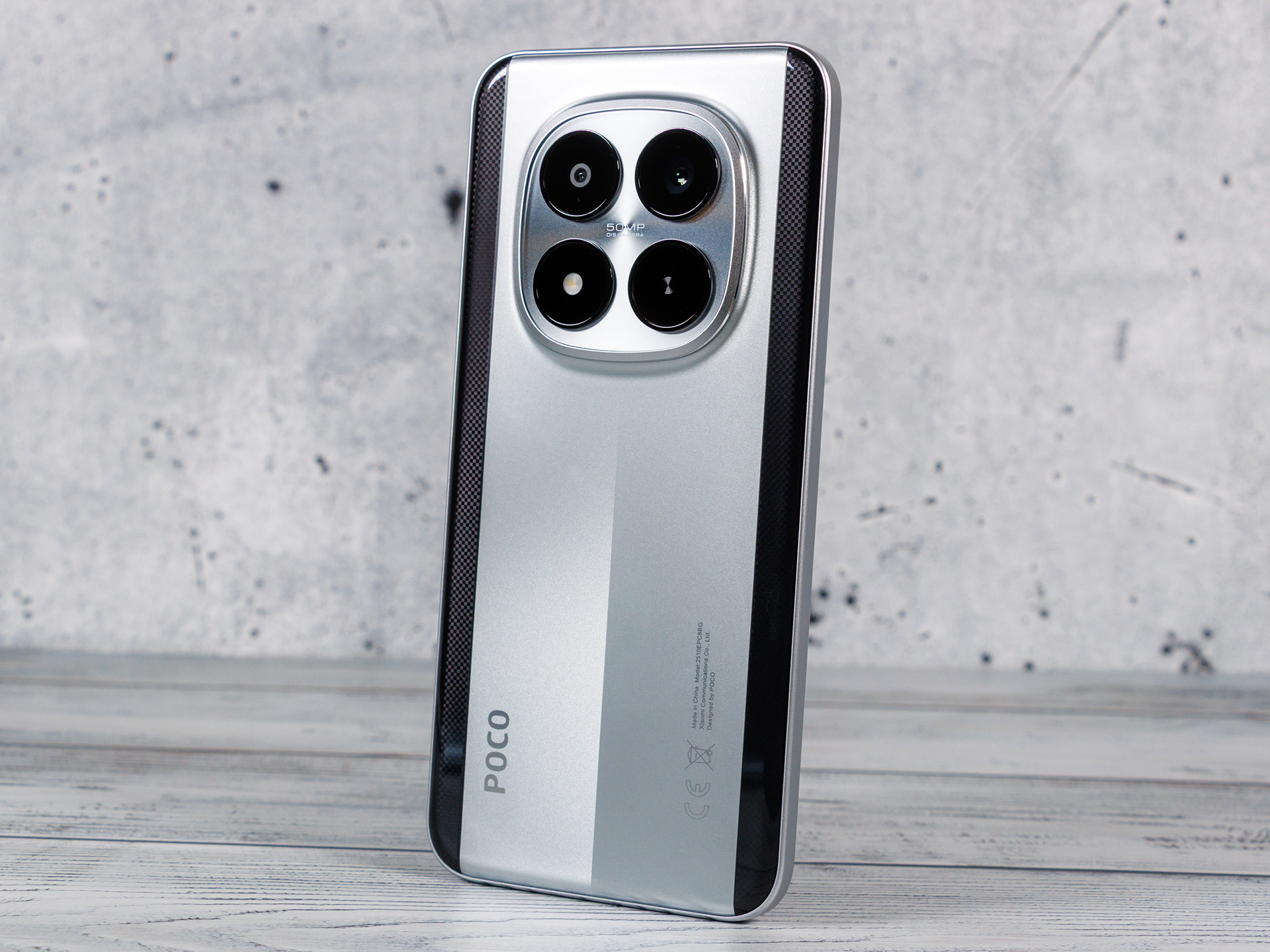
Das Xiaomi Poco M8 Pro 5G ist ein preiswertes Mittelklasse-Smartphone, das mit dem Snapdragon 7s Gen 4 und 12 GB RAM ausgestattet ist. Sein 6,83-Zoll-AMOLED-Display mit 120 Hz bietet hohe Helligkeit, scharfe Auflösung und umfassende HDR-Unterstützung. Ein 6500-mAh-Akku sorgt für eine hervorragende Laufzeit, während das 100-W-Laden ein schnelles Aufladen ermöglicht. Die stabilisierte 50-MP-Hauptkamera liefert zuverlässige Alltagsfotos, während die Sekundärkamera weniger überzeugt. Die Schutzklasse IP66/IP68, Wi-Fi 6E, 5G, Stereolautsprecher und langfristiger Software-Support runden das Gesamtpaket ab. In Testberichten werden das Display, der Akku und der Preis gelobt, während die HyperOS-Werbung, Bloatware und die mäßige Leistung bei anspruchsvollen Spielen kritisiert werden.
Ausstattung / Datenblatt
Secondary Camera: 32 MPix f/2.2, 1/3.6" sensor size, video recording up to 1080p@60fps
Preisvergleich
Durchschnitt von 26 Bewertungen (aus 48 Tests)
Testberichte für das Xiaomi Poco M8 Pro 5G
Mit dem Poco M8 Pro 5G mischt Xiaomi die Konkurrenz auf. Das Mittelklasse-Smartphone ist vor allem bei Display und Akku stark, vernachlässigt dabei aber nicht die übrige Ausstattung. Mit der Offline Communication besitzt es sogar ein echtes Alleinstellungsmerkmal.
Quelle: Allround-PC.com

Das Poco M8 Pro 5G ist ein sehr gutes Beispiel dafür, wie viel Technik man heute für rund 300 Euro bekommen kann. Es sticht mit Features hervor, die normalerweise der Oberklasse vorbehalten sind, leistet sich aber auch Poco-typische Patzer. Das 120 Hz OLED-Display ist in dieser Preisklasse eine Wucht: Hell, scharf und dank Gorilla Glass Victus 2 sehr gut geschützt.
Einzeltest, online verfügbar, Kurz, Datum: 29.07.2026
Bewertung: Gesamt: 80%
Quelle: Chip.de
Das Xiaomi Poco M8 Pro bietet in unserem Test für wenig Geld eine überraschend starke Ausstattung. Besonders das scharfe und helle OLED-Display mit flüssiger Darstellung überzeugt. Der Prozessor liefert genügend Leistung für den Alltag, während der große Akku mit über 20 Stunden Laufzeit glänzt.
Einzeltest, online verfügbar, Kurz, Datum: 22.07.2026
Bewertung: Gesamt: 92% Preis: 100% Leistung: 82% Bildschirm: 99% Mobilität: 97%
Quelle: Computerbild
Wenn man sich gleich an die Spitze in seiner Preisklasse schiebt, kann man wohl nur von einem gelungenen Auftritt sprechen. Für das Poco M8 Pro 5G sprechen sein tolles, superhelles Display und der riesige Akku, der nicht auf die Figur schlägt. Im Test entpuppt sich das Android-Smartphone als technischer Zwilling des Redmi Note 15 Pro+ 5G zum Angebotspreis – aber im Detail gibt es dann doch Unterschiede, die für den einen oder anderen entscheidend sein können: Nur wer auf Xiaomis KI App Boost, die 200-MP-Kamera, eSIM und die vegane Lederrückseite des Redmi verzichtet und sich mit der 50 MP-Hauptkamera begnügt, kann richtig sparen, zumal das erste Aufeinandertreffen der beiden Kameras keine signifikanten Vorteile im Sichttest bei Standardfotos ergeben hat. Das Poco M8 Pro schiebt sich unter die Ausdauer-Top-5 und kürt sich zum besten Handy unter 300 Euro.
Einzeltest, online verfügbar, Mittel, Datum: 12.05.2026
Bewertung: Gesamt: 94%
Quelle: Computerbild
Wenn man sich gleich an die Spitze in seiner Preisklasse schiebt, kann man wohl nur von einem gelungenen Auftritt sprechen. Für das Poco M8 Pro 5G sprechen sein tolles, superhelles Display und der riesige Akku, der nicht auf die Figur schlägt. Im Test entpuppt sich das Android-Smartphone als technischer Zwilling des Redmi Note 15 Pro+ 5G zum Angebotspreis – aber im Detail gibt es dann doch Unterschiede, die für den einen oder anderen entscheidend sein können: Nur wer auf Xiaomis KI App Boost, die 200-MP-Kamera, eSIM und die vegane Lederrückseite des Redmi verzichtet und sich mit der 50 MP-Hauptkamera begnügt, kann richtig sparen, zumal das erste Aufeinandertreffen der beiden Kameras keine signifikanten Vorteile im Sichttest bei Standardfotos ergeben hat. Das Poco M8 Pro schiebt sich unter die Ausdauer-Top-5 und kürt sich zum besten Handy unter 300 Euro.
Einzeltest, online verfügbar, Kurz, Datum: 09.04.2026
Bewertung: Gesamt: 94%
Quelle: Allround-PC.com
Das Poco M8 Pro 5G ist ein sehr gutes Beispiel dafür, wie viel Technik man heute für rund 300 Euro bekommen kann. Es sticht mit Features hervor, die normalerweise der Oberklasse vorbehalten sind, leistet sich aber auch Poco-typische Patzer. Das 120 Hz OLED-Display ist in dieser Preisklasse eine Wucht: Hell, scharf und dank Gorilla Glass Victus 2 sehr gut geschützt. Zusammen mit der IP68-Zertifizierung und dem schlanken Design fühlt sich das Handy deutlich „teurer“ an, als es ist – Kunststoff für Rahmen und Rückseite hin oder her. Dazu gibt es flottes 100 Watt Laden sowie das praktische Reverse Charging.Die Hauptkamera liefert bei Tag und Nacht zudem sehr gute Ergebnisse, die Ultraweitwinkel-Kamera ist dagegen nur Mittelmaß. Selfies gelingen gut, werden aber stärker weichgezeichnet als mir das gefällt. Dass Xiaomi das Gerät noch mit Android 15 und HyperOS 2 ausliefert, obwohl Android 16 und HyperOS 3 schon längst verteilt werden, ist bei einem Update-Versprechen von 4 Jahren einfach schade – man verschenkt quasi direkt das erste Jahr.
Einzeltest, online verfügbar, Kurz, Datum: 12.03.2026
Quelle: Computerbild
Wenn man sich gleich an die Spitze in seiner Preisklasse schiebt, kann man wohl nur von einem gelungenen Auftritt sprechen. Für das Poco M8 Pro 5G sprechen sein tolles, superhelles Display und der riesige Akku, der nicht auf die Figur schlägt. Im Test entpuppt sich das Android-Smartphone als technischer Zwilling des Redmi Note 15 Pro+ 5G zum Angebotspreis – aber im Detail gibt es dann doch Unterschiede, die für den einen oder anderen entscheidend sein können: Nur wer auf Xiaomis KI App Boost, die 200-MP-Kamera, eSIM und die vegane Lederrückseite des Redmi verzichtet und sich mit der 50 MP-Hauptkamera begnügt, kann richtig sparen, zumal das erste Aufeinandertreffen der beiden Kameras keine signifikanten Vorteile im Sichttest bei Standardfotos ergeben hat. Das Poco M8 Pro schiebt sich unter die Ausdauer-Top-5 und kürt sich zum besten Handy unter 300 Euro.
Einzeltest, online verfügbar, Mittel, Datum: 07.03.2026
Bewertung: Gesamt: 94%
Quelle: Computerbild
Wenn man sich gleich an die Spitze in seiner Preisklasse schiebt, kann man wohl nur von einem gelungenen Auftritt sprechen. Für das Poco M8 Pro 5G sprechen sein tolles, superhelles Display und der riesige Akku, der nicht auf die Figur schlägt. Im Test entpuppt sich das Android-Smartphone als technischer Zwilling des Redmi Note 15 Pro+ 5G zum Angebotspreis – aber im Detail gibt es dann doch Unterschiede, die für den einen oder anderen entscheidend sein können: Nur wer auf Xiaomis KI App Boost, die 200-MP-Kamera, eSIM und die vegane Lederrückseite des Redmi verzichtet und sich mit der 50 MP-Hauptkamera begnügt, kann richtig sparen, zumal das erste Aufeinandertreffen der beiden Kameras keine signifikanten Vorteile im Sichttest bei Standardfotos ergeben hat. Das Poco M8 Pro schiebt sich unter die Ausdauer-Top-5 und kürt sich zum besten Handy unter 300 Euro.
Einzeltest, online verfügbar, Mittel, Datum: 22.02.2026
Bewertung: Gesamt: 94%
Quelle: Smartzone
Das Poco M8 Pro ist ein guter Allrounder, der aber etwas die typische Xiaomi-Begeisterung vermissen lässt. Doch muss das in dieser Preisklasse überhaupt sein? Gehen wir von einem realistischen Preis von rund 250€ aus, bekommt ihr hier ein astreines Display, eine ausgezeichnete Akkulaufzeit und Ladezeit und genug Leistung für den Alltag. Auch die Kamera ist nicht nennenswert schlechter als beim Redmi Note 15 Pro+ (zum Test) und liefert bei gutem Licht wirklich schöne Aufnahmen. Einer Kaufempfehlung steht somit prinzipiell nichts im Wege und käme das Poco M8 Pro vom Hersteller Samsung, wäre es spielend dessen bestes Mittelklasse-Smartphone unter 300€. Aber wir müssen fair bleiben und Xiaomi hier mit Xiaomi vergleichen. Und da bekommt ihr mit einem Poco F7 (zum Test) zum ähnlichen Preis ein Gerät, das in jeder Hinsicht in einer ganz anderen Liga spielt, weshalb dieses auch für 90% der Nutzer die bessere Empfehlung ist. Hier müsste der Preis schon bei knapp über 200€ landen, damit sich die Ersparnis lohnt.
Einzeltest, online verfügbar, Mittel, Datum: 14.02.2026
Bewertung: Gesamt: 85% Leistung: 75% Bildschirm: 90% Mobilität: 100% Gehäuse: 85%
Quelle: Computerbild
Für das Poco M8 Pro 5G sprechen sein tolles, superhelles Display und der riesige Akku, der nicht auf die Figur schlägt. Im Test entpuppt sich das Android-Smartphone als technischer Zwilling des Redmi Note 15 Pro+ 5G zum Angebotspreis – aber im Detail gibt es dann doch Unterschiede, die für den einen oder anderen entscheidend sein können: Nur wer auf Xiaomis KI App Boost, die 200-MP-Kamera, eSIM und die vegane Lederrückseite des Redmi verzichtet und sich mit der 50 MP-Hauptkamera begnügt, kann richtig sparen, zumal das erste Aufeinandertreffen der beiden Kameras keine signifikanten Vorteile im Sichttest bei Standardfotos ergeben hat.
Einzeltest, online verfügbar, Kurz, Datum: 07.02.2026
Bewertung: Gesamt: 94%
Quelle: Heise
Das Poco M8 Pro 5G bietet ein großes, tolles OLED-Display, der Akku ist riesig, das Laden geht schnell und nicht zuletzt die IP68-Zertifizierung macht das Gerät alltagstauglich. Dazu kommt ein moderner Chip, der genug Leistung für die meisten Nutzer bietet und nur für Hardcore-Gamer vielleicht nicht die richtige Wahl ist. Die Hauptkamera liefert bei Tageslicht starke Bilder und einen brauchbaren, dezenten Zoom, sogar Nachtaufnahmen sind für die Preisklasse ordentlich. Der Weitwinkel kann da nicht mithalten und ein optischer Zoom fehlt. Hyper OS liefert viele Funktionen, wirkt aber zu sehr aufgebläht – das Entschlacken kostet Zeit. Letztlich bietet das M8 Pro 5G ein richtig gutes Gesamtpaket.
Einzeltest, online verfügbar, Sehr kurz, Datum: 07.02.2026
Bewertung: Gesamt: 80%
Ausländische Testberichte
Quelle: Know Your Mobile
 EN→DE
EN→DEIn terms of the mid-range, the Xiaomi Poco M4 Pro is a decent performer, with an adequate feature set and price. It features an outstanding AMOLED screen, decent performance, extra long battery life, super fast 100W charging and premium sturdy body.
Einzeltest, online verfügbar, Kurz, Datum: 30.07.2026
Bewertung: Gesamt: 80% Leistung: 80% Bildschirm: 80% Mobilität: 80% Gehäuse: 80%
Quelle: Mobile Dokan
EN→DEIn terms of the mid-range, the Xiaomi Poco M4 Pro is a decent performer, with an adequate feature set and price. It features an outstanding AMOLED screen, decent performance, extra long battery life, super fast 100W charging and premium sturdy body.
Einzeltest, online verfügbar, Kurz, Datum: 30.07.2026
Bewertung: Gesamt: 80% Leistung: 80% Bildschirm: 80% Mobilität: 80% Gehäuse: 80%
Quelle: Tech Advisor
EN→DEThe Poco M8 Pro delivers a lot of hardware and great performance for a great price. It’s hard to beat Poco for value, making this a great choice for those who can’t afford a flagship phone but want some of that power. The battery life and charging are better than most flagship rivals, too. But the software doesn’t make for a great experience and there’s a lot to be done to remove bloat and move to Google apps to make everything smoother and cleaner. It’s a phone that you’ll need to tinker with to get the best experience – and it might just be worth it for the price. Ultimately, this is a great budget phone, with an impressive display and battery life, for not a lot of money.
Einzeltest, online verfügbar, Mittel, Datum: 23.02.2026
Bewertung: Gesamt: 80%
Quelle: Android Headlines
EN→DEThe Poco M8 Pro is full of virtues, but perhaps the main one is perfectly recognizing its role in the market. Macra identified that, for the average consumer, the most frustrating aspects of a smartphone are a dead battery, a dim screen, and a laggy performance.
Einzeltest, online verfügbar, Lang, Datum: 19.02.2026
Bewertung: Gesamt: 80%
Quelle: Yugatech
The biggest difference here is the price. The POCO starts at PHP 16,999 (8GB + 256GB), while the REDMI jumps all the way to PHP 25,999 (12GB + 256GB). That’s a massive Php 9,000 gap, and we're taking a look at the differences (or lack thereof) in this comparison review.
Vergleich, online verfügbar, Lang, Datum: 30.01.2026
Quelle: Manila Shaker
EN→DELike many midrange smartphones, the POCO M8 Pro handles lighter esports titles such as Mobile Legends and Wild Rift with ease. However, performance drops significantly when running more graphically demanding games. If your primary focus is competitive or casual MOBA gaming, the device will serve you well. That said, there are other options at the same price point that offer better overall gaming performance, especially for heavier titles.
Einzeltest, online verfügbar, Mittel, Datum: 27.01.2026
Quelle: Manila Shaker
Einzeltest, online verfügbar, Mittel, Datum: 27.01.2026
Quelle: Android Guys
EN→DEThe POCO M8 Pro 5G is what happens when POCO takes the old M-series value formula and swaps “cheap and cheerful” for “tough, sharp, and fast-charging.” It delivers a genuinely premium-feeling display, unusually serious durability, and one of the more convincing battery experiences in its segment. The trade-offs are also very POCO: software clutter takes some cleanup, secondary cameras are there because marketing insists they should be, and US buyers need to be realistic about carrier support and warranty logistics.
Einzeltest, online verfügbar, Kurz, Datum: 26.01.2026
Bewertung: Gesamt: 84% Leistung: 80% Mobilität: 90% Gehäuse: 80%
Quelle: Stuff TV
EN→DEIt’s easy to be dazzled by big numbers, but they’re not always worth paying extra for; the Poco M8 Pro proves you gain very little by choosing the more expensive Redmi Note 15 Pro+ and its 200MP snapper. Marginally better 4x photos that still can’t compete with more capable mid-range phones don’t justify the premium. With styling, screen, software battery life and power otherwise being so similar, the Poco just makes more sense if you’re shopping to a budget. It also comfortably outlasts the Samsung Galaxy A56 and Nothing Phone 3a, though it lacks the former’s software finesse and the latter’s distinctive styling.
Einzeltest, online verfügbar, Mittel, Datum: 25.01.2026
Bewertung: Gesamt: 80%
Quelle: Manila Shaker
EN→DEIn case you missed it, POCO has just launched its newest midrange smartphone, the POCO M8 Pro 5G. Priced under PHP 17K, the device marks POCO’s first smartphone release for 2026. But what does it actually bring to the table, and is it a strong start for the brand this year?
Einzeltest, online verfügbar, Kurz, Datum: 23.01.2026
Quelle: Yugatech
Vergleich, online verfügbar, Lang, Datum: 16.01.2026
Quelle: GSM Arena
Despite being a rebadged Redmi Note 15 Pro+, the Poco M8 Pro undercuts its sibling by a wide margin. But the aggressive pricing does come with a caveat - there are plenty of ads and bloatware. Check out our video review to learn ALL YOU NEED TO KNOW about the phone's top features, build and screen quality, battery life, performance, and camera image quality. And below you will find a short step-by-step guide on how to get rid of these ads.
Einzeltest, online verfügbar, Mittel, Datum: 14.01.2026
Quelle: OI Spice Tech News
EN→DEThe Poco M8 Pro lands as an impressive mid-range phone released in January 2026. It is built tough with a Gorilla Glass Victus 2 front and a fiber-reinforced plastic back, while also carrying full IP68/IP69K water and dust resistance, which is unusual in this price range. The 6.83-inch AMOLED display is one of its standout features, bringing 120Hz refresh rate, HDR10+, Dolby Vision, 3840Hz PWM dimming, and up to 3200 nits peak brightness. The 1280 × 2772 resolution and roughly 447ppi density help the visuals look sharp, and Android 15 with HyperOS 2 runs smoothly out of the box with four promised major upgrades.
Einzeltest, online verfügbar, Sehr kurz, Datum: 10.01.2026
Quelle: Tech Spurt
Reviewing Xiaomi's POCO M8 Pro 5G after several days of using as my full-time phone, including camera testing, gaming on Wuthering Waves and battery life impressions. The POCO M8 Pro could be an early contender for best budget smartphone of 2026. But how does it compare vs the M8 and is it worth the upgrade? You'll find quite a few improvements here, over the previous M7 Pro and also the regular phone. The POCO M8 Pro camera setup sports a large Light Fusion sensor, for upgraded low light photography, as well as an ultra-wide shooter if you want an alternative view. Battery capacity is also much bigger, complete with fast charge support - for excellent life and quick recharging. The POCO M8 Pro runs the same Xiaomi HyperOS software of course, still on version 2. However, you're guaranteed four OS updates, as well as a couple of extra years of security patching.
Vergleich, online verfügbar, Sehr Lang, Datum: 08.01.2026
Quelle: The Tech Chap
Vergleich, online verfügbar, Lang, Datum: 08.01.2026
Quelle: GSM Arena
EN→DEOne thing became clear during the review of the Poco M8 Pro. It brings the Redmi Note 15 Pro+ level hardware into a lower price bracket, where it feels more coherent and considerably more competitive. It even raises the question of whether Xiaomi has deliberately priced the Redmi Note 15 Pro+ aggressively high to make the Poco M8 Pro appear like the better value by comparison. The phone offers a solid and durable build, a well-specced OLED display, impressive battery life, and very fast charging. The stereo speakers are notably loud, while chipet performance is adequate for the class, even if it does not stand out. Camera expectations were modest, yet the supposedly downgraded main camera proved more capable than anticipated, delivering reliable results in both daylight and low-light conditions.
Einzeltest, online verfügbar, Sehr Lang, Datum: 08.01.2026
Bewertung: Gesamt: 80%
Quelle: Yugatech
EN→DEWrapping this video up, the POCO M8 Pro 5G may not be trying to rewrite the smartphone playbook, but it does rewrite expectations in its class. It brings a well-rounded experience with a premium-feeling display, dependable performance, all-day battery life, and a camera setup that hits the sweet spot for everyday shooters, unless of course you’d rather get a telephoto sensor over an ultrawide; for that you may need to look elsewhere. Because it doesn’t chase after the latest and greatest camera specs or unnecessary bells and whistles. Instead, it delivers what POCO thinks most people actually need. If you want a phone that’s fast, enduring, and versatile for both work and play, without pushing you into premium price territory, the POCO M8 Pro 5G is a compelling candidate. It’s a perfect example of how smart choices trump over-specification, giving us value where it matters most.
Einzeltest, online verfügbar, Mittel, Datum: 08.01.2026
Quelle: Profesional Review
 ES→DE
ES→DEEinzeltest, online verfügbar, Kurz, Datum: 10.01.2026
Quelle: Profesional Review
ES→DEVergleich, online verfügbar, Kurz, Datum: 07.01.2026
Quelle: 4G News
 PT→DE
PT→DEEinzeltest, online verfügbar, Kurz, Datum: 04.04.2026
Bewertung: Gesamt: 80%
Quelle: Tutto Android
 IT→DE
IT→DEEinzeltest, online verfügbar, Lang, Datum: 23.01.2026
Bewertung: Gesamt: 80%
Quelle: Everyeye.it
IT→DEEinzeltest, online verfügbar, Kurz, Datum: 16.01.2026
Quelle: HDblog.it
IT→DEEinzeltest, online verfügbar, Kurz, Datum: 08.01.2026
Quelle: Multiplayer IT
IT→DEEinzeltest, online verfügbar, Lang, Datum: 08.01.2026
Bewertung: Gesamt: 70%
Quelle: Smart World
IT→DEEinzeltest, online verfügbar, Kurz, Datum: 08.01.2026
Bewertung: Gesamt: 81% Preis: 75% Ausstattung: 80% Bildschirm: 85% Mobilität: 85% Gehäuse: 75% Ergonomie: 75%
Quelle: Batista70Phone
IT→DEEinzeltest, online verfügbar, Sehr Lang, Datum: 08.01.2026
Bewertung: Gesamt: 83% Preis: 87% Ausstattung: 82% Bildschirm: 88% Mobilität: 86% Gehäuse: 85%
Quelle: Evo smart
IT→DEEinzeltest, online verfügbar, Kurz, Datum: 08.01.2026
Bewertung: Gesamt: 74% Preis: 70% Leistung: 70% Bildschirm: 80% Mobilität: 90%
Quelle: AndroidWorld.nl
 NL→DE
NL→DEEinzeltest, online verfügbar, Kurz, Datum: 13.02.2026
Bewertung: Gesamt: 72%
Quelle: Tabletowo
 PL→DE
PL→DEEinzeltest, online verfügbar, Lang, Datum: 05.02.2026
Bewertung: Gesamt: 74%
Quelle: Instalki
PL→DEEinzeltest, online verfügbar, Lang, Datum: 08.01.2026
Quelle: MobilArena HU
 HU→DE
HU→DEEinzeltest, online verfügbar, Mittel, Datum: 19.02.2026
Bewertung: Preis: 80% Bildschirm: 90% Mobilität: 90% Gehäuse: 90%
Quelle: FPT shop
 VN→DE
VN→DEEinzeltest, online verfügbar, Kurz, Datum: 21.03.2026
Quelle: FPT shop
VN→DEEinzeltest, online verfügbar, Sehr kurz, Datum: 16.03.2026
Quelle: Genk
VN→DEVergleich, online verfügbar, Sehr kurz, Datum: 25.01.2026
Quelle: Genk
VN→DEVergleich, online verfügbar, Kurz, Datum: 25.01.2026
Quelle: M3 PC för alla
 SV→DE
SV→DEEinzeltest, online verfügbar, Sehr kurz, Datum: 06.02.2026
Bewertung: Gesamt: 80%
Kommentar
Qualcomm Adreno 810: Grafikchip für Smartphones und Tablets, integriert im Qualcomm Snapdragon 7s Gen 3 SoC. Laut Qualcomm um 40% schneller als die alte Vorgängergeneration (Adreno 710).
Einige nicht anspruchsvolle aktuelle Spiele können mit geringen Details noch flüssig gespielt werden. Für Office und Video natürlich ausreichende Leistungsreserven.
» Weitere Informationen gibt es in unserem Notebook-Grafikkartenvergleich und der Benchmarkliste.
SD 7s Gen 4: Mittelklasse SoC mit 8 Kryo Kernen (1x ARM Cortex-A720 2,57 GHz Prime Core, 3x ARM Cortex A720 2,4 GHz Performance-Cluster, 4x ARM Cortex A520 mit 1,8 Effizienz-Cluster) und einem 5G Modem. Der Chip wird im 4nm Prozess bei TSMC gefertigt.» Weitere Infos gibt es in unserem Prozessorvergleich Vergleich mobiler Prozessoren und der Prozessoren Benchmarkliste .
Ähnliche Geräte mit den selben Spezifikationen
Geräte anderer Hersteller
Geräte eines anderen Herstellers und/oder mit einer anderen CPU
Geräte mit der selben Grafikkarte
Geräte mit der selben Bildschirmgröße und/oder ähnlichem Gewicht
 Als bevorzugte Quelle auf Google hinzufügen


