




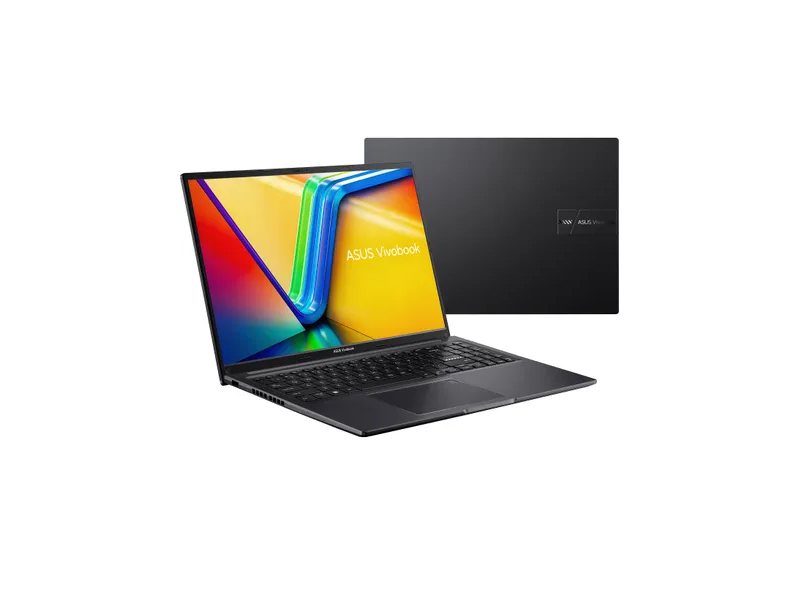
Asus Vivobook 16 A1605
Ausstattung / Datenblatt
Preisvergleich
Durchschnitt von 2 Bewertungen (aus 4 Tests)
Testberichte für das Asus Vivobook 16 A1605
Quelle: Chip.de

Das Asus VivoBook 16 präsentiert sich im Test als solides Einsteigernotebook mit einem leichten und schlanken Gehäuse. Es bietet eine solide Anschlussvielfalt, gute Speicherausstattung und eine leise Kühlung. Abzüge gibt es für das Display, die kurze Akkulaufzeit unter Last, das mitgelieferte proprietäre Netzteil sowie die schlechte Webcam.
Einzeltest, online verfügbar, Sehr kurz, Datum: 14.08.2026
Bewertung: Gesamt: 80% Preis: 85% Leistung: 82% Bildschirm: 78% Mobilität: 69%
Ausländische Testberichte
Quelle: Pokde
 EN→DE
EN→DEThe ASUS Vivobook 16 in Intel form will cost slightly more than its AMD counterpart at RM3,199, but just like the Team Red’s laptop, this is a budget workhorse for those who want to get things done without blowing a big hole into their wallets. However, I’d personally stick with the AMD version because there’s more multi-core performance on offer (which will be noticeable compared to single-core), even at a slight battery life deficit.
Einzeltest, online verfügbar, Lang, Datum: 08.04.2024
Bewertung: Gesamt: 82% Preis: 85% Leistung: 83% Mobilität: 80% Gehäuse: 82%
Quelle: Tech Critter
EN→DEAt RM3,199, the ASUS Vivobook 16 A1605 delivers a compelling value proposition. The screen might be a limitation for specific uses, but the performance is surprisingly strong, even handling some games. I do recommend you check out this laptop if it suits your budget as we’re getting quite good value here. It’s just the screen that I wish was better.
Einzeltest, online verfügbar, Mittel, Datum: 05.04.2024
Quelle: NLT
EN→DESo, at the end, this laptop is RM3,199 and I think it’s quite good in terms of value. Sure, the screen is might be a problem for certain use cases, but the performance is actually really good. We can even play some games on it and I think that’s great. However, if you want something at around the same price but with more performance, then take a look at this MSI laptop. I’ll leave it at the end screen here – and if you have any questions about this ASUS Vivobook 16 A1605, leave them in the comments section below. I think it’s a great laptop for many people.
Einzeltest, online verfügbar, Lang, Datum: 03.04.2024
Kommentar
Intel Iris Xe G7 80EUs: Integrierte Grafikkarte (in Tiger-Lake G4 SoCs) der Gen. 12 Architektur mit 80 EUs. Z.B. in Tiger Lake i5 CPUs verbaute iGPU.
Diese Klasse ist noch durchaus fähig neueste Spiele flüssig darzustellen, nur nicht mehr mit allen Details und in hohen Auflösungen. Besonders anspruchsvolle Spiele laufen nur in minimalen Detailstufen, wodurch die grafische Qualität oft deutlich leidet. Diese Klasse ist nur noch für Gelegenheitsspieler empfehlenswert. Der Stromverbrauch von modernen Grafikkarten in dieser Klasse ist dafür geringer und erlaubt auch bessere Akkulaufzeiten.
» Weitere Informationen gibt es in unserem Notebook-Grafikkartenvergleich und der Benchmarkliste.
Core 5 120U: Auf der Alder-Lake-Architektur basierender High-End-Mobilprozessor. Bietet 2 Performance-Kerne und 8 Effizienzkerne und kann 12 Threads gleichzeitig bearbeiten. Der maximale Turbo-Takt der P-Kerne beträgt 5 GHz.» Weitere Infos gibt es in unserem Prozessorvergleich Vergleich mobiler Prozessoren und der Prozessoren Benchmarkliste .
 Als bevorzugte Quelle auf Google hinzufügen