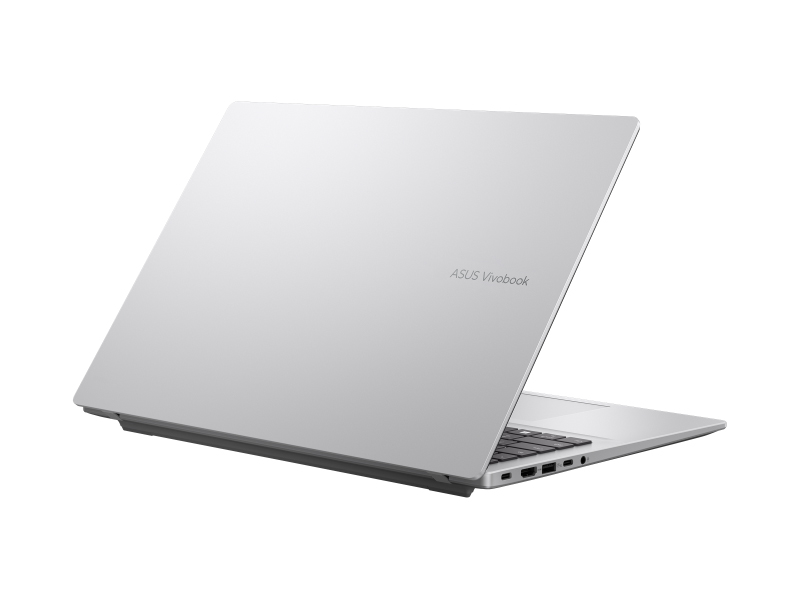




Asus Vivobook 16 Serie
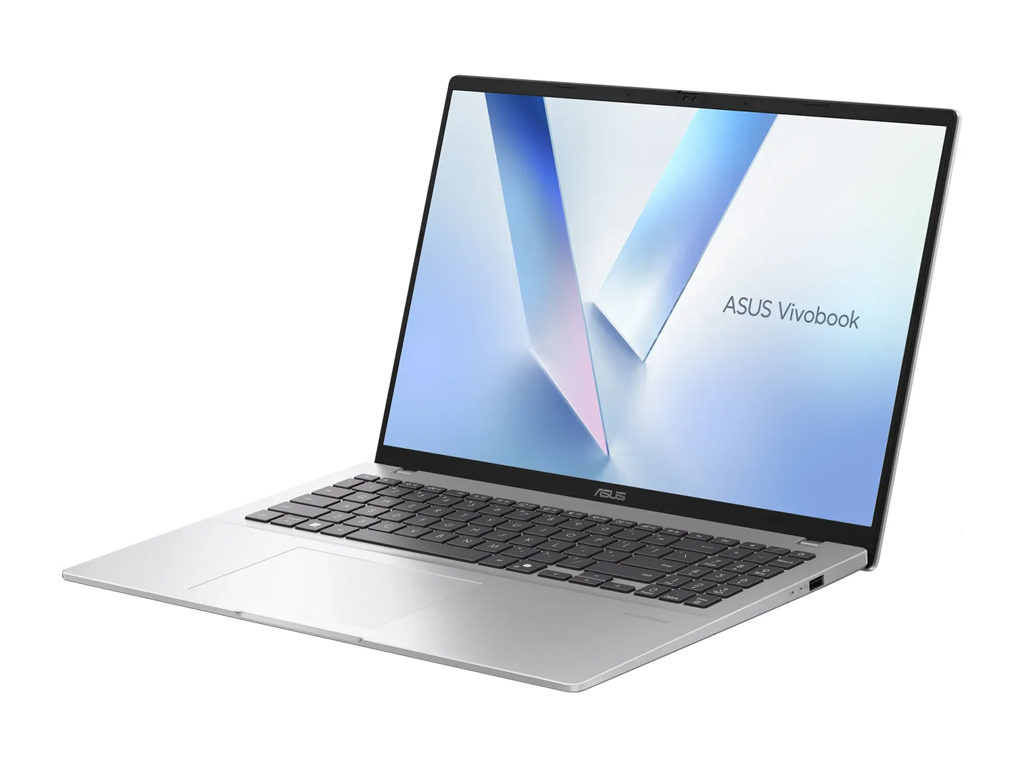 Prozessor: AMD Strix / Gorgon Point Ryzen AI 7 350, Intel Panther Lake Ultra 5 325, Intel Raptor Lake-U Core 5 120U, Qualcomm Snapdragon X SD X1-26-100
Grafikkarte: AMD Radeon 860M, Intel Intel Graphics 4 Xe3 PTL, Intel Iris Xe G7 80EUs, Qualcomm Adreno X1-45 1.7 TFLOPS
Bildschirm: 16.00 Zoll
Gewicht: 1.8kg, 1.88kg
Preis: 850 Euro
Durchschnitt von 4 Bewertungen (aus 8 Tests)
Asus Vivobook 16 A1605
Ausstattung / Datenblatt
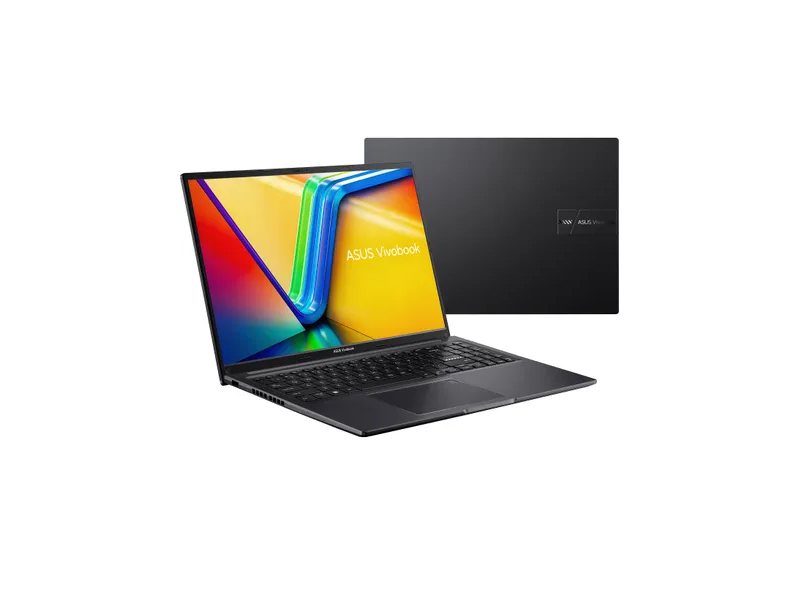 Notebook: Asus Vivobook 16 A1605
Prozessor: Intel Raptor Lake-U Core 5 120U
Grafikkarte: Intel Iris Xe G7 80EUs
Bildschirm: 16.00 Zoll, 16:10, 1920 x 1200 Pixel
Gewicht: 1.88kg
Links: Asus Startseite Asus Notebooks Übersichtseite
Preisvergleich
Bewertung:
Testberichte
Quelle: Chip.de

Das Asus VivoBook 16 präsentiert sich im Test als solides Einsteigernotebook mit einem leichten und schlanken Gehäuse. Es bietet eine solide Anschlussvielfalt, gute Speicherausstattung und eine leise Kühlung. Abzüge gibt es für das Display, die kurze Akkulaufzeit unter Last, das mitgelieferte proprietäre Netzteil sowie die schlechte Webcam.
Einzeltest, online verfügbar, Sehr kurz, Datum: 14.08.2026
Bewertung: Gesamt: 80% Preis: 85% Leistung: 82% Bildschirm: 78% Mobilität: 69%
Ausländische Testberichte
Quelle: Pokde
 EN→DE
EN→DEThe ASUS Vivobook 16 in Intel form will cost slightly more than its AMD counterpart at RM3,199, but just like the Team Red’s laptop, this is a budget workhorse for those who want to get things done without blowing a big hole into their wallets. However, I’d personally stick with the AMD version because there’s more multi-core performance on offer (which will be noticeable compared to single-core), even at a slight battery life deficit.
Einzeltest, online verfügbar, Lang, Datum: 08.04.2024
Bewertung: Gesamt: 82% Preis: 85% Leistung: 83% Mobilität: 80% Gehäuse: 82%
Quelle: Tech Critter
EN→DEAt RM3,199, the ASUS Vivobook 16 A1605 delivers a compelling value proposition. The screen might be a limitation for specific uses, but the performance is surprisingly strong, even handling some games. I do recommend you check out this laptop if it suits your budget as we’re getting quite good value here. It’s just the screen that I wish was better.
Einzeltest, online verfügbar, Mittel, Datum: 05.04.2024
Quelle: NLT
EN→DESo, at the end, this laptop is RM3,199 and I think it’s quite good in terms of value. Sure, the screen is might be a problem for certain use cases, but the performance is actually really good. We can even play some games on it and I think that’s great. However, if you want something at around the same price but with more performance, then take a look at this MSI laptop. I’ll leave it at the end screen here – and if you have any questions about this ASUS Vivobook 16 A1605, leave them in the comments section below. I think it’s a great laptop for many people.
Einzeltest, online verfügbar, Lang, Datum: 03.04.2024
Asus Vivobook 16 A1607
Ausstattung / Datenblatt
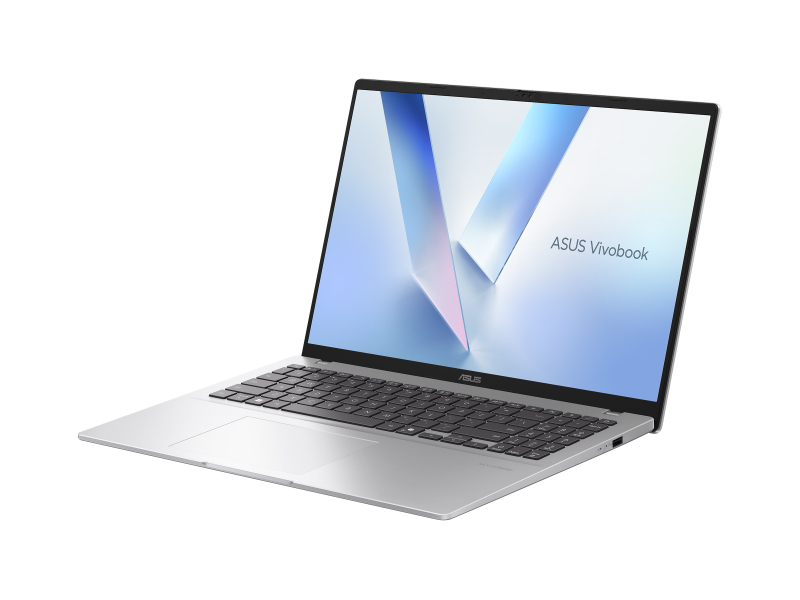 Notebook: Asus Vivobook 16 A1607
Prozessor: Qualcomm Snapdragon X SD X1-26-100
Grafikkarte: Qualcomm Adreno X1-45 1.7 TFLOPS
Bildschirm: 16.00 Zoll, 16:10, 1920 x 1200 Pixel
Gewicht: 1.8kg
Links: Asus Startseite Asus Notebooks Übersichtseite
Preisvergleich
Ausländische Testberichte
Quelle: NLT
EN→DEStill, if you just want something simple – then the ASUS Vivobook 16 A1607 should be on your list. It’s supremely affordable at just RM2,999. I know that the price is enticing, but please know what you’re getting into before actually purchasing a Snapdragon laptop. I will say it again – app compatibility has improved a lot – and you can check out this website to find out if the apps you use are compatible or not – but compatibility does not mean the apps will run with the best performance possible. From experience, DaVinci Resolve and some games can be launched but the performance is… disappointing, to say the least. We have other videos to talking about Snapdragon laptops – do watch those videos and leave your questions down in the comments section below so that we can help you out.
Einzeltest, online verfügbar, Mittel, Datum: 18.04.2025
Asus Vivobook 16 M1607KA
Ausstattung / Datenblatt
Notebook: Asus Vivobook 16 M1607KAProzessor: AMD Strix / Gorgon Point Ryzen AI 7 350
Grafikkarte: AMD Radeon 860M
Bildschirm: 16.00 Zoll, 16:10, 1920 x 1200 Pixel
Gewicht: 1.88kg
Preis: 850 Euro
Links: Asus Startseite Asus Notebooks Übersichtseite
Preisvergleich
Bewertung:
Ausländische Testberichte
Quelle: 91mobiles
EN→DEThe VivoBook 16 M1607KA is not a statement piece. It is instead a sensible, large-screen laptop that quietly leverages AMD’s most advanced mainstream processor to deliver the kind of balanced experience most buyers actually need. The screen is roomy, the keyboard comfortable, the performance snappy, and the battery genuinely long-lasting. Shortcomings do exist. The panel is merely adequate for colour work, the port arrangement omits SD and Type-C charging, and the webcam could use an upgrade. Yet, weighed against the asking price, those flaws shrink. For students who juggle research, coding projects, and Netflix, for remote workers who crave a bigger canvas than a 13-inch ultrabook can provide, and for families who want one machine that handles homework by day and light gaming by night, the Vivobook 16 M1607KA represents strong value.
Einzeltest, online verfügbar, Lang, Datum: 11.06.2025
Bewertung: Gesamt: 80% Leistung: 80% Bildschirm: 75% Mobilität: 80% Gehäuse: 80%
Quelle: Cell Phones
 VN→DE
VN→DEPositive: Affordable price; decent processor. Negative: Average performance.
Hands-On, online verfügbar, Lang, Datum: 04.04.2025
Asus Vivobook 16 X1607AA
Ausstattung / Datenblatt
Notebook: Asus Vivobook 16 X1607AAProzessor: Intel Panther Lake Ultra 5 325
Grafikkarte: Intel Intel Graphics 4 Xe3 PTL
Bildschirm: 16.00 Zoll, 16:10, 1920 x 1200 Pixel
Gewicht: 1.88kg
Links: Asus Startseite Asus Notebooks Übersichtseite
Preisvergleich
Bewertung:
Ausländische Testberichte
Quelle: The Mobile Indian
EN→DEAt Rs 1,01,990, the ASUS Vivobook 16 2026 (X1607AA) comes across as a dependable option for productivity-focused users. While it may not offer top-tier performance, loud bass-heavy speakers, or an AMOLED display, it makes up for it with excellent battery life, reliable day-to-day performance even for professional editing workloads, and a solid keyboard and trackpad experience.
Einzeltest, online verfügbar, Mittel, Datum: 25.05.2026
Bewertung: Gesamt: 83% Preis: 85% Bildschirm: 70% Mobilität: 90% Gehäuse: 85% Ergonomie: 90%
Kommentar
Asus: ASUSTeK Computer Inc. ist ein großer taiwanesischer Hersteller von Computer-Hardware mit Sitz in Taipeh, gegründet 1989. Unter dem Markennamen Asus fertigt das Unternehmen eine breite Palette von Produkten, darunter Laptops, Desktops, Motherboards, Grafikkarten, Monitore, Smartphones und Netzwerkgeräte, Komplettsysteme und PC-Bauteile für Endkunden.
Unter dem Markennamen ROG (Republic of Gamers) stellt ASUS Gaming-Laptops her, die bei Spielern für ihre leistungsstarken Spezifikationen, dedizierten Grafikkarten, Displays mit hoher Bildwiederholrate und fortschrittlichen Kühlsystemen bekannt sind.
Über das Gaming hinaus werden eine breite Palette von Notebooks für unterschiedliche Anforderungen und Budgets geboten: von ultraschlanken und leichten Ultrabooks bis hin zu vielseitigen 2-in-1-Convertibles und budgetfreundlichen Optionen. 2023 hatte Asus einen Weltmarktanteil von 7% am PC-Markts.
Die Kundenzufriedenheit mit ASUS-Notebooks betrifft Leistung, die Funktionen und das gute Preis-Leistungs-Verhältnis der ASUS-Notebooks. Wie bei jeder Marke gibt es jedoch gelegentlich Berichte über Probleme wie Überhitzung, Treiberkompatibilität oder Probleme mit der Verarbeitungsqualität.
Diese Klasse ist noch durchaus fähig neueste Spiele flüssig darzustellen, nur nicht mehr mit allen Details und in hohen Auflösungen. Besonders anspruchsvolle Spiele laufen nur in minimalen Detailstufen, wodurch die grafische Qualität oft deutlich leidet. Diese Klasse ist nur noch für Gelegenheitsspieler empfehlenswert. Der Stromverbrauch von modernen Grafikkarten in dieser Klasse ist dafür geringer und erlaubt auch bessere Akkulaufzeiten.
Intel Iris Xe G7 80EUs: Integrierte Grafikkarte (in Tiger-Lake G4 SoCs) der Gen. 12 Architektur mit 80 EUs. Z.B. in Tiger Lake i5 CPUs verbaute iGPU.
Qualcomm Adreno X1-45 1.7 TFLOPS: Die Qualcomm Snapdragon X Adreno X1-45 ist die schwächste GPU in the Snapdragon X Plus SoCs mit nur 1,7 statt 3,8 TFLOPS an Leistung. Wahrscheinlich wird dies durch weniger Taktraten und / oder weniger Kerne erreicht.
Durch aktuell eingeschränkten Treibersupport und Spieleunterstüztung ist die 3D-Leistung und Kompabilität in Spielen jedoch nicht vergleichbar mit Nvidia und AMD iGPUs.
AMD Radeon 860M: Starke RDNA3+ basierende integrierte Grafikkarte (iGPU) mit 8 der 16 Compute Units (= 512 Unified Shader) und einer Taktung von bis zu 3 GHz (je nach Modell).
Intel Intel Graphics 4 Xe3 PTL: Die Intel Graphics 4 Xe3 ist eine integrierte Grafikkarte in Panther Lake SoCs mit 4 Xe3 Kernen (32 EUs / 512 ALUs), 4 Raytracing Kernen und einer Taktung von bis zu 2450 MHz.
» Weitere Informationen gibt es in unserem Notebook-Grafikkartenvergleich und der Benchmarkliste.
Intel Raptor Lake-U:
Core 5 120U: Auf der Alder-Lake-Architektur basierender High-End-Mobilprozessor. Bietet 2 Performance-Kerne und 8 Effizienzkerne und kann 12 Threads gleichzeitig bearbeiten. Der maximale Turbo-Takt der P-Kerne beträgt 5 GHz.
Qualcomm Snapdragon X:
SD X1-26-100: Eine erschwingliche ARM-Architektur Prozessor (SoC) für den Einsatz in Windows-Notebooks. Der 8-Kern Snapdragon X Chip verfügt über 8 Oryon CPU-Kerne, die mit bis zu 2,98 GHz laufen, zusammen mit der 1,7 TFLOPS X1-45 Adreno iGPU und der 45 TOPS Hexagon NPU. Der superschnelle LPDDR5x-8448 Speichercontroller, den wir von anderen Snapdragon X Chips kennen, USB 4.0 Unterstützung, TB 4 Unterstützung und PCIe 4 Unterstützung sind ebenfalls an Bord.
AMD Strix / Gorgon Point:
Ryzen AI 7 350: Eine relativ leistungsstarke Krackan Point Familie Prozessor, die Anfang 2025 vorgestellt wurde. Die APU integriert 8 CPU-Kernen (4 Zen 5-Kerne mit bis zu 5 GHz und 4 Zen 5c-Kerne mit bis zu 3,5 GHz).
Intel Panther Lake:
Ultra 5 325: Mobiler Mittelklasse 8-Kern SoC der Panther Lake Familie mit 4 Xe3 GPU-Kernen. Die verbaute NPU 5 bietet wie bei Lunar Lake 50 TOPS und bietet nun Unterstützung für FP8.
» Weitere Infos gibt es in unserem Prozessorvergleich Vergleich mobiler Prozessoren und der Prozessoren Benchmarkliste .
16.00: Dieser Bereich für Displayformate war und ist eine Seltenheit. Es ist größer als der allgemeine Standard von 15 Zoll, aber noch nicht im Bereich der großen Workstations. Man hat üblicherweise höhere Bildschirmauflösungen zur Verfügung, darunter leidet aber auch die Portabilität.
» Prüfen Sie in unserer DPI Liste, welche Displays wie fein aufgelöst sind.
1.8 kg:
Most smartphones and only a few tablets fall into this weight category. Only a few smartphones are heavier and should rather be considered tablets.
1.88 kg:
81.25%: Diese Bewertung ist leicht überdurchschnittlich, es gibt etwas mehr Geräte mit schlechteren Beurteilungen. Klare Kaufempfehlungen sehen aber anders aus.
» Lesen Sie auch unsere Notebook-Kaufberatung.
 Als bevorzugte Quelle auf Google hinzufügen