




LG Z430
Ausstattung / Datenblatt
Preisvergleich
Testberichte für das LG Z430
Quelle: Trusted Reviews
 EN→DE Archive.org version
The overall look and feel of the laptop may leave us feeling a little cold, but the combination of HDD and SSD, together with better-than-average connectivity and excellent build quality means the LG Z430 is an intriguing prospect. Add in up to 8GB of RAM and the latest Sandy Bridge processors and if the pricing is right we could be looking at the Ultrabook to beat.
Einzeltest, online verfügbar, Sehr kurz, Datum: 20.01.2012
Quelle: Pocket Lint
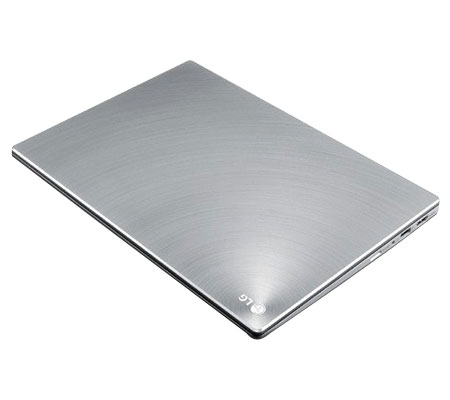
EN→DE Archive.org versionLG announced two new Ultrabook models at CES in Las Vegas and Pocket-lint was on hand to have a quick play with the new models. The LG Z430 is a 14-inch Ultrabook that is just 19.9mm thick and weighs just 1.5kg. Clad in metal, it certainly looks the part.
Einzeltest, online verfügbar, Sehr kurz, Datum: 16.01.2012
Quelle: Trusted Reviews
EN→DE Archive.org versionIn a bid to stand out from the crowd, LG decided to launch the Z330 Ultrabook ahead of CES last week so we knew what to expect when we visited the LG booth in Las Vegas. Calling it a 'Super Ultrabook', LG said it went above and beyond the standards laid out by Intel for the Ultrabook platform, but does it live up to this claim? Let's see.
Einzeltest, online verfügbar, Sehr kurz, Datum: 16.01.2012
Quelle: T3
EN→DE Archive.org versionThe Z430 looks like an interesting Ultrabook for those in search for a machine that’s able to offer more storage space, more memory, and a larger screen while still retaining a slim design and low weight. You get a fast SSD for Windows and programs and a comfortably large HDD for all your personal files, and eight gigs of memory will help keep everything running smoothly even when joggling many apps at the same time. Oh, and the design, materials, and build quality really are spot on.
Einzeltest, online verfügbar, Sehr kurz, Datum: 11.01.2012
Kommentar
Intel HD Graphics 3000: In Sandy Bridge Prozessoren (Core ix-2xxx) integrierte Grafikkarte von Intel. Stärkere GT2 genannte Version mit 12 Execution Units (EUs). Je nach Modell mit unterschiedlichen Taktraten (350-650MHz) und TurboBoost Unterstützung (900-1350MHz).
Diese Karten können nur sehr alte und sehr anspruchslose 3D Spiele flüssig darstellen. Anwendungen wie Office, Internet surfen, Bildbearbeitung oder (SD) Videoschnitt sind jedoch ohne große Einschränkungen möglich.
» Weitere Informationen gibt es in unserem Notebook-Grafikkartenvergleich und der Benchmarkliste.
2637M:
Stromspar-Doppelkernprozessor mit nur 1.7 GHz Basisfrequenz aber einem Turbo bis zu 2.8 GHz (bei ausreichender Kühlung). Integriert die Intel HD Graphics 3000 (jedoch nur mit 350 - 1200 MHz Taktung) und einen DDR3-1333 Speicherkontroller.
» Weitere Infos gibt es in unserem Prozessorvergleich Vergleich mobiler Prozessoren und der Prozessoren Benchmarkliste .
 Als bevorzugte Quelle auf Google hinzufügen