




Xiaomi Redmi K50 Pro
Ausstattung / Datenblatt
Secondary Camera: 20 MPix
Preisvergleich
Testberichte für das Xiaomi Redmi K50 Pro
Quelle: OI Spice Tech News
 EN→DE Archive.org version
All in all, the functionality of the K50 Pro is unquestionable, and its performance is on par with some flagship phones. The Xiaomi Redmi K50 Pro has everything that you can expect from a mid-range flagship phone. Although, the K50 Gaming look is slightly better. But a little compromise is worthy for such an impeccable deal. Each specification is top-notch and won’t cause any problem for you. Talking about Redmi K50, it is one of the most cost-effective phones with more and more specs. Except for an average camera, everything else is outstanding. Considering the price and features, K50 has very few rivals and is even more recommendable as compared to Pro. Thus, one must look out for these 5G smartphones shortly when they enter the global market. In case you’re looking for something budget-friendly, you can definitely check out the Realme 9 Pro, which comes with a better chipset and battery support.
Vergleich, online verfügbar, Mittel, Datum: 06.04.2022
Quelle: OI Spice Tech News
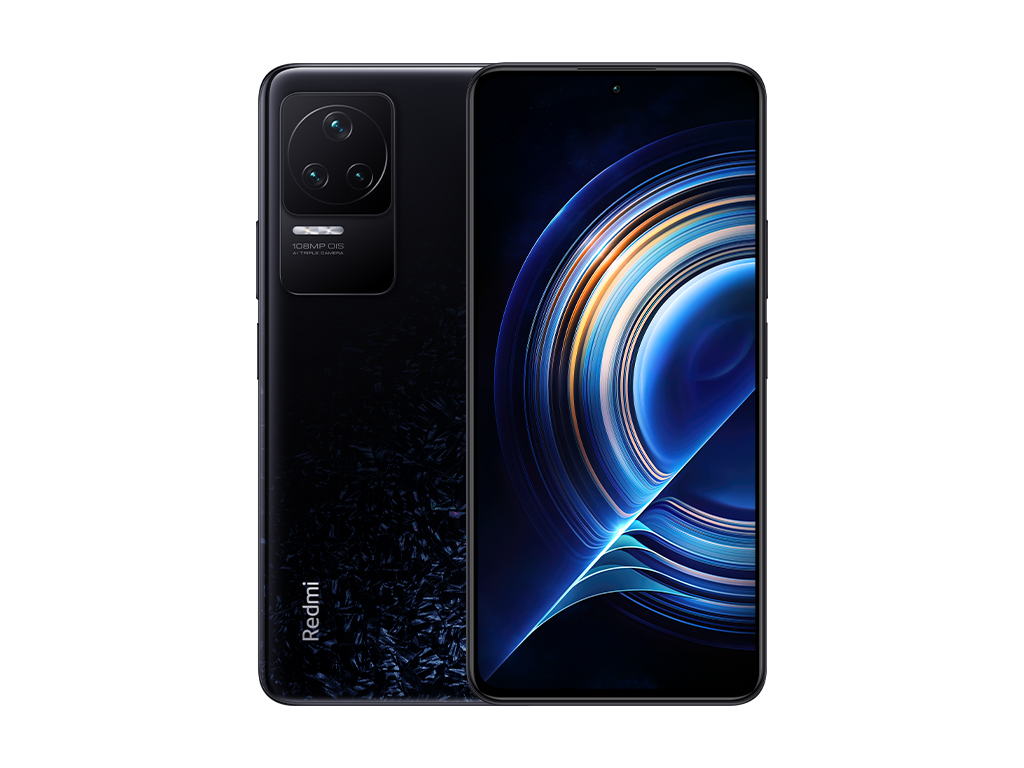
EN→DE Archive.org versionXiaomi Redmi K50 Pro smartphone was launched in March 2022. The phone comes with a 120 Hz refresh rate 6.67 inches OLED display offering a resolution of 1440×3200 pixels and the screen sports Gorilla Glass for protection. The Xiaomi Redmi K50 Pro phone renders on the latest Android 12 OS with the MIUI 13 UI. The Redmi K50 Pro is available in 8GB/12GB RAM with 128GB/256GB/512GB internal storage options. For better performance 4nm – MediaTek Dimensity 9000 chipset supported by Mali-G710 MC10 GPU is given. The Redmi K50 Pro comes with a triple camera with a 108MP main camera and a 20MP selfie camera. For video, you can record up to 4K resolution from the back camera and 1080p resolution from the selfie camera, plus you get gyro-EIS support on the rear camera only. The battery inside is a Li-Po 5000 mAh with a 120W fast charging support. Besides this, you can pick the phone in Black, Gray, Blue, and Green color options. Everything seems great about this device except that we expect reverse charging support.
Einzeltest, online verfügbar, Kurz, Datum: 24.03.2022
Quelle: Igeekphone
EN→DE Archive.org versionAlthough it lacks an LTPO technology that is standard today, it’s very weak absence, does not prevent me from considering the Redmi K50 Pro as almighty. In performance, image, screen, charging and other places that are closely related to our daily life, Redmi K50 Pro has done its best, especially with the blessing of Dimensity 9000, the daily experience maybe even better. A year ago, the Redmi K40 achieved a full flagship and even defended its title as a flagship welder. Today, the Redmi K50 Pro has once again sounded the horn of a comprehensive impact on the flagship, but this time the stacking is more aggressive, the configuration without compromise, and even 512GB of large storage is given.
Einzeltest, online verfügbar, Sehr Lang, Datum: 19.03.2022
Quelle: Viettelstore
 VN→DE Archive.org version
Positive: Impressive cameras; very quick charging; powerful cameras; elegant design; attractive price.
Hands-On, online verfügbar, Mittel, Datum: 30.03.2022
Kommentar
ARM Mali-G710 MP10: High-End Grafikchip für Smartphones mit 10 der 16 möglichen Kernen. Basiert auf die dritte Generation der Valhall Architektur. Bietet laut ARM bei gleicher Kernanzahl eine 20% höhere Performance und 20% höhere Energieeffizienz als die Vorgängergeneration.
Diese Klasse ist noch durchaus fähig neueste Spiele flüssig darzustellen, nur nicht mehr mit allen Details und in hohen Auflösungen. Besonders anspruchsvolle Spiele laufen nur in minimalen Detailstufen, wodurch die grafische Qualität oft deutlich leidet. Diese Klasse ist nur noch für Gelegenheitsspieler empfehlenswert. Der Stromverbrauch von modernen Grafikkarten in dieser Klasse ist dafür geringer und erlaubt auch bessere Akkulaufzeiten.
» Weitere Informationen gibt es in unserem Notebook-Grafikkartenvergleich und der Benchmarkliste.
Dimensity 9000: Der Dimensity 9000 ist ein Oberklasse-Prozessor mit integriertem 5G Modem. Der CPU-Teil integriert einen schnellen ARM Cortex-X2 Ultra-Core mit bis zu 3 GHz, 3 A710 mit bis zu 2,85 und 4 A510 mit 1,8 GHz.» Weitere Infos gibt es in unserem Prozessorvergleich Vergleich mobiler Prozessoren und der Prozessoren Benchmarkliste .
 Als bevorzugte Quelle auf Google hinzufügen