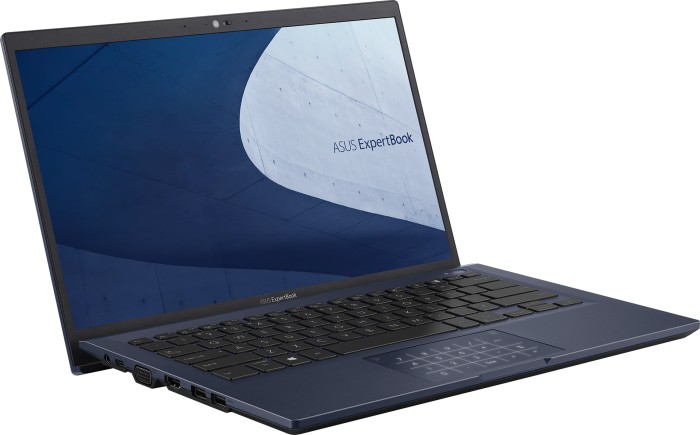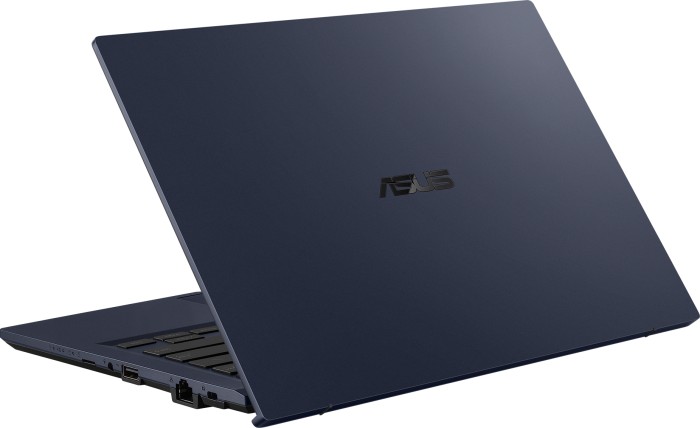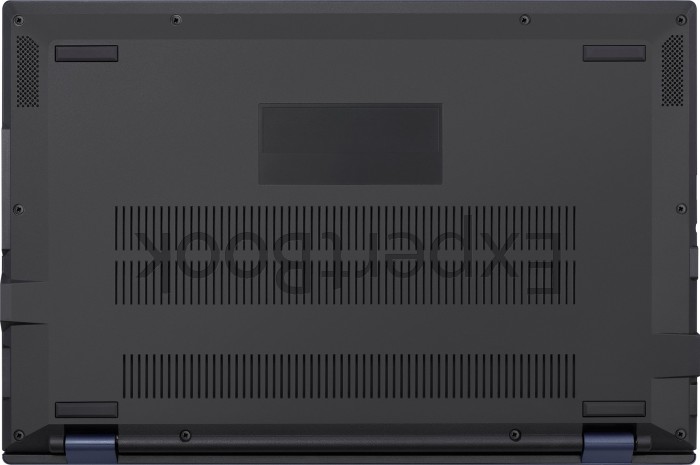




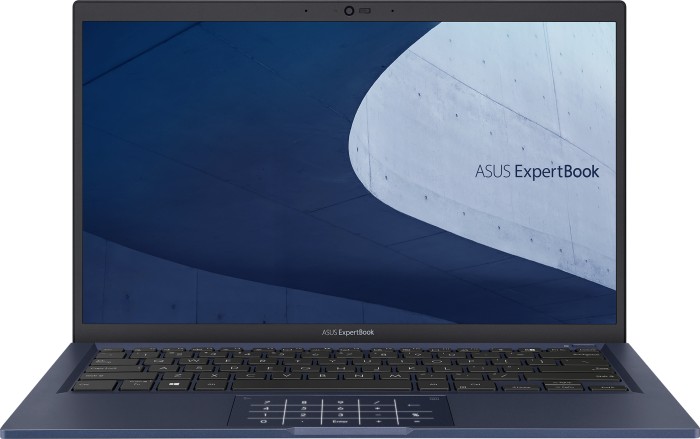
Asus ExpertBook B1 B1400C, 1165G7 MX330
Ausstattung / Datenblatt
Preisvergleich
Durchschnitt von 1 Bewertungen (aus 5 Tests)
Testberichte für das Asus ExpertBook B1 B1400C, 1165G7 MX330
Quelle: Ricks Tech

Support, online verfügbar, Mittel, Datum: 18.06.2024
Quelle: Laptop Media
Archive.org versionSupport, online verfügbar, Sehr kurz, Datum: 27.01.2022
Quelle: Laptop Media
EN→DE Archive.org versionLike every laptop out there, the ExpertBook B1 B1500 has its ups and downs. Impressively, the performance is one of its advantages, as it puts the Core i7-1165G7 to good use. Additionally, you have quite a good amount of upgrade options, as well, including one SODIMM slot, an M.2 slot, and a 2.5-inch SATA drive bay. At the end of the day, ASUS didn’t do a bad job with that laptop. They could have made it better, but generally, we feel that it matches the expectations set by the price. After all, something should be given up in order to make the device more affordable.
Einzeltest, online verfügbar, Sehr Lang, Datum: 15.09.2021
Quelle: Hitech Century
EN→DE Archive.org versionThe ASUS ExpertBook B1 B1400 represents a highly durable and powerful ultraportable with a useful NumberPad 2.0 touchpad, generous amounts of storage as well as a diverse variety of ports. In its most powerful configuration, the laptop proves to be an immensely capable, if slightly heavier than usual business laptop that is ideal for paperwork related tasks though the middling display which has modest colour accuracy in all possible variants mean that it’s not the best choice for content creators.
Einzeltest, online verfügbar, Mittel, Datum: 02.06.2021
Bewertung: Gesamt: 72% Preis: 70% Leistung: 80% Bildschirm: 70% Mobilität: 60% Gehäuse: 80%
Quelle: i2Hard
 RU→DE Archive.org version
Positive: Slim size; light weight; Thunderbolt 4 port; great dedicated graphics; high performance; powerful hardware; nice webcam; good cooling system; long battery life. Negative: Overheats while using; poor display.
Einzeltest, online verfügbar, Sehr Lang, Datum: 08.09.2021
Kommentar
NVIDIA GeForce MX330: Wahrscheinlich auf die alte GeForce MX150 / MX250 basierende Notebook-Grafikkarte (mobile Version der GT 1030). Eventuell beim Speicherbus und den Taktraten beschnitten. Wie bei der MX250 können auch wieder zwei Varianten zum Einsatz kommen (normale mit 25 Watt und langsamere Stromsparvariante mit 10 Watt).
Diese Klasse ist noch durchaus fähig neueste Spiele flüssig darzustellen, nur nicht mehr mit allen Details und in hohen Auflösungen. Besonders anspruchsvolle Spiele laufen nur in minimalen Detailstufen, wodurch die grafische Qualität oft deutlich leidet. Diese Klasse ist nur noch für Gelegenheitsspieler empfehlenswert. Der Stromverbrauch von modernen Grafikkarten in dieser Klasse ist dafür geringer und erlaubt auch bessere Akkulaufzeiten.
» Weitere Informationen gibt es in unserem Notebook-Grafikkartenvergleich und der Benchmarkliste.
i7-1165G7: Auf der Tiger-Lake-Architektur basierender ULV-SoC (System-on-a-Chip) für schlanke Notebooks und Ultrabooks. Integriert unter anderem vier CPU-Kerne mit 2,8 - 4,7 GHz und HyperThreading sowie eine starke Iris Xe G7 Grafikeinheit und wird in 10-Nanometer-Technik gefertigt (10nm+). » Weitere Infos gibt es in unserem Prozessorvergleich Vergleich mobiler Prozessoren und der Prozessoren Benchmarkliste .
 Als bevorzugte Quelle auf Google hinzufügen