



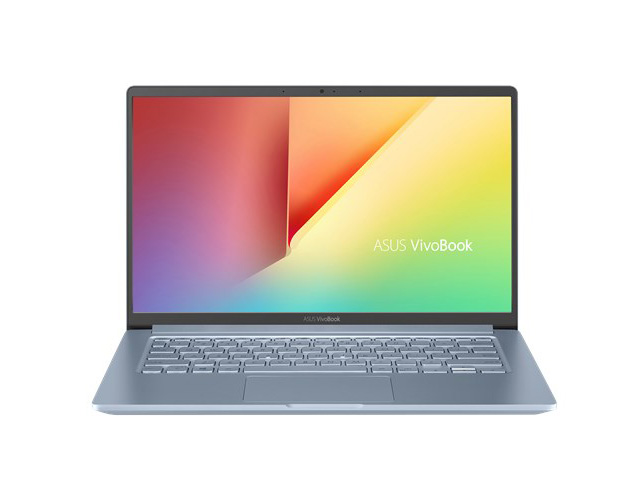
Asus VivoBook 14 X403FA, i3-8145U
Ausstattung / Datenblatt
Preisvergleich
Testberichte für das Asus VivoBook 14 X403FA, i3-8145U
Quelle: Unbox
 EN→DE Archive.org version
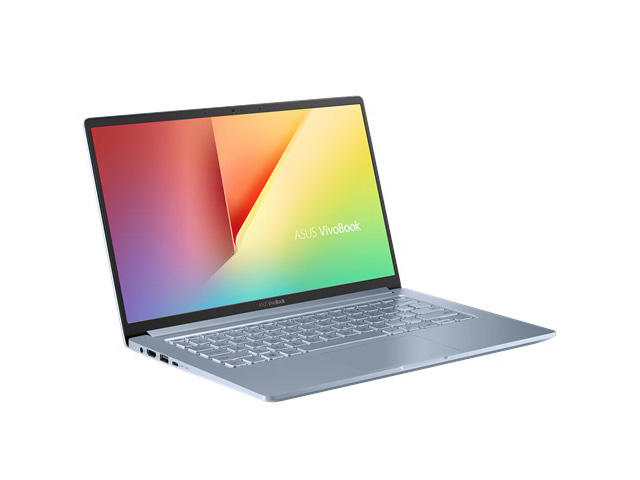
At Php 39,995, the X403’s asking price is on the higher end of the spectrum considering it only uses a Core i3 processor and that it cannot be upgraded further. While there are a bunch of things that can make the X403 stand out—512GB NVMe SSD, and 72Wh battery, and aluminum build—it will face tough competition against its rivals who offer a Core i5 Processor at roughly the same price. The X403 is aimed at a specific market: not to those who are into content creation, but more towards digital professionals who are always on the go and have to deal with tons of emails, documents, and presentations on a daily basis.
Einzeltest, online verfügbar, Mittel, Datum: 06.08.2019
Quelle: Unbox
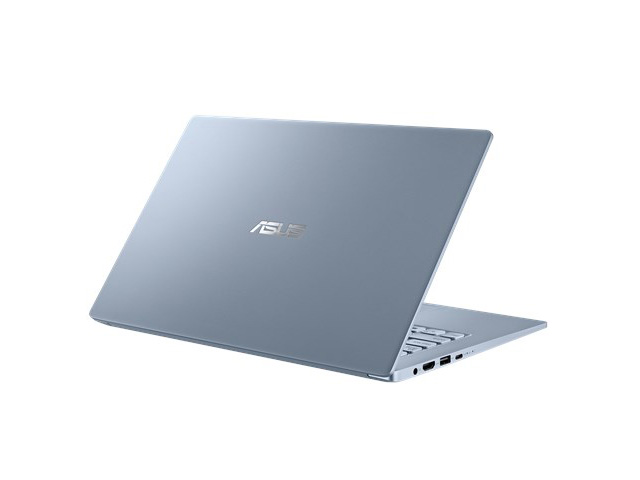
EN→DE Archive.org versionASUS is only bringing one variant of the X403 to the Philippines. The configuration consists of a Core-i3-8145U processor, HD Graphics 620 integrated GPU, 4GB RAM, 512GB SSD, and comes in silver blue. Unlike the VivoBook X412, you cannot upgrade the RAM and SSD on the X403—both are soldered into the motherboard.
Einzeltest, online verfügbar, Kurz, Datum: 12.07.2019
Kommentar
Intel UHD Graphics 620: Integrierte Grafikkarte (GT2-Ausbau, 24 EUs), welche in einigen Kaby-Lake-CPUs (Refresh, ULV-Modelle, 15 Watt TDP) verbaut wird. Technisch identisch zur HD Graphics 620 in den Kaby-Lake Modellen aus 2016.
Diese Klasse ist noch durchaus fähig neueste Spiele flüssig darzustellen, nur nicht mehr mit allen Details und in hohen Auflösungen. Besonders anspruchsvolle Spiele laufen nur in minimalen Detailstufen, wodurch die grafische Qualität oft deutlich leidet. Diese Klasse ist nur noch für Gelegenheitsspieler empfehlenswert. Der Stromverbrauch von modernen Grafikkarten in dieser Klasse ist dafür geringer und erlaubt auch bessere Akkulaufzeiten.
» Weitere Informationen gibt es in unserem Notebook-Grafikkartenvergleich und der Benchmarkliste.
i3-8145U: Auf der Whiskey Lake / Kaby-Lake-Architektur basierender ULV-SoC (System-on-a-Chip) für schlanke Notebooks und Ultrabooks. Integriert unter anderem zwei CPU-Kerne mit 2,1 - 3,9 GHz und HyperThreading sowie eine Grafikeinheit und wird in 14-Nanometer-Technik (14nm++ versus 14nm+ bei Kaby-Lake-R) gefertigt.» Weitere Infos gibt es in unserem Prozessorvergleich Vergleich mobiler Prozessoren und der Prozessoren Benchmarkliste .
 Als bevorzugte Quelle auf Google hinzufügen