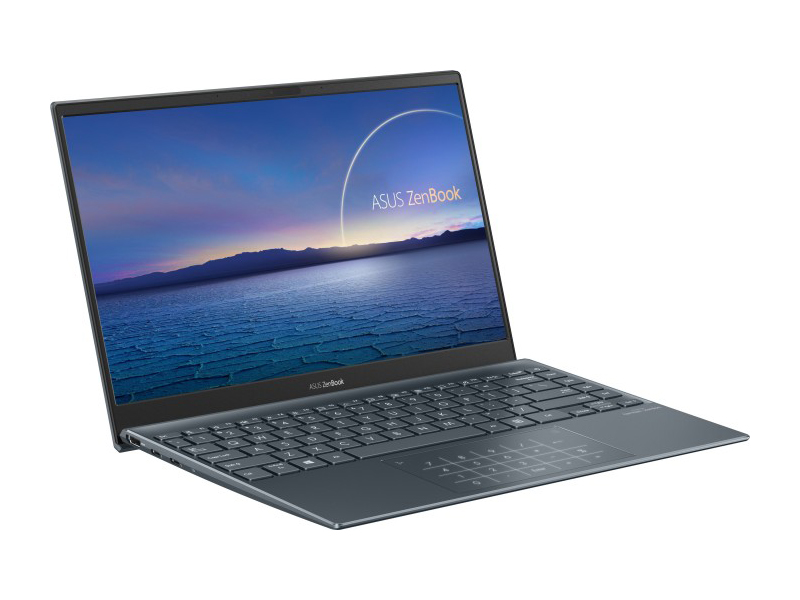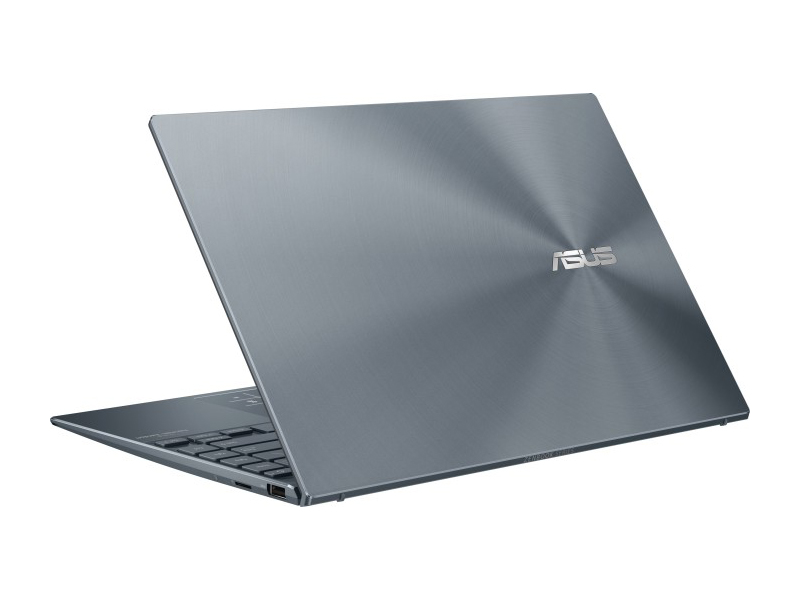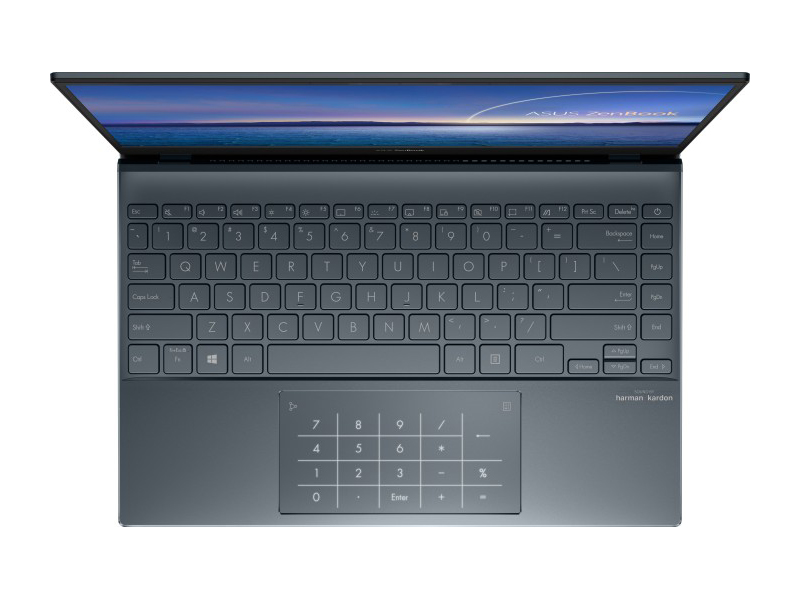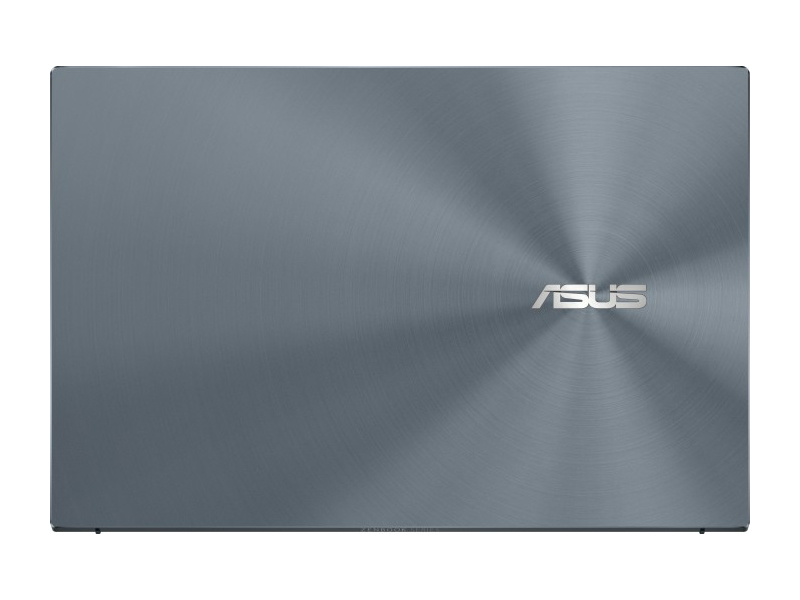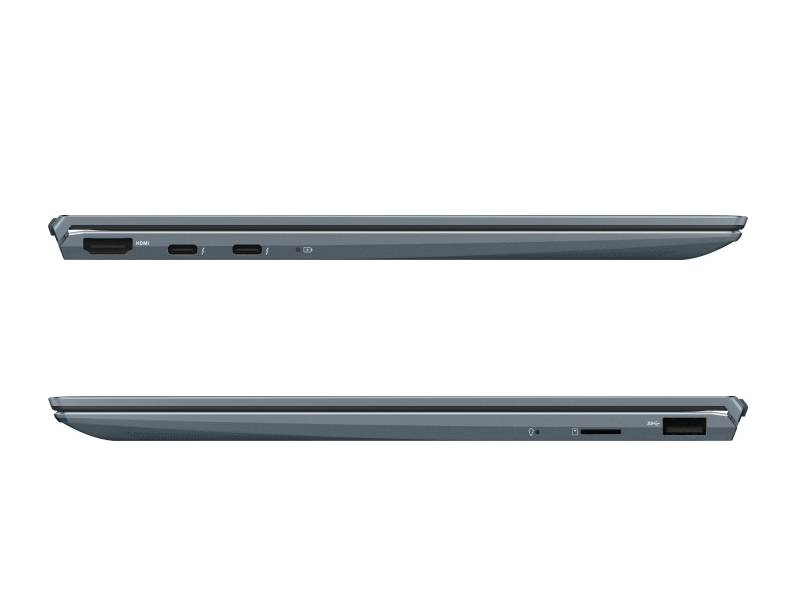




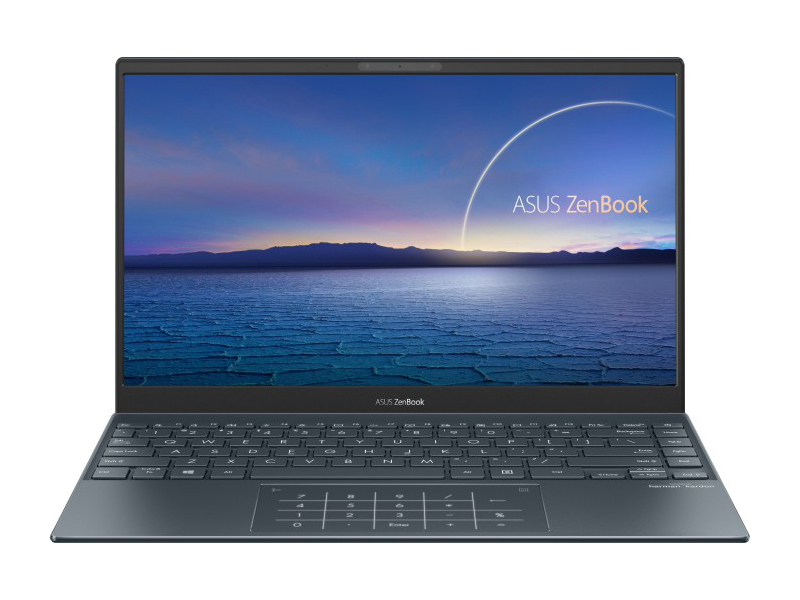
Asus ZenBook 13 UX325JA-AB51
Ausstattung / Datenblatt
Preisvergleich
Testberichte für das Asus ZenBook 13 UX325JA-AB51
Quelle: Root Nation
 EN→DE Archive.org version
With the arrival of OLED panels, the ultrabook world has changed forever. This small, compact, but at the same time powerful laptop will not leave you indifferent. Right now I myself really want to buy the ASUS ZenBook 13 OLED (UX325). I am so used to it that it will be very difficult for me to go back to my Huawei MateBook X Pro now. The ASUS ZenBook 13 OLED (UX325) has a stunningly elegant design, compact size, great build and a fantastic display. It’s almost perfect. Of course, it is worth mentioning the keyboard, which takes getting used to in the early days, the sometimes annoying random operation of the NumPad, and the small number of ports, but all these disadvantages are covered by one significant plus – the OLED display. You need to see it for yourself. Who should buy it? The ASUS ZenBook 13 OLED (UX325) is not your typical ultrabook. It is a powerful machine for those looking for the visual benefits of an OLED screen in a lightweight and portable design.
Einzeltest, online verfügbar, Sehr Lang, Datum: 15.11.2021
Quelle: Mi Mundo Gadget
 ES→DE Archive.org version
Positive: Slim size; light weight; backlit keys; powerful processor; nice face recognition. Negative: No headphone jack; mediocre speakers.
Einzeltest, online verfügbar, Mittel, Datum: 20.05.2021
Kommentar
Intel UHD Graphics G1 (Ice Lake 32 EU): Integrierte Grafikkarte (in Ice-Lake G1 SoCs) der Gen. 11 Architektur mit 32 der 64 EUs (Shader-Cluster). Taktet mit 300 MHz Basistakt und 1050 bzw. 1100 MHz Boost (erste Modelle). Der Ice-Lake-Chip wird im modernen 10nm Verfahren bei Intel gefertigt und soll mit 7nm bei TSMC mithalten können.
Diese Klasse ist noch durchaus fähig neueste Spiele flüssig darzustellen, nur nicht mehr mit allen Details und in hohen Auflösungen. Besonders anspruchsvolle Spiele laufen nur in minimalen Detailstufen, wodurch die grafische Qualität oft deutlich leidet. Diese Klasse ist nur noch für Gelegenheitsspieler empfehlenswert. Der Stromverbrauch von modernen Grafikkarten in dieser Klasse ist dafür geringer und erlaubt auch bessere Akkulaufzeiten.
» Weitere Informationen gibt es in unserem Notebook-Grafikkartenvergleich und der Benchmarkliste.
i5-1035G1: Auf der Ice-Lake-Architektur basierender ULV-SoC (System-on-a-Chip) für schlanke Notebooks und Ultrabooks. Integriert unter anderem vier CPU-Kerne der Sunnycove Microarchitektur mit 1 (Basis) - 3,6 GHz und HyperThreading sowie eine starke UHD Graphics G1 Grafikeinheit und wird in 10-Nanometer-Technik gefertigt. » Weitere Infos gibt es in unserem Prozessorvergleich Vergleich mobiler Prozessoren und der Prozessoren Benchmarkliste .
 Als bevorzugte Quelle auf Google hinzufügen