




Xiaomi Pad 8
Pro
Contra
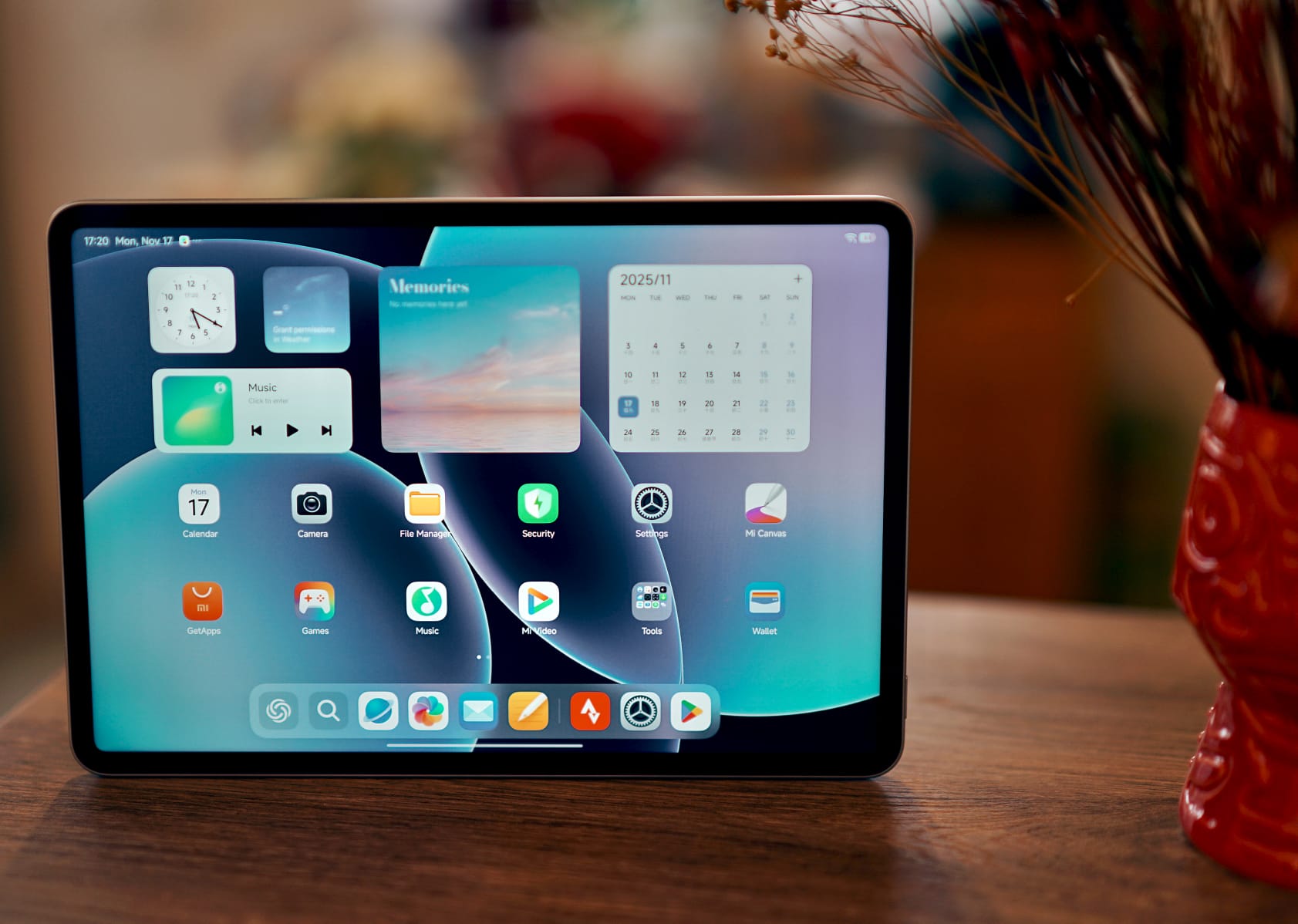
Das Xiaomi Pad 8 ist ein erschwingliches Android Tablet, das mit seinem hochwertigen Metall-Unibody-Design und seiner starken Leistung mit den höherwertigen Konkurrenten mithalten will. Es läuft mit einem Snapdragon 8s Gen 4 mit Adreno 825 Grafik, gepaart mit 12 GB RAM und 256 GB UFS 4.1 Speicher. Das 11,2 Zoll große 3:2 IPS-Panel bietet eine Auflösung von 3200 x 2136, eine Bildwiederholfrequenz von 144 Hz und eine native Stiftunterstützung, wodurch es sich sowohl für die Arbeit als auch für die Unterhaltung eignet. Anschlussausstattung Highlights sind USB-C mit Power Delivery, Wi-Fi 7, Bluetooth 5.4 und GPS, während Audio von vier Lautsprecher unterstützt wird. Die Ladeleistung liegt bei 45 W (kabelgebunden) und 22,5 W (rückwärts) für den 9200-mAh-Akku. Einige Testberichte berichten jedoch, dass sich der Akku schneller als erwartet entleert. Die Gesamtbewertung von Test bewegt sich im mittleren 80er-Bereich, wobei der Wert und die Leistung gelobt werden, aber auch Softwareprobleme und begrenzte Upgrades der neuen Generation erwähnt werden.
Ausstattung / Datenblatt
Secondary Camera: 8 MPix f/2.3, 1/4.0", 1.12µm
Preisvergleich
Durchschnitt von 26 Bewertungen (aus 42 Tests)
Testberichte für das Xiaomi Pad 8
Das Xiaomi Pad 8 ist ein günstiges Tablet, welches sich aber auch vor der Oberklasse nicht verstecken muss: Schneller Prozessor, Stifteingabe, leuchtstarkes Display und Metall-Unibody-Gehäuse lassen es sehr hochwertig wirken. Wie sich das Xiaomi Tab im Detail schlägt, lesen Sie im Testbericht. Update: Akku-Tests abgeschlossen & Zubehörfotos ergänzt
Quelle: Heise

Das Xiaomi Pad 8 entpuppt sich erneut als Geheimtipp unter den Android-Tablets: hochwertiges Aluminium-Gehäuse, eine für den Preis enorme Leistung und ein gestochen scharfes 3K-LCD mit flüssigen 144 Hz. An OLED-Panels reicht es bei Schwarzwerten und Kontrasten zwar nicht heran, muss es für den Preis aber auch nicht. Die stark spiegelnde Oberfläche stört in Kombination mit den LCD-typischen Schwarzwerten vor allem bei dunklen Filmszenen. Gegenüber dem Pro-Modell fällt die Leistung etwas geringer aus, was im Alltag kaum auffällt. Eine Mobilfunk-Option fehlt ebenfalls. Stärker vermisst haben wir dagegen den Fingerabdrucksensor, den es beim Pad 8 Pro gibt. Auch die Kamera ist deutlich abgespeckt. Wer ein kompaktes Unterhaltungs-Tablet sucht, findet im Pad 8 eine hervorragende Wahl mit exzellentem Preis-Leistungs-Verhältnis – für viele sogar die klügere Option als das teurere Pro-Modell, sofern man mit einer schlechteren Kamera und ohne Fingerabdrucksensor auskommen kann.
Einzeltest, online verfügbar, Kurz, Datum: 10.04.2026
Bewertung: Gesamt: 90%
Quelle: PC Welt
Wer ein solides Android-Mittelklasse-Tablet sucht, das nicht zu teuer ist, findet im Xiaomi Pad 8 eine sehr gute Wahl. Die Ausstattung macht es zu einem echten Kraftpaket für Unterhaltung, Spiele und Arbeit. Für diesen Preis bekommt man kaum ein Smartphone mit einem ähnlich starken Prozessor. Auch Display und Akku überzeugen auf ganzer Linie. Zubehör macht das Tablet zwar etwas teurer, kann für viele Nutzer aber einen echten Mehrwert bieten. Insgesamt werden Sie kaum ein anderes Tablet mit so guter Ausstattung zu diesem Preis finden.
Einzeltest, online verfügbar, Lang, Datum: 04.04.2026
Bewertung: Gesamt: 90%
Quelle: Nextpit Germany
Selten hat uns ein Android-Tablet so gut gefallen, wie das Xiaomi Pad 8. Das liegt vor allem an seiner Nähe zum iPad, die jetzt sogar Einzug in den Arbeitsalltag findet. Denn mit der verbesserten Konnektivität zu anderen Betriebssystemen lassen sich jetzt sogar Dateien und Bildschirminhalte mit Apple-Geräten tauschen. Leider verbessert Xiaomi das Pad 8 allerdings eher in Bereichen, in denen schon das Vorgängermodell überzeugen konnte. Das Xiaomi Pad 8 hätte nicht dünner werden müssen und selbst die Leistung wäre noch ausreichend gewesen.
Einzeltest, online verfügbar, Kurz, Datum: 06.03.2026
Ausländische Testberichte
Quelle: Techlusive
 EN→DE
EN→DEThe Xiaomi Pad 8 offers flagship-grade performance, a sharp anti-glare display and premium build quality at a competitive price. However, the lack of cellular connectivity, expandable storage and a few software quirks may influence your buying decision.
Einzeltest, online verfügbar, Mittel, Datum: 07.07.2026
Bewertung: Gesamt: 82% Preis: 90% Leistung: 90% Bildschirm: 90% Mobilität: 90% Gehäuse: 90%
Quelle: Digit.in
EN→DEThe Xiaomi Pad 8 improves on the Pad 7 in the areas that matter most. The Snapdragon 8s Gen 4 brings performance up to a flagship level, the battery is larger and charges quickly and the form factor is the most refined Xiaomi has shipped in this segment. At the launch price of Rs 33,999 for the 8 GB + 128 GB variant and Rs 36,999 for the 12 GB + 256 GB, the Pad 8 is a strong recommendation for students, professionals who need a capable portable work device and anyone seeking the best Android tablet experience short of an iPad.
Einzeltest, online verfügbar, Sehr kurz, Datum: 13.06.2026
Quelle: Mobygyaan
EN→DEThe Xiaomi Pad 8 comes across as a refined and meaningful upgrade that pushes Xiaomi’s tablet lineup closer to the flagship category, without going all the way into ultra-premium pricing. Instead of chasing gimmicks, Xiaomi has focused on core user experience – display quality, performance, software, and productivity – and it shows in everyday use. The 11.2-inch 3.2K 144 Hz display with Nano Texture option continues to be one of its biggest strengths, offering a sharp, smooth, and comfortable viewing experience, especially in brighter environments. Paired with Dolby Atmos quad speakers, the tablet delivers an immersive multimedia setup that’s easily among the best in its segment. Performance is another major highlight. The Snapdragon 8s Gen 4 chipset, combined with LPDDR5T RAM and UFS 4.1 storage, ensures flagship-grade responsiveness, whether you’re multitasking, working on productivity apps, or playing demanding games.
Einzeltest, online verfügbar, Sehr Lang, Datum: 01.05.2026
Quelle: India Today
EN→DEThe Xiaomi Pad 8 is a strong option if you’re looking for a premium Android tablet under Rs 40,000. It gets a lot of things right. The display is sharp and smooth, performance is reliable for everyday use, and the overall design feels slim, lightweight, and premium. The quad-speaker setup, backed by Dolby Atmos, also adds to the experience, making it great for streaming without needing external audio. At the same time, it’s not without its quirks. Battery life is decent but not exceptional, especially if you consume a lot of media, and the charging speed is comparatively slow. There’s also some noticeable glare on the display in bright environments, which can occasionally take away from the viewing experience. Still, if you’re looking for a well-rounded tablet that balances performance, display quality, and usability, the Pad 8 makes a solid case for itself.
Einzeltest, online verfügbar, Kurz, Datum: 19.04.2026
Bewertung: Gesamt: 85%
Quelle: Yanko Design
EN→DEXiaomi Pad 8 is an easy tablet to like because it focuses on the basics and executes them well. The display is sharp and fluid, the speakers are loud and balanced, and performance stays stable even during longer gaming sessions. It also feels solid in the hand, and the slimmer, lighter body makes it comfortable for long reading or streaming sessions. The downsides are straightforward, with no fingerprint sensor, no microSD card slot, and a glossy screen that can show reflections unless you choose the Matte Glass version. On the plus side, Xiaomi’s accessory lineup gives you room to grow, whether you want a keyboard setup for light work or a pressure-sensitive pen for note-taking. The overall package lands as a strong value, especially if your tablet time revolves around entertainment with occasional productivity.
Einzeltest, online verfügbar, Kurz, Datum: 03.04.2026
Bewertung: Preis: 80% Leistung: 80% Ergonomie: 80%
Quelle: The Times of India
EN→DEThe Xiaomi Pad 8 comes with a starting price tag of Rs 33,999. The tablet is a refined, focused upgrade that puts near-flagship hardware into a slim, attractive body at a price that consistently embarrasses much of the competition. It’s the best value Android tablet to beat, with specs that far exceed its reasonable price which includes a good-looking screen, plenty of processing power, and a nice compact build that’s easy to carry around. If you are looking for a premium-level tablet and do not want to burn a hole in your pocket then the Xiaomi Pad 8 is a superb recommendation.
Einzeltest, online verfügbar, Kurz, Datum: 02.04.2026
Bewertung: Gesamt: 76%
Quelle: Gadgetbyte Nepal
EN→DEAnd needless to say, Xiaomi has once again bagged a winner with this guy. Its speakers kinda suck, and there's also some gaming-related hiccups for Xiaomi to sort out, but other than that, the Xiaomi Pad 8 is a fantastic midrange tablet. Now, about that price hike—I know it absolutely sucks. The “RAMpocalypse” has come for every consumer electronic device, and what once was a killer “value for money” isn't the same anymore. The crazy thing is that even though the Xiaomi Pad 8 is a lot more expensive than its predecessor, there's still no real competition for this guy. I guess the Xiaomi Pad 7 itself would've been a viable option, but that's no longer available in Nepal. Samsung's Galaxy Tab S10 Lite and Tab A11+ 5G are also available at a similar price to Xiaomi's latest midranger, but a quick peek into their specs will tell you that those two have worse display, worse performance, worse battery life… pretty much worse everything.
Einzeltest, online verfügbar, Mittel, Datum: 29.03.2026
Bewertung: Gesamt: 84% Preis: 87% Leistung: 93% Bildschirm: 85% Mobilität: 92% Gehäuse: 86%
Quelle: The Indian Express
EN→DEAmong the mainline tech product categories, I find tablets to be the most complex devices. Honestly, I never fully understood tablets, and I am sure it’s the same for many people. In fact, they aren’t as simple as they should be and are gradually becoming closer to laptops, yet they haven’t fully become the personal computers they were intended to be. I see tablets as sitting somewhere between a phone and a laptop, and companies acknowledge this, which is why they position them as productivity devices. I don’t think that’s changing anytime soon, but it’s fascinating to see a market for such devices. However, it remains to be seen how much impact the new Apple MacBook Neo might have on the tablet market.
Einzeltest, online verfügbar, Kurz, Datum: 29.03.2026
Bewertung: Gesamt: 80%
Quelle: Phandroid
EN→DEAt a price of around $400 (when converted), the Xiaomi Pad 8 comes with a great set of hardware features such as its display, battery and processor which easily out-perform those seen on rivals such as the Galaxy Tab S10 Lite, for example. It also helps that the tablet comes with an incredibly-sleek design, which makes it an ideal travel companion for those situations that a laptop might be a bit too much to bring along. There are of course factors to consider, such as the lack of microSD card support, missing 3.5mm connectivity, and slow software updates. On its own however it’s a very capable performer, and gets a lot of the basics right for not much cash.
Einzeltest, online verfügbar, Sehr kurz, Datum: 26.03.2026
Bewertung: Gesamt: 75%
Quelle: Gadgetguy
EN→DEOn paper, this tablet has all the potential to be a do-it-all computer and a desktop replacement on the road. In practice, for me, it did not quite get there, maybe if I forced myself to persist, but a product should aspire for you to love it from day one. Speaking of which, I do love this device for ‘me’ time; it can be used for scrolling whilst I watch TV, streaming movies on a plane, navigating a foreign city, working out where the best gelato is, or reading your Gmail. I see the Xiaomi Pad 8 is an amazing companion for leisure travel and a home device for browsing websites or getting instructions from YouTube videos. If you do all this on a phone today, you will be blown away by the Pad 8’s larger screen and versatility.
Einzeltest, online verfügbar, Kurz, Datum: 26.03.2026
Bewertung: Gesamt: 84% Preis: 90% Leistung: 90% Gehäuse: 90%
Quelle: 91mobiles
EN→DEThe Xiaomi Pad 8 arrives as a well-rounded and meaningful upgrade over the Pad 6 — a faster chip, a bigger battery, an improved display, a better accessory ecosystem, and a more mature software experience. For anyone still on the Pad 6 or older, the case for upgrading is clear. Even for Pad 7 users, the performance gains alone might be worth upgrading to the Pad 8. The Xiaomi Pad 8 starts at Rs 33,999 for the Standard model with 8GB RAM and 128GB storage. The variant with a Nano Texture Display — the one I reviewed — is priced at Rs 38,999. Despite the price hike from the Xiaomi Pad 7, the Pad 8 is still one of the best value-for-money tablets on the market. The Snapdragon 8s Gen 4, the 3:2 display with Dolby Vision, the quad-speaker setup, the excellent Focus Keyboard, and the HyperAI feature set make for a compelling combination, especially for users who value productivity and multimedia consumption over pure spec-sheet wins. If you’re looking for an Android tablet that works as well as it plays, the Xiaomi Pad 8 is among the best to consider under Rs 35,000.
Einzeltest, online verfügbar, Kurz, Datum: 20.03.2026
Bewertung: Gesamt: 83%
Quelle: Tech Advisor
EN→DETablet buyers who want a solid, mid-range Android tablet, especially one which doesn’t break the bank, will find the Xiaomi Pad 8 a great option. Its specs show it as a real entertainment, gaming and work powerhouse; you’d struggle to get as powerful a chip on a smartphone at this price, and its display and battery power are just as admirable. Accessories make it more expensive, but they could be a real game-changer for many users. Once again, you’ll struggle to find a better value tablet on the market with this level of hardware and features.
Einzeltest, online verfügbar, Mittel, Datum: 13.03.2026
Bewertung: Gesamt: 90%
Quelle: Business Standard
EN→DEStarting at Rs 33,999, the Xiaomi Pad 8 is a good option if you want a tablet that balances work and entertainment without feeling heavy or complicated. The large, smooth display makes it great for watching videos, browsing, and reading, while the Snapdragon 8s Gen 4 keeps everyday tasks running smoothly. The lightweight design and reliable battery life also make it easy to carry around and use throughout the day, whether you're working, streaming, or just scrolling. Where the Pad 8 really makes sense is for users who want a device that sits comfortably between work and entertainment. For students, young professionals, or Gen-Z users who move between note-taking, social media, streaming, and light productivity, it may fit naturally into that lifestyle.
Einzeltest, online verfügbar, Kurz, Datum: 12.03.2026
Quelle: Exhibit.tech
EN→DEThe Xiaomi Pad 8 is a premium tablet that effectively merges entertainment and productivity. With its solid aluminium build, impressive performance, excellent battery life, and useful accessories, it offers great value starting at ₹34,999, making it a competitive alternative to pricier options like the iPad Air and Samsung Galaxy Tab S10 FE. Key advantages include its slim design, vibrant display, and strong ecosystem, while drawbacks include a lack of OLED contrast, an absence of a fingerprint sensor, and some software quirks in HyperOS.
Einzeltest, online verfügbar, Kurz, Datum: 12.03.2026
Quelle: Tech PP
EN→DEIf what you are looking for is a terrific and not too big tablet, then the Xiaomi Pad 8 is perhaps your best option, especially if you can get the Nano Texture variant. It is elegantly designed, works smoothly, and can pretty much go toe to toe with the iPad. We loved the Pad 7, and the Pad 8 retains all that’s good in it, while adding a decent dollop of power to the mix. Its accessories are very good too, and make it a productivity powerhouse at its price. It can also step into notebook shoes and be an able sketching canvas and notepad, for not too much extra. All of which make it a classic flagship killer.
Einzeltest, online verfügbar, Lang, Datum: 12.03.2026
Bewertung: Gesamt: 82% Preis: 80% Leistung: 80% Gehäuse: 80%
Quelle: Gadgetbyte Nepal
EN→DESo, that is my full review of the Xiaomi Pad 8. Xiaomi has once again bagged a winner with this device. Its speakers suck, and there are some gaming-related hiccups, but otherwise the Pad 8 is a fantastic midrange tablet. The only true competition is the Xiaomi Pad 7 itself. The 7 still makes sense starting at 45,000 rupees. Otherwise, spending a couple thousand more on the Pad 8 is the way to go, which is bound to happen once it launches here.
Einzeltest, online verfügbar, Mittel, Datum: 11.03.2026
Bewertung: Gesamt: 84% Preis: 85% Leistung: 90% Bildschirm: 90% Mobilität: 90% Gehäuse: 85%
Quelle: Digital Camera World
EN→DEThe Xiaomi Pad 8 is an interesting tablet because it’s reasonably priced for a highly portable device aimed at productivity. With some impressive specs that take it far beyond entry-level models, it’s fantastic for a range of tasks on the go, including entertainment, work, and basic creative tasks, but it's certainly no replacement for a laptop. What makes it work well is that it’s much smaller, lighter, and portable than a laptop, so if you add the Focus Pen Pro and Pro Focus Keyboard, it becomes a laptop alternative with less processing power and less screen real estate. This is a tablet that sits in a strange place – it’s not as powerful as the Xiaomi Pad 8 Pro, but it’s more expensive than a true budget tablet. It’s too much for purely entertainment, but it will never replace your laptop. For me, the Pad 8 is a useful device for keeping up with work, entertainment, and minor creative work on the move, when paired with the Focus Keyboard, when you need or want to travel extra light.
Einzeltest, online verfügbar, Kurz, Datum: 09.03.2026
Bewertung: Gesamt: 80% Preis: 80% Leistung: 80% Gehäuse: 100%
Quelle: Yugatech
EN→DEOverall, the Xiaomi Pad 8 is a great choice for a tablet if you need one for work and play. It may feature a lot of carry over features from its predecessor, but it also packs a new, more powerful chipset along with HyperOS 3. It’s not perfect, though, given the fast-draining battery, but aside from that, it’s a great tablet for everyday use in all situations. Not to mention, there are a bunch of accessories users can choose from. As for the price? The Xiaomi Pad 8 starts at PHP XX,XXX for the 8+128GB variant we have here. But so far, what do you guys think of the Xiaomi Pad 8? Is this the tablet you’re considering for 2026, or would you choose the more capable Xiaomi Pad 8 Pro? Maybe wait for something else later on? Whatever the case, share your thoughts in the comments below.
Einzeltest, online verfügbar, Sehr Lang, Datum: 02.03.2026
Quelle: Expert Reviews
EN→DEIn comparing the Xiaomi Pad 8 to its predecessor, I noted that the cons listed at the top of this review are the same main problems I had with the Xiaomi Pad 7. So in that sense, this doesn’t really feel like much of an evolution. The display still has minor quibbles, and the software continues to frustrate me. Instead, Xiaomi has focused on making improvements in areas in which the Pad 7 already excelled: good performance and battery life get even better, the sleek all-metal build gets a tad slimmer and lighter, and the display brightness is a little higher.It’s a refinement on an already solid foundation, and well worth considering if you’re after a relatively affordable tablet that doesn’t scrimp on power.
Einzeltest, online verfügbar, Kurz, Datum: 28.02.2026
Bewertung: Gesamt: 80%
Quelle: Stuff TV
EN→DEIt might not be a massive step forward from the previous generation (which at the time of writing was still doing the rounds online, and at a healthy discount from the original RRP) but the Xiaomi Pad 8 has done just enough to eclipse its affordable Android tablet rivals. There’s considerably more power here than the OnePlus Pad Go 2, and a more up-to-date operating system than you’ll find with sub-brands Redmi or Poco. Getting an LCD screen rather than an OLED isn’t a dealbreaker at this price, and the lack of a fingerprint sensor is a minor grumble when the facial recognition works so consistently.
Einzeltest, online verfügbar, Mittel, Datum: 28.02.2026
Bewertung: Gesamt: 100%
Quelle: Unbox
EN→DEIf you want a tablet that punches way above its weight class in terms of display, build, and raw performance, the Xiaomi Pad 8 ia a good recommendation. It’s the perfect middle ground for someone who wants a premium experience without spending iPad Pro money. While we don’t have the final official global pricing yet, we will pin it in the comments once it’s released. For context, the Chinese version launched at around Php 25,000, though that was before the current component shortages impacted the market.
Einzeltest, online verfügbar, Kurz, Datum: 28.02.2026
Quelle: CG Mag Online
EN→DEThe Xiaomi Pad 8 is an excellent tablet for those looking for a new and premium tablet experience, but it lacks any innovations to truly set it apart from its predecessor.
Einzeltest, online verfügbar, Kurz, Datum: 28.02.2026
Bewertung: Gesamt: 80%
Quelle: 4G News
 PT→DE
PT→DEEinzeltest, online verfügbar, Kurz, Datum: 28.03.2026
Bewertung: Gesamt: 90%
Quelle: Quotidiano Hardware Upgrade
 IT→DE
IT→DEVergleich, online verfügbar, Sehr kurz, Datum: 26.09.2025
Quelle: Clubic
 FR→DE
FR→DEEinzeltest, online verfügbar, Kurz, Datum: 05.06.2026
Bewertung: Gesamt: 70% Leistung: 80% Bildschirm: 80% Mobilität: 70% Gehäuse: 80%
Quelle: Frandroid
FR→DEEinzeltest, online verfügbar, Lang, Datum: 01.05.2026
Bewertung: Gesamt: 80% Leistung: 80% Bildschirm: 80% Mobilität: 70% Gehäuse: 70%
Quelle: Journal du Geek
FR→DEEinzeltest, online verfügbar, Kurz, Datum: 13.04.2026
Bewertung: Gesamt: 80%
Quelle: Les Numeriques
FR→DEEinzeltest, online verfügbar, Mittel, Datum: 28.02.2026
Bewertung: Gesamt: 100% Leistung: 100% Bildschirm: 100% Mobilität: 80% Ergonomie: 80%
Quelle: 01Net
FR→DEEinzeltest, online verfügbar, Mittel, Datum: 28.02.2026
Bewertung: Gesamt: 68% Preis: 80% Mobilität: 90%
Quelle: Phonandroid
FR→DEEinzeltest, online verfügbar, Mittel, Datum: 28.02.2026
Bewertung: Gesamt: 80%
Quelle: Presse Citron
FR→DEEinzeltest, online verfügbar, Mittel, Datum: 28.02.2026
Bewertung: Gesamt: 67% Preis: 60% Bildschirm: 50% Mobilität: 80% Gehäuse: 80% Ergonomie: 80%
Quelle: Techno Senior
 PL→DE
PL→DEEinzeltest, online verfügbar, Lang, Datum: 04.04.2026
Quelle: Co Nowego
PL→DEEinzeltest, online verfügbar, Kurz, Datum: 14.03.2026
Quelle: The Gioididong
 VN→DE
VN→DEEinzeltest, online verfügbar, Kurz, Datum: 19.03.2026
Quelle: Genk
VN→DEVergleich, online verfügbar, Kurz, Datum: 05.03.2026
Quelle: XT Mobile
VN→DEEinzeltest, online verfügbar, Sehr kurz, Datum: 05.01.2026
Quelle: PC Press RS
 HR→DE
HR→DEEinzeltest, online verfügbar, Sehr kurz, Datum: 24.03.2026
Quelle: Tik Gadget
 JA→DE
JA→DEEinzeltest, online verfügbar, Sehr Lang, Datum: 22.10.2025
Kommentar
Qualcomm Adreno 825: Eine integrierte Grafikkarte, die im April 2025 zusammen mit dem Snapdragon 8s Gen 4 vorgestellt wurde.
Diese Klasse ist noch durchaus fähig neueste Spiele flüssig darzustellen, nur nicht mehr mit allen Details und in hohen Auflösungen. Besonders anspruchsvolle Spiele laufen nur in minimalen Detailstufen, wodurch die grafische Qualität oft deutlich leidet. Diese Klasse ist nur noch für Gelegenheitsspieler empfehlenswert. Der Stromverbrauch von modernen Grafikkarten in dieser Klasse ist dafür geringer und erlaubt auch bessere Akkulaufzeiten.
» Weitere Informationen gibt es in unserem Notebook-Grafikkartenvergleich und der Benchmarkliste.
SD 8s Gen 4:
Der Qualcomm Snapdragon 8s Gen 4 (SM8735) ist ein High-End-SoC (System-on-a-Chip), welches in Oberklasse-Smartphones und -Tablets zum Einsatz kommt.
Der Snapdragon 8s Gen 4 ist offiziell die günstigere Alternative zum Snapdragon 8 Elite und soll bis zu 49 Prozent schneller sein als sein Vorgänger Snapdragon 8s Gen 3.
Der 4-nm-Chip besteht aus vier Clustern: Der erste besteht aus einem Prime-Core (Cortex X4) mit bis zu 3,2 GHz, der zweite aus drei Leistungskernen mit bis zu 3,0 GHz (Cortex A720). Der Effizienzcluster besteht aus vier Stromspareinheiten (Cortex A720), von denen zwei mit bis zu 2,8 GHz arbeiten, während zwei weitere mit bis zu 2,0 GHz takten.
» Weitere Infos gibt es in unserem Prozessorvergleich Vergleich mobiler Prozessoren und der Prozessoren Benchmarkliste .
Geräte mit der selben Grafikkarte
Geräte mit der selben Bildschirmgröße und/oder ähnlichem Gewicht
Laptops des selben Herstellers
 Als bevorzugte Quelle auf Google hinzufügen


