




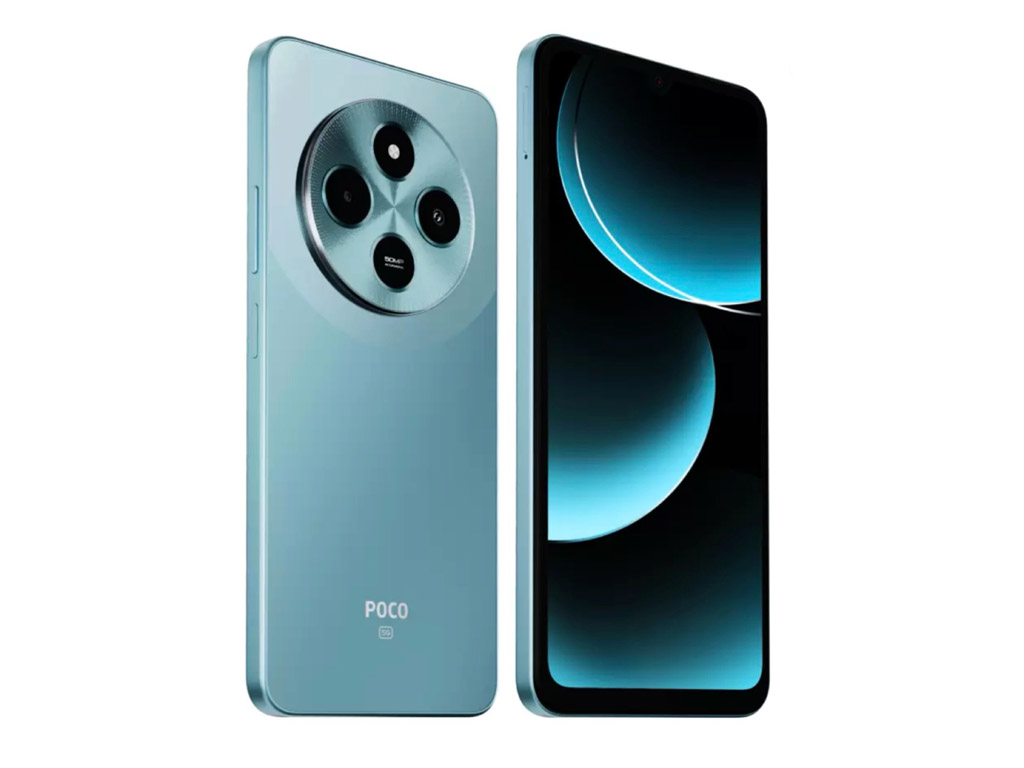
Xiaomi Poco M7 5G
Ausstattung / Datenblatt
Secondary Camera: 8 MPix f/2.0
Preisvergleich
Durchschnitt von 5 Bewertungen (aus 8 Tests)
Testberichte für das Xiaomi Poco M7 5G
Quelle: Smartzone

Im Test des Poco M7 wechseln sich Licht und Schatten ab. Einerseits ist da der riesige Akku, aber mit dem alten Prozessor und dem riesigen Bildschirm kann das Smartphone keinen wirklichen Nutzen daraus ziehen. Wo wir schon beim nächsten Kritikpunkt wären:das Poco M7 ist zu breit. Glänzen kann das Poco M7 dagegen beim Empfang, aber leider nur im 4G-Netz, denn 5G fehlt. Auch in der Einsteigerklasse sollte bei neuen Produkten, aus meiner Sicht, 5G integriert sein. Der IPS-Bildschirm wird ausreichend hell und hat eine tolle Auflösung, könnte nur ein wenig homogener ausgeleuchtet sein. Die Kamera ist akzeptabel und auch der microSD-Slot wird einige von euch freuen. Trotzdem will der Funke nicht so recht überspringen, da noch die preislichen Unterschiede so eng sind. Das Poco M7 Pro 5G ist nur unwesentlich teurer, punktet allerdings mit einer runden Ausstattung. So muss das Poco M7 auf unter 100€ sinken, um preislich attraktiv zu sein. Dann bekommt es auch einen Platz in unserer Low-Budget-Bestenliste.
Einzeltest, online verfügbar, Lang, Datum: 30.09.2025
Bewertung: Gesamt: 76% Leistung: 65% Bildschirm: 80% Mobilität: 90% Gehäuse: 75%
Ausländische Testberichte
Quelle: Root Nation
 EN→DE
EN→DEThe POCO M7 is an affordable smartphone that combines strong battery life, a large display, and adequate performance for everyday tasks. It delivers decent sound, maintains charge for extended periods, and generally feels well-balanced. As a budget option, it performs quite well.
Einzeltest, online verfügbar, Lang, Datum: 11.12.2025
Bewertung: Gesamt: 87% Preis: 80% Leistung: 80% Mobilität: 100% Gehäuse: 90%
Quelle: Yugatech
Vergleich, online verfügbar, Lang, Datum: 30.10.2025
Quelle: NDTV Gadgets
EN→DEAt Rs. 9,999, the Poco M7 5G is one of the most value-for-money offerings currently available in India. It offers support for 5G connectivity and has a familiar-looking design, and offers decent camera performance during the day. Battery life and charging speeds are also on par with other similarly priced smartphones. It's disappointing to see the Poco M7 5G launch with Android 14 when Android 15 has been out for several months when its biggest rival — the Samsung Galaxy F06 5G — ships with the latest version and is slated to receive four Android OS version upgrades. Other alternatives to the Poco M7 5G include the Redmi A4 (Review), Redmi 14C 5G, and the Moto G35 (Review).
Einzeltest, online verfügbar, Lang, Datum: 07.04.2025
Bewertung: Gesamt: 80% Preis: 80% Leistung: 80% Bildschirm: 80% Mobilität: 80% Gehäuse: 70%
Quelle: 91mobiles
EN→DEThe POCO M7 currently retails for Rs 9,999 for the 6GB + 128GB variant and goes up to Rs 10,999 for the 8GB + 128GB configuration. The device nails essentials and offers a smooth 120Hz display, decent battery life, satisfactory daylight photography and good software support. Its key rival at this price is the Tecno Spark 30C (review). Both phones are evenly matched in terms of performance and battery life, though the Spark 30C has the advantage in low-light photography. However, it doesn’t come with a compatible charger in the box, which adds to the overall cost. If you’re looking for a budget-friendly phone with a great display and good longevity, the POCO M7 is definitely worth considering.
Einzeltest, online verfügbar, Mittel, Datum: 28.03.2025
Bewertung: Gesamt: 76% Leistung: 80% Bildschirm: 80% Mobilität: 80% Gehäuse: 75%
Quelle: Business Standard
EN→DEThe POCO M7 5G is a decent phone that you can consider as a daily driver, if the usage is limited to essential tasks. If someone is looking for a valued proposition that they can rely on, is good for calling, some video streaming, and listening to music or playing casual games like Candy Crush then this smartphone might be the right pick.
Einzeltest, online verfügbar, Kurz, Datum: 24.03.2025
Quelle: The Indian Express
EN→DEThe gap between budget and mid-range smartphones is narrowing by the day. Features such as 5G, once considered exclusive to premium devices, are now making their way into more affordable models—one of the many ways technology evolves, becoming more accessible to everyone.
Einzeltest, online verfügbar, Mittel, Datum: 18.03.2025
Bewertung: Gesamt: 80%
Quelle: FPT shop
 VN→DE
VN→DEVergleich, online verfügbar, Sehr kurz, Datum: 17.12.2025
Kommentar
Qualcomm Adreno 613: Grafikchip für Smartphones und Tablets, integriert im Qualcomm Snapdragon 4 Gen 2 SoC. Obwohl es der Nachfolger des Adreno 619 im SD 4 Gen 1 ist, liegt die Performance deutlich darunter in der Einstiegsklasse.
Diese Karten können nur sehr alte und sehr anspruchslose 3D Spiele flüssig darstellen. Anwendungen wie Office, Internet surfen, Bildbearbeitung oder (SD) Videoschnitt sind jedoch ohne große Einschränkungen möglich.
» Weitere Informationen gibt es in unserem Notebook-Grafikkartenvergleich und der Benchmarkliste.
SD 4 Gen 2: Einsteiger-SoC mit 8 Kryo Kernen (zwei ARM Cortex-A78 basierte Kerne mit bis 2,2 GHz und 6 ARM Cortex-A55 mit bis zu 2 GHz) und einem X61 5G Modem. Wird im 4nm Prozess bei TSMC gefertigt.» Weitere Infos gibt es in unserem Prozessorvergleich Vergleich mobiler Prozessoren und der Prozessoren Benchmarkliste .
 Als bevorzugte Quelle auf Google hinzufügen