




Sony Vaio VGN-TZ12VN
Ausstattung / Datenblatt
Preisvergleich
Durchschnitt von 1 Bewertungen (aus 1 Tests)
Testberichte für das Sony Vaio VGN-TZ12VN
Quelle: PC Pro
 EN→DE Archive.org version
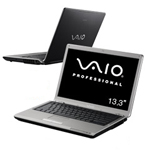
If the TZ12 looks familiar, that's because it's the spitting image of the TZ11 (web ID: 117830), which graced these pages just two months ago. We can't complain, as this version is as desirable as the original, but Sony has made a major change under the covers. Gone is the 100GB hard disk of the TZ11, replaced by a 32GB Samsung solid-state disk (SSD) - one of the very first laptops to contain what some consider the death knell for mechanical hard disks. We're yet to be convinced by that, but SSD does have a number of advantages over mechanical disks, which, for all their tried-and-tested years, still rely on precision moving parts. As they're prone to physical stress, extra layers such as head-parking software (as used by the Toshiba R500, opposite) become necessary, and a single, heavy blow can render the whole disk extinct. Also, seek times are higher because of the need to get a physical head to a specific place on a disk. And, in a product where battery life is the name of the game, SSDs take up significantly less power than their spinning equivalents.
4 von 6, Preis/Leistung mangelhaft, Leistung hervorragend
Einzeltest, online verfügbar, Mittel, Datum: 24.08.2007
Bewertung: Gesamt: 67% Preis: 50% Leistung: 95%
Kommentar
Intel Graphics Media Accelerator (GMA) 950: Integrierter (onboard) Grafikchip auf Mobile Intel 945GM/C/Z/ME/ML Chipsätzen und Nachfolger des GMA 900. Kein Hardware T&L (für manche Spiele benötigt). Für Spiele kaum geeignet.
3D Spiele sind auf diesen Vertretern nur in Ausnahmen spielbar, grundsätzlich sind die Grafiklösungen hierfür jedoch nicht geeignet. Office Programme und Internet surfen dürfte jedoch ohne Problem möglich sein.
» Weitere Informationen gibt es in unserem Notebook-Grafikkartenvergleich und der Benchmarkliste.
Intel Core 2 Duo: Core Duo Nachfolger mit längerer Pipeline und 5-20% Geschwindigkeitszuwachs bei 0.5 - 3 Watt mehr Stromverbrauch.
Der Notebook Core 2 Duo ist baugleich mit den Desktop Core 2 Duo Prozessoren, jedoch werden die Notebook-Prozessoren mit niedrigeren Spannungen und geringerem Frontsidebus Takt betrieben. Von der Leistung bleiben gleichgetaktete Notebooks deswegen (und auch wegen der langsameren Festplatten) 20-25% hinter Desktop PCs.
U7600: Die U-Varianten verbrauchen maximal 11.9 Watt und stehen für "Ultra Low Voltage".» Weitere Infos gibt es in unserem Prozessorvergleich Vergleich mobiler Prozessoren und der Prozessoren Benchmarkliste .
 Als bevorzugte Quelle auf Google hinzufügen