




Motorola Razr 70 Plus

Pro
Contra
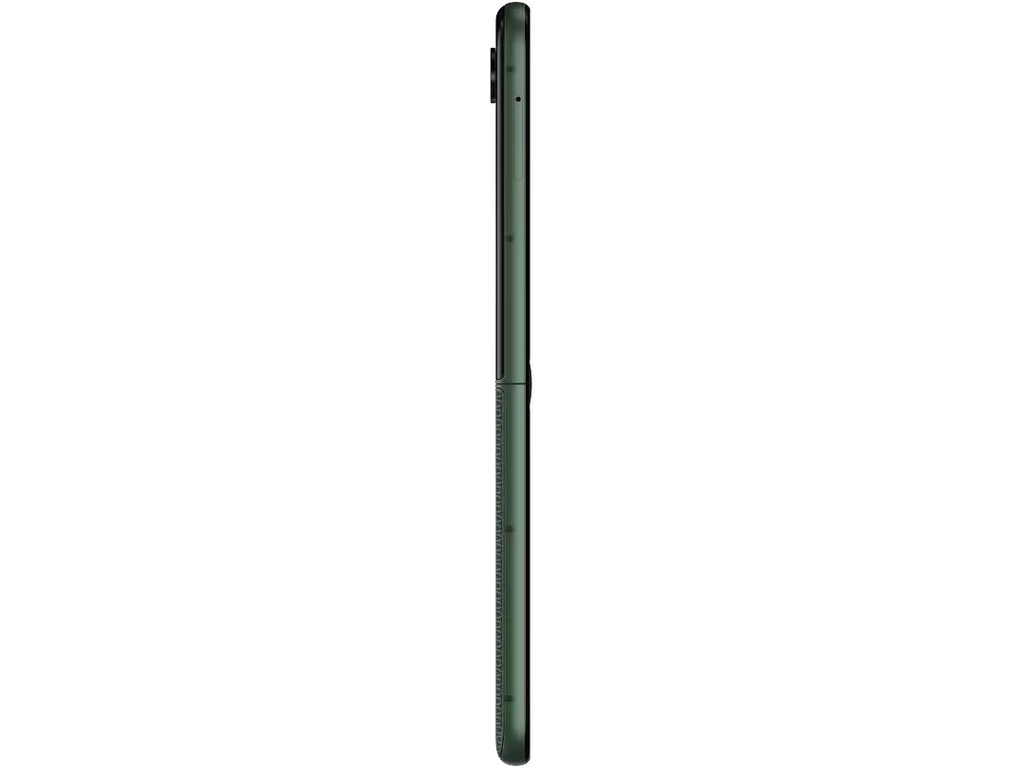
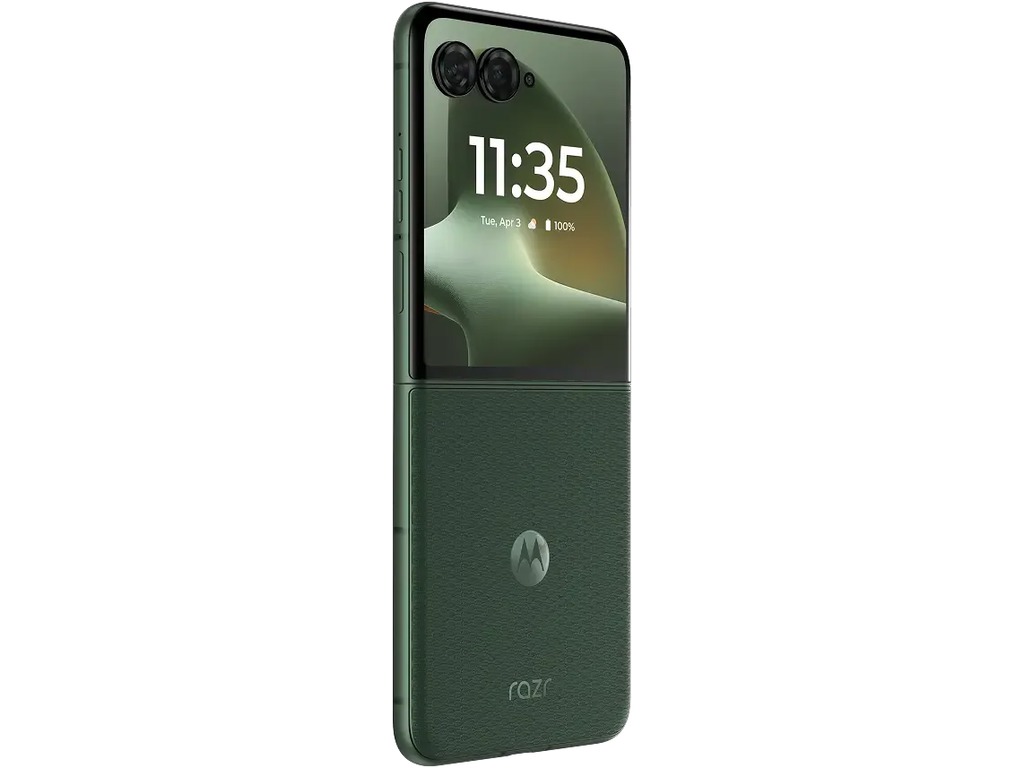
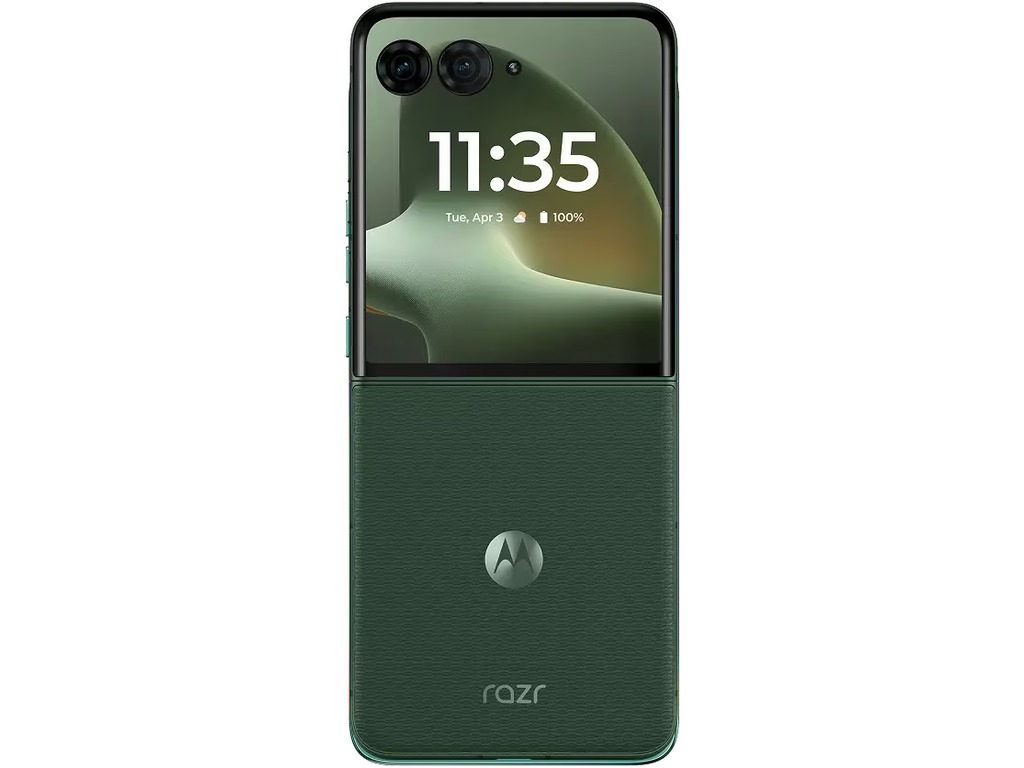
Das Motorola Razr 70 Plus ist ein stilvolles Klapphandy mit einem 6,9-Zoll-Hauptdisplay und einem praktischen 4-Zoll-Deckbildschirm. Beide AMOLED-Displays bieten eine flüssige Bildwiederholfrequenz von 165 Hz. Der Snapdragon 8s Gen 3-Prozessor, 12 GB RAM und bis zu 512 GB Speicher sorgen für eine solide, wenn auch nicht klassenführende Leistung. Zwei 50-MP-Kameras auf der Rückseite und eine 32-MP-Selfie-Kamera liefern hervorragende Fotoergebnisse, insbesondere bei Porträtaufnahmen. Der 4.500-mAh-Akku unterstützt 45-W-Laden per Kabel sowie 15-W-Laden per Induktion. Rezensenten schätzen im Allgemeinen das Design, die Displays, die Kameras und den Akku, stellen jedoch den Preis sowie die Positionierung zwischen dem günstigeren Razr und dem Premium-Modell Razr Ultra in Frage.
Ausstattung / Datenblatt
Secondary Camera: 32 MPix f/2.4, Videos @2160p/30fps
Preisvergleich
Durchschnitt von 16 Bewertungen (aus 21 Tests)
Testberichte für das Motorola Razr 70 Plus
Erstmals bringt Motorola ein drittes Modell seiner Clamshell-Klapphandys: Das Razr 70 Plus soll einiges besser machen als das Razr 70 und doch erschwinglich bleiben. Ob dieser Spagat gelingt, erfahren Sie in unserem Test. Update: Weitere Akkutests
Quelle: Techradar
 EN→DE
EN→DEThe Motorola Razr Plus 2026 (or Razr 70 Plus) is a head-turning foldable with two great displays, impressive battery life, and excellent portrait-taking capabilities. Unfortunately, it's also saddled with a so-so chipset and software support (or a lack thereof) that just isn't good enough at this price range.
Einzeltest, online verfügbar, Mittel, Datum: 30.06.2026
Bewertung: Gesamt: 70% Preis: 60% Leistung: 60% Bildschirm: 80% Mobilität: 100% Gehäuse: 80%
Quelle: Android Headlines
EN→DEThe Motorola Razr Plus 2026 is a big win for the folding phone category. It shakes off the air of a fragile experimental prototype and confidently takes on the role of a reliable, high-performance daily driver. The gorgeous Pantone Mountain View color and textured rear cover is a breath of fresh air from slippery glass slabs that provide excellent grip and look pristine and fingerprint-free.
Einzeltest, online verfügbar, Lang, Datum: 30.06.2026
Bewertung: Gesamt: 80%
Quelle: PC Mag
EN→DEThe Motorola Razr+ for 2026 now has the battery life it should've had all along, but simply catching up doesn't justify charging more. Between the recycled processor, mid-grade performance, Moto AI headaches, and the $100 price hike, I can't recommend the Razr+.
Einzeltest, online verfügbar, Mittel, Datum: 29.06.2026
Bewertung: Gesamt: 60%
Quelle: BGR
EN→DEThe Motorola Razr+ (2026) sits in kind of an awkward position. It's not quite the flip phone for those who simply want their device to fold at the lowest price possible. That title goes to the base Motorola Razr. And it's not the device for those who want the best flip phone they can buy. For that, you'll need to step up to the Razr Ultra tier.
Einzeltest, online verfügbar, Kurz, Datum: 09.06.2026
Quelle: Phone Arena
EN→DEThe Motorola Razr Plus 2026 suffers from being the middle child. It has to find the perfect balance of features and price, but with the new and higher $1,100 price, it's not cheap. It's also $300 pricier than the base Razr 2026 model, and for most people, I think that price premium is not worth it.
Einzeltest, online verfügbar, Sehr Lang, Datum: 04.06.2026
Bewertung: Gesamt: 67% Leistung: 57% Bildschirm: 70% Mobilität: 82% Gehäuse: 80%
Quelle: Android Central
EN→DEThe Motorola Razr Plus 2026 might look nearly the same from the outside, but Motorola clearly paid attention to most users' concerns, upgrading key components like the battery size, cameras, and durability. The 2026 model also sports longer software support commitments, now with promised updates until 2032. The price increase stings, especially given that there's no SoC upgrade, and having only one color model is a bummer, but this is still the best flip phone for the price, especially with the new upgrades.
Einzeltest, online verfügbar, Mittel, Datum: 26.05.2026
Bewertung: Gesamt: 90%
Quelle: Make Use Of
EN→DEThe Motorola Razr Plus 2026 left me surprised more than anything else. It's woefully underpowered in some areas, like the processor, but also impressive in others, such as the camera and battery hardware. The battery makes the Razr Plus 2026 weak within the Razr 2026 lineup, although it becomes a key advantage when comparing the phone to the Galaxy Z Flip 7. The same can be said about the cameras. We can argue about whether the Razr Plus 2026 should've retained its telephoto lens, but having a 50MP secondary lens of any kind puts this phone ahead of Samsung's best. I've already written about how the Razr Ultra 2026 isn't a realistic choice at its full $1,500 price point, but the Plus model is appealing at $1,100. Throw in a carrier discount — AT&T will give you this phone for under $160 with a 36-month contract and bill credits — and the Razr Plus 2026 becomes a downright good deal.
Einzeltest, online verfügbar, Mittel, Datum: 23.05.2026
Bewertung: Gesamt: 75%
Quelle: CNet
EN→DEThere are two groups of people that I think this Razr Plus is best for. The first group is anyone who purchased the 2023 Razr Plus or base Razr and is looking for an upgrade to the 4-inch cover display without spending $1,500 for the Razr Ultra. The second is anyone curious about the Razr line who knows they need a bit more power and memory than the base phone offers, yet isn't willing to spend $1,500 on an Ultra with more powerful specs. However, for most people interested in getting their first folding phone, I don't think there's enough here to justify the $300 premium over the base Razr. The bigger cover screen is nice, but not nice enough to justify the price difference. That $800 Razr includes the same 256GB of storage, at least in the version sold by Motorola; I'd avoid the 128GB model wherever it's sold.
Einzeltest, online verfügbar, Mittel, Datum: 21.05.2026
Bewertung: Gesamt: 70%
Quelle: OI Spice Tech News
EN→DEThe Motorola is bringing back the flip-phone magic with the Razr 70 Plus, announced and released on April 29, 2026. When you unfold it, you get a gorgeous 6.9-inch LTPO AMOLED screen that is smooth as butter with a 165Hz refresh rate and blindingly bright at 3000 nits, perfect for watching HDR videos or using it outdoors. You are left with a compact 4-inch external AMOLED display (also 165Hz) that lets you reply to messages, take selfies, or control music without flipping open. It is incredibly lightweight at just 189 grams, and the titanium hinge feels premium. Plus, it has an IP48 rating, meaning it can handle dust and survive a dip in 1.5 meters of water for 30 minutes.
Einzeltest, online verfügbar, Sehr kurz, Datum: 13.05.2026
Quelle: Xataka
 ES→DE
ES→DEEinzeltest, online verfügbar, Sehr Lang, Datum: 19.07.2026
Bewertung: Gesamt: 82% Leistung: 80% Bildschirm: 85% Mobilität: 75% Gehäuse: 90%
Quelle: Computerhoy
ES→DEEinzeltest, online verfügbar, Mittel, Datum: 15.06.2026
Bewertung: Gesamt: 86%
Quelle: 4G News
 PT→DE
PT→DEEinzeltest, online verfügbar, Kurz, Datum: 16.08.2026
Bewertung: Gesamt: 80%
Quelle: Android Geek
PT→DEEinzeltest, online verfügbar, Lang, Datum: 24.07.2026
Bewertung: Gesamt: 85%
Quelle: Batista70Phone
 IT→DE
IT→DEVergleich, online verfügbar, Sehr Lang, Datum: 20.08.2026
Quelle: Batista70Phone
IT→DEEinzeltest, online verfügbar, Sehr Lang, Datum: 03.08.2026
Bewertung: Gesamt: 87% Preis: 80% Ausstattung: 80% Bildschirm: 90% Mobilität: 85% Gehäuse: 90%
Quelle: Techprincess IT
IT→DEEinzeltest, online verfügbar, Kurz, Datum: 19.06.2026
Quelle: Everyeye.it
IT→DEEinzeltest, online verfügbar, Sehr kurz, Datum: 09.06.2026
Quelle: Smart World
IT→DEEinzeltest, online verfügbar, Kurz, Datum: 01.06.2026
Bewertung: Gesamt: 81% Preis: 65% Ausstattung: 80% Bildschirm: 80% Mobilität: 75% Gehäuse: 85% Ergonomie: 85%
Quelle: Evo smart
IT→DEEinzeltest, online verfügbar, Kurz, Datum: 30.05.2026
Bewertung: Gesamt: 74% Preis: 70% Leistung: 80% Bildschirm: 80% Mobilität: 60%
Quelle: AndroidWorld.nl
 NL→DE
NL→DEEinzeltest, online verfügbar, Kurz, Datum: 17.06.2026
Bewertung: Gesamt: 77%
Quelle: FPT shop
 VN→DE
VN→DEEinzeltest, online verfügbar, Kurz, Datum: 29.07.2026
Kommentar
Qualcomm Adreno 735: Grafikchip für Smartphones und Tablets, integriert im Qualcomm Snapdragon 8s Gen 3 SoC.
Diese Klasse ist noch durchaus fähig neueste Spiele flüssig darzustellen, nur nicht mehr mit allen Details und in hohen Auflösungen. Besonders anspruchsvolle Spiele laufen nur in minimalen Detailstufen, wodurch die grafische Qualität oft deutlich leidet. Diese Klasse ist nur noch für Gelegenheitsspieler empfehlenswert. Der Stromverbrauch von modernen Grafikkarten in dieser Klasse ist dafür geringer und erlaubt auch bessere Akkulaufzeiten.
» Weitere Informationen gibt es in unserem Notebook-Grafikkartenvergleich und der Benchmarkliste.
SD 8s Gen 3: High-End SoC (System on a Chip) für Smartphones welcher in 2024 vorgestellt wurde. Integriert unter anderen einen schnellen Cortex-X4 "Prime Core" mit bis zu 3 GHz und 4 weitere schnelle Cortex-A720 2,8 GHz. Zum Stromsparen wurden außerdem 3weitere ARM Cortex-A520 Kerne mit 2,3 GHz verbaut. Integriert ein 5G Modem, WiFi 7 und eine deutlich schnellere AI Engine.» Weitere Infos gibt es in unserem Prozessorvergleich Vergleich mobiler Prozessoren und der Prozessoren Benchmarkliste .
Geräte anderer Hersteller
Geräte mit der selben Bildschirmgröße und/oder ähnlichem Gewicht
Laptops des selben Herstellers
 Als bevorzugte Quelle auf Google hinzufügen


