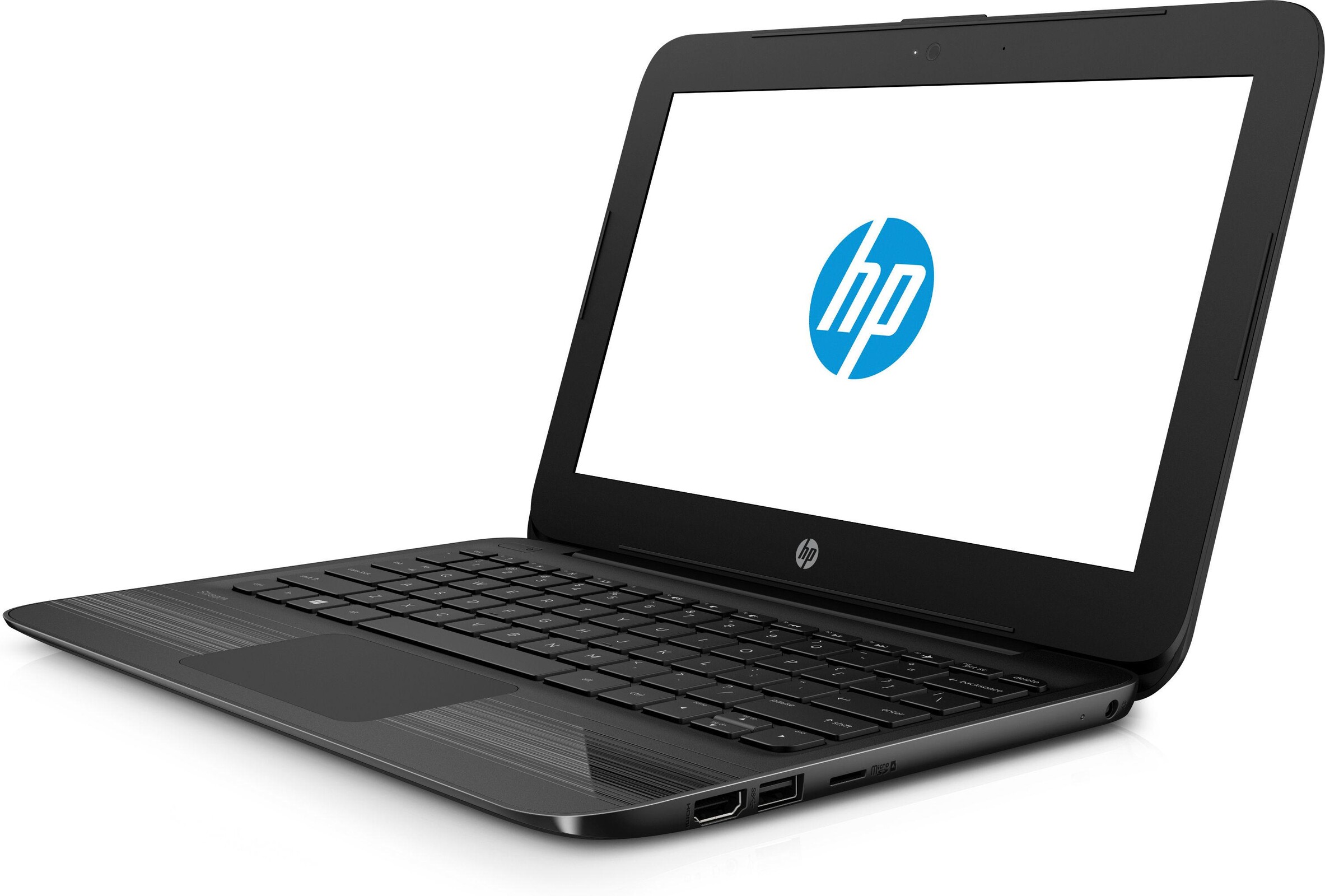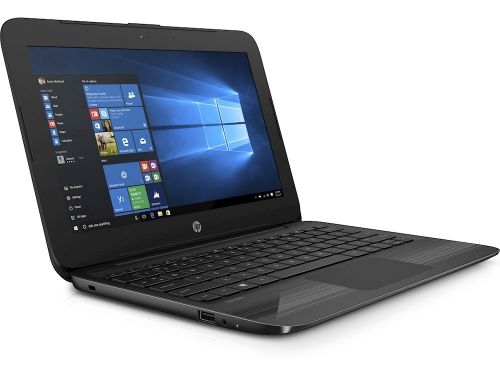




HP Stream 11 Pro G3 Z2Z28ES
Ausstattung / Datenblatt
Preisvergleich
Durchschnitt von 1 Bewertungen (aus 1 Tests)
Testberichte für das HP Stream 11 Pro G3 Z2Z28ES
Quelle: Tweakers
 NL→DE Archive.org version
Einzeltest, online verfügbar, Sehr kurz, Datum: 04.12.2018
Bewertung: Gesamt: 20%
Kommentar
Modell: Sind Sie bereit sich die Geschichte des bislang schlechtesten Laptops zu hören? Ich weiß, dass ist ein frecher Einstieg in einen Artikel. Doch leider trifft dies auf diesen Laptop zu.
Die Stream-11-Serie umfasst kleine und kompakte Notebooks. Zumindest glaube ich, dass HP das erreichen wollte. Die Idee ist nicht schlecht. Im Gegenteil, ich denke das ist eine großartige Idee. Doch bei Netbooks gibt es meiner Meinung nach ein Problem. Ja, sie sind klein, leicht und einfach tragbar. Doch ein kleines Gehäuse bedeutet auch, dass man dafür viele Kompromisse eingehen muss.
Okay, Sie könnten fragen, was daran schlecht sei. Meine Antwort ist: Wenn der Laptop nicht einmal Office-Software flüssig ausführen kann, warum gibt es ihn dann? Das ist bei den meisten, wenn nicht allen Netbooks so. Mit dem Stream 11 Pro erhalten Sie ein Gerät, das erfreulicherweise nur zirka 1,3 kg wiegt. Doch ein 64 GB eMMC-Laufwerk ist sehr einschränkend. Auch der Intel Celeron N3060 ist kein Kraftwerk. Man kombiniere das mit 4 GB RAM und versuche Windows 10 darauf ausführen. Verstehen Sie, worauf ich hinaus will?
Der Preis ist ein weiteres Kriterium. Netbooks sind zwar billig, aber lassen Sie sich nicht in die Irre führen. Billiges führt meistens zu Frustration. Wenn Sie ein knappes Budget haben und dringend einen neuen Laptop brauchen, sollten Sie sicherstellen, dass Sie etwas kaufen, was ihren Anforderungen entspricht. Prüfen Sie immer auf Alternativen, sodass Sie nicht irgendetwas kaufen und später etwas Besseres kaufen müssen.
Mit 4 GB RAM, nur 64 GB Speicherkapazität und einem Celeron Prozessor kommt dieser Laptop leider überhaupt nicht in Frage. Sogar beim Surfen im Internet ist seine Leistung sehr beschränkt. In den meisten Fallen ist ein Android-Tablet dafür viel brauchbarer.
Spricht irgendetwas für diesen Laptop? Nichts, außer, dass er klein und leicht ist. Wenn Sie genug Geld haben, gibt es natürlich hochwertige Modelle, die so leicht wie ein Netbook sind und vielleicht die 10-fache Leistung bieten.
Insgesamt empfehle ich daher, diesen Laptop nicht zu kaufen, egal wie sehr er Ihnen gefallen hat, denn das wäre nur eine Geldverschwendung.
Hands-On-Artikel von Ümit Yılmaz Güneş
Serie:
At first blush, HP’s Stream 14 is an inexpensive compact budget laptop with a long battery life and performance good enough for basic productivity and streaming media. The system is encased in an attractive and bright aqua blue colour clamshell made of plastic, and the lid has ridges that give the device texture and added grip. The slim and lightweight laptop measures 17.8 x 337.1 x 226.1 mm and weighs up to 1.4 kg, making it extremely easy to carry around. As the name implies, the Stream 14 has a 14-inch LED-backlit screen with aspect ratio of 16:9, HD resolution of 1366 x 768 pixels, and a pixel density of 112 PPI. The lack of IPS technology for the display gives it poor viewing angles, but its picture quality is decent and therefore should be suitable for entertainment like watching YouTube clips. The display is also bright enough to work in a dimly lit room. Set below the display is a full size Chiclet style keyboard with white keys, giving it a nice contrast to the Stream 14’s blue chassis hue. The keys have good travel and distance between them, and are comfortable to type on. However, the keyboard is not backlit, and that is among the few trade-offs HP had to make to keep the notebook affordable. The one-piece touchpad is also responsive and does its job well. For connectivity options, this budget notebook has a plethora of ports including USB 2.0, 3.0 and 3.1 ports. Battery-wise, the Stream 14 runs on a 3-cell 41 Wh lithium-ion battery that can provide 9 to 11 hours of battery life depending on the type of usage. This is pretty impressive for a budget notebook.
The Stream 14 runs on a dual core Intel Celeron N3060, with a base frequency of 1.6 GHZ and can be pumped up to a maximum of 2.48 GHz with the help of Intel’s Turbo Boost Technology. The Celeron N3060 is one of the weaker CPU’s in today’s market. Though it has two cores, the Stream 14 may not be able to perform well in photo and video editing or 3D designing. This should come as no surprise, since this processor is complemented with an Intel HD Graphics 400 (Braswell) graphics card. These specs clearly indicate that the Stream 14 is not appropriate for modern gaming. Instead, the Stream 14 is designed to be only suitable for basic home and office computing tasks. Packed with 4 GB of RAM, there will be no problems with system lag when running multiple programs simultaneously. The Stream 14 ships with the Microsoft Windows 10 Home 64 bit operating system, and has an inbuilt storage of 32 GB. The storage capacity can be expanded with an USB drive or a microSD card. HP has also includes a one-year subscription to 1 TB of online cloud storage on Microsoft OneDrive and use of Office 365 Personal with the system.
Hands-on article by Jagadisa Rajarathnam
Intel HD Graphics 400 (Braswell): Grafikeinheit in den SoCs der Intel-Braswell-Serie. Basiert auf der Broadwell-GPU (Intel Gen8), unterstützt DirectX 11.2 und bietet je nach Modell 12 EUs bei unterschiedlichen Taktraten. Anfangs nur Intel HD Graphics benannt, später als Intel HD Graphics 400 bezeichnet.
Einige nicht anspruchsvolle aktuelle Spiele können mit geringen Details noch flüssig gespielt werden. Für Office und Video natürlich ausreichende Leistungsreserven.
» Weitere Informationen gibt es in unserem Notebook-Grafikkartenvergleich und der Benchmarkliste.
N3060: Sparsamer Dual-Core-SoC auf Basis der Atom-Architektur "Airmont" für preiswerte Notebooks. Taktet mit 1,6 bis 2,48 GHz und integriert eine DirectX-11.2-fähige Grafikeinheit. » Weitere Infos gibt es in unserem Prozessorvergleich Vergleich mobiler Prozessoren und der Prozessoren Benchmarkliste .
 Als bevorzugte Quelle auf Google hinzufügen