




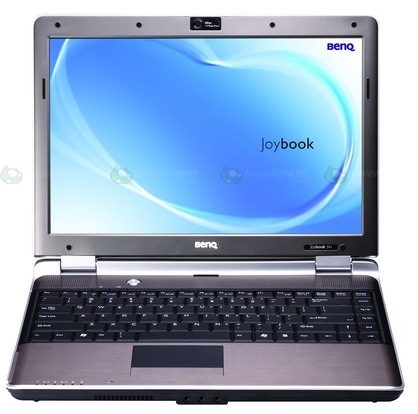
Benq Joybook S41
Ausstattung / Datenblatt
Preisvergleich
Durchschnitt von 1 Bewertungen (aus 1 Tests)
Testberichte für das Benq Joybook S41
Quelle: Hardware Zone
 EN→DE Archive.org version
When it comes to BenQ notebooks, our impression is that of affordable and competent workhorse systems, rather than glamour. The company's new Santa Rosa based notebook, the Joybook S41 tries to be different with its unique pop art inspired design on the lid but in our opinion, it's a miss rather than a hit. Not everyone will agree with our opinion obviously as this is a subjective issue. We did however like some facets of its chassis, like the brushed aluminum used for the palm rest. It all depends on the consumer and we really recommend that you get a hands-on for this notebook as images can only go so far. Finally, BenQ competes against more reputed brands by having prices that are usually quite attractive. This works for consumers looking for value and performance and at S$2099, the Joybook S41 is very affordable for a notebook boasting decent dedicated graphics like the GeForce 8600M GS along with the system's other tech specs. There are a couple of similar options out there like the slightly better equipped Acer Aspire 4920G (S$2298) but once we normalized the differences, they are both very close in price-performance.
4 von 5, Preis/Leistung sehr gut
Einzeltest, online verfügbar, Lang, Datum: 27.07.2007
Bewertung: Gesamt: 80% Preis: 90%
Kommentar
NVIDIA GeForce 8600M GS: DirectX 10 fähige Mittelklasse Grafikkarte für Notebooks mit ausreichend Performance für DirectX 9 Spiele und H.264 Beschleunigung. Für DirectX 10 Effekte reicht die Performance nicht aus.
Diese Karten können nur sehr alte und sehr anspruchslose 3D Spiele flüssig darstellen. Anwendungen wie Office, Internet surfen, Bildbearbeitung oder (SD) Videoschnitt sind jedoch ohne große Einschränkungen möglich.
» Weitere Informationen gibt es in unserem Notebook-Grafikkartenvergleich und der Benchmarkliste.
Intel Core 2 Duo: Core Duo Nachfolger mit längerer Pipeline und 5-20% Geschwindigkeitszuwachs bei 0.5 - 3 Watt mehr Stromverbrauch.
Der Notebook Core 2 Duo ist baugleich mit den Desktop Core 2 Duo Prozessoren, jedoch werden die Notebook-Prozessoren mit niedrigeren Spannungen und geringerem Frontsidebus Takt betrieben. Von der Leistung bleiben gleichgetaktete Notebooks deswegen (und auch wegen der langsameren Festplatten) 20-25% hinter Desktop PCs.
T7100: Die T-Varianten sind die Standardversion für Notebooks und verbrauchen etwa 30-39 Watt.» Weitere Infos gibt es in unserem Prozessorvergleich Vergleich mobiler Prozessoren und der Prozessoren Benchmarkliste .
 Als bevorzugte Quelle auf Google hinzufügen