




Samsung Galaxy Book S Intel
Ausstattung / Datenblatt
Preisvergleich
Durchschnitt von 6 Bewertungen (aus 10 Tests)
Testberichte für das Samsung Galaxy Book S Intel
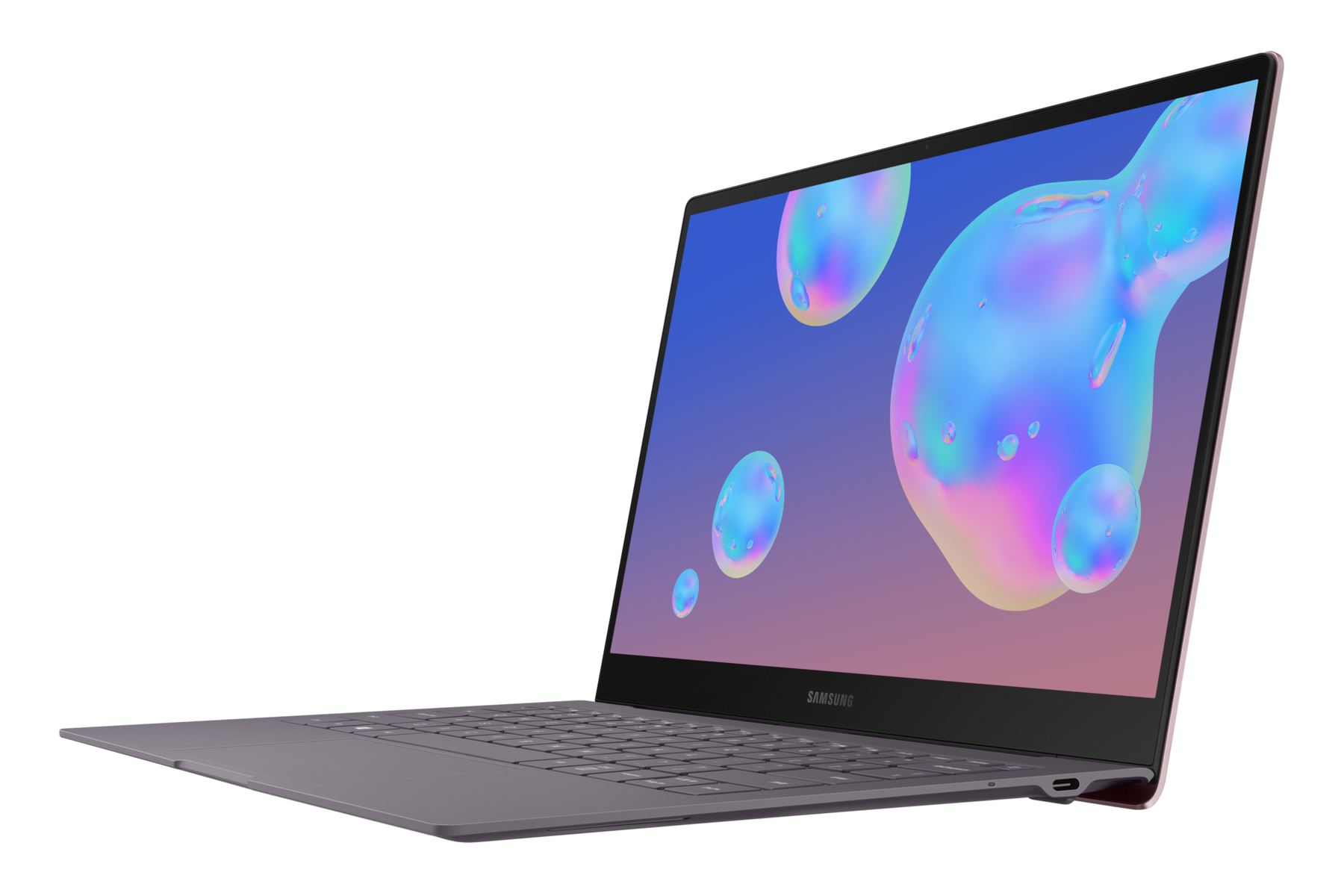
Samsung bietet das kompakte Galaxy Book S nun auch mit einem Intel Prozessor an. Gegenüber dem ARM Modell verbessert sich damit die Kompatibilität mit Apps, doch im Gegenzug muss man auf ein LTE-Modem verzichten, und auch die Akkulaufzeiten fallen deutlich kürzer aus. Welche Unterschiede es sonst noch gibt, haben wir uns im Test genau angesehen. Update: Statement von Samsung hinzugefügt
Quelle: Pocket Lint
 EN→DE Archive.org version
A lightweight looker that - despite the battery life being about 25 per cent less than the Qualcomm equivalent - is still a decent daily driver, with full access to Windows 10 Home and all that apps that you'll need.
Einzeltest, online verfügbar, Sehr Lang, Datum: 30.11.2020
Bewertung: Gesamt: 80%
Quelle: Hot Hardware
EN→DE Archive.org versionWe began this shoot-out thinking that the full x86 compatibility of the Core i5-L16G7 was going to be nothing but an asset. Coming into this, we expected better single-threaded performance, similar battery life thanks to Lakefield's low TDP, and full x86 compatibility. In the end, we got the full x86 compatibility, but the rest of the numbers didn't look very good. Overall, of the Qualcomm Snapdragon 8cx's performance relative to the Core i5-L16G7 is excellent and the battery life for the Arm-based system is in another league. As a result, we have to give this version of the Galaxy Book S a pass.
Vergleich, online verfügbar, Sehr Lang, Datum: 03.09.2020
Quelle: T3
EN→DE Archive.org versionThe Samsung Galaxy Book S series continues to impress, and the new hybrid chip that Intel has been able to fit here manages to find a good balance between performance and battery life. On top of that, the screen and design is one of the best we've seen too.
Einzeltest, online verfügbar, Lang, Datum: 08.07.2020
Bewertung: Gesamt: 100%
Quelle: Target HD
 PT→DE Archive.org version
Positive: Slim size; light weight; premium design; solid workmanship; metal case; nice display; powerful hardware; high performance; good connectivity.
Einzeltest, online verfügbar, Sehr Lang, Datum: 27.07.2022
Quelle: Gizmodo Brasil
PT→DE Archive.org versionPositive: Compact size; light weight; high mobility; elegant design; great built quality; bright display; attractive price.
Einzeltest, online verfügbar, Mittel, Datum: 30.04.2021
Quelle: Smart World
 IT→DE Archive.org version
Einzeltest, online verfügbar, Mittel, Datum: 09.07.2020
Bewertung: Gesamt: 75% Preis: 55% Ausstattung: 75% Bildschirm: 85% Mobilität: 85% Ergonomie: 75%
Quelle: Quotidiano Hardware Upgrade
IT→DE Archive.org versionPositive: Compact size; light weight; powerful processor; good cooling and silent system; beautiful design.
Einzeltest, online verfügbar, Sehr Lang, Datum: 23.11.2020
Quelle: Tweakers
 NL→DE Archive.org version
Positive: Impressive processor; nice performance; slim size; light weight.
Einzeltest, online verfügbar, Sehr Lang, Datum: 19.08.2020
Quelle: Alt om Data
 DA→DE Archive.org version
Einzeltest, online verfügbar, Kurz, Datum: 10.09.2020
Bewertung: Gesamt: 67% Preis: 67% Leistung: 50%
Quelle: M3 PC för alla
 SV→DE Archive.org version
Einzeltest, online verfügbar, Lang, Datum: 24.06.2020
Bewertung: Gesamt: 80%
Kommentar
Intel UHD Graphics G7 (Lakefield GT2 64 EU): integrierte Grafikkarte (in Lakefield Ice-Lake G7 SoCs) der Gen. 11 Architektur mit 64 EUs (Shader-Cluster). Taktet mit 200 MHz Basistakt und 500 MHz Boost (erste Modelle). Der Lakefield-Chip wird im modernen 10nm Verfahren bei Intel gefertigt und soll mit 7nm bei TSMC mithalten können.
Diese Klasse ist noch durchaus fähig neueste Spiele flüssig darzustellen, nur nicht mehr mit allen Details und in hohen Auflösungen. Besonders anspruchsvolle Spiele laufen nur in minimalen Detailstufen, wodurch die grafische Qualität oft deutlich leidet. Diese Klasse ist nur noch für Gelegenheitsspieler empfehlenswert. Der Stromverbrauch von modernen Grafikkarten in dieser Klasse ist dafür geringer und erlaubt auch bessere Akkulaufzeiten.
» Weitere Informationen gibt es in unserem Notebook-Grafikkartenvergleich und der Benchmarkliste.
i5-L16G7: Auf der Lakefield-Architektur basierender ULV-SoC (System-on-a-Chip) für dünne Notebooks, Tablets und Convertibles. Integriert einen schnellen Sunny Cove Kern (bekannt aus Ice Lake) mit bis zu 3 GHz und 4 kleine Tremont Kerne (neuer Atom Kern). Der Rest des SoC kommt aus der Ice Lake-Generation wie auch die Gen 11 Grafik (Iris Plus Graphics G7 Grafikeinheit). Der SoC wird im aktuellen 10-Nanometer-Prozess bei Intel gefertigt. » Weitere Infos gibt es in unserem Prozessorvergleich Vergleich mobiler Prozessoren und der Prozessoren Benchmarkliste .
 Als bevorzugte Quelle auf Google hinzufügen