




Samsung Galaxy Book Ion 13.3
Ausstattung / Datenblatt
Preisvergleich
Durchschnitt von 11 Bewertungen (aus 12 Tests)
Testberichte für das Samsung Galaxy Book Ion 13.3
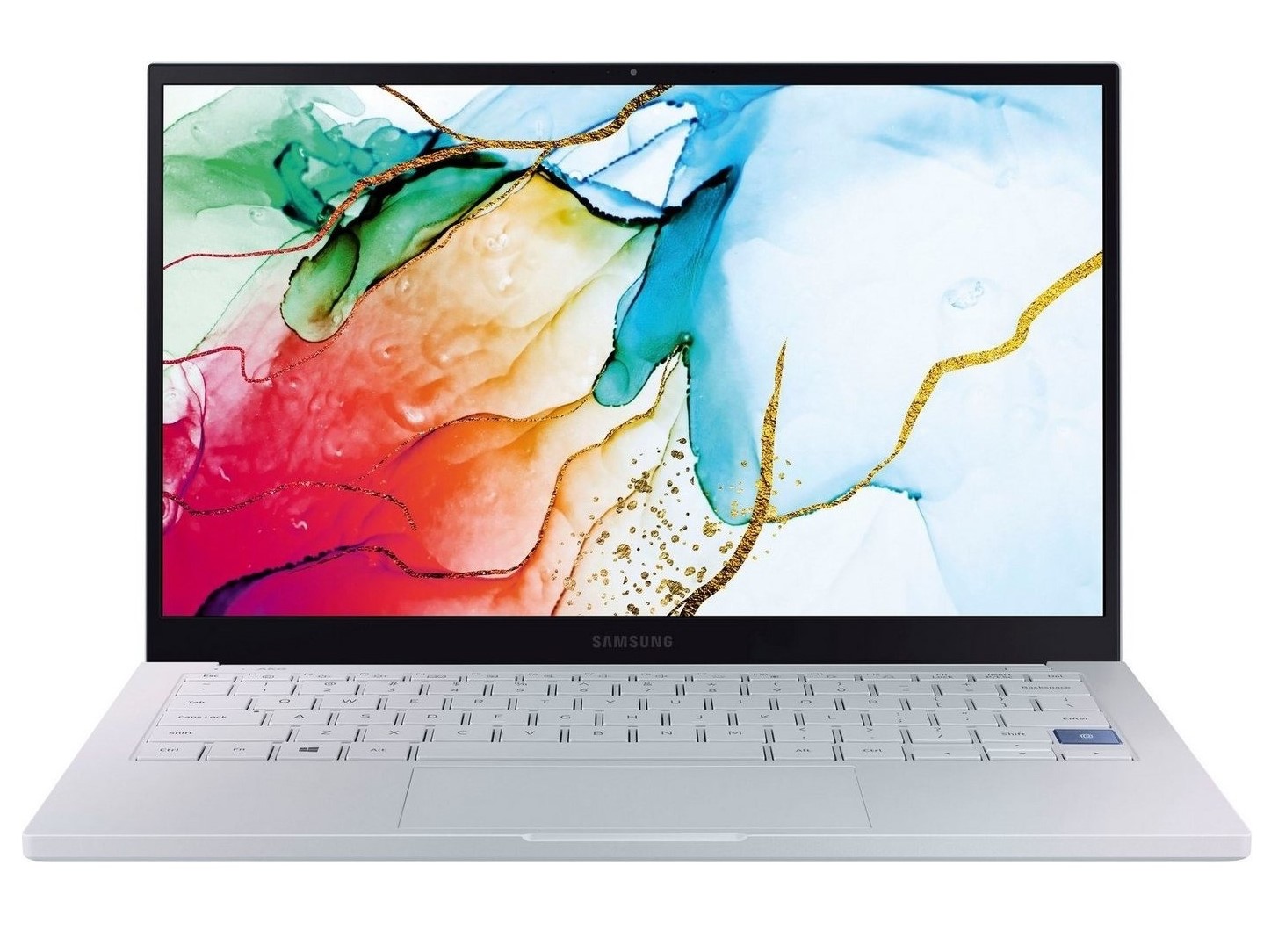
Die aktualisierte 2020-Version des Samsung Galaxy Book Ion bringt nicht nur moderne Hardware mit sich, sondern auch ein ansprechendes Design. Hinzu kommen QLEDs als Hintergrundbeleuchtung und das Versprechen einer langen Akkulaufzeit. Was die Neuauflage tatsächlich im Alltag leistet, klären wir in unserem Testbericht.
Quelle: Inside Handy
 Archive.org version
Großer Bildschirm, geringes Gewicht, das Ganze kombiniert mit einer leistungsfähigen Hardware – das könnte viele überzeugen. Die Eingabegeräte sowie die Ergonomie gefallen, und auch die Verarbeitung geht in Ordnung. Das Galaxy Book Ion ist ein gutes Notebook mit kleinen Abzügen bei Details.
Einzeltest, online verfügbar, Lang, Datum: 06.08.2020
Quelle: WinFuture
Archive.org versionSamsung kehrt nach sechs Jahren Pause auf den Notebook-Markt zurück. Zu den ersten neuen Modellen zählt das recht kompakte Samsung Galaxy Book Ion, welches in unterschiedlichen Displaygrößen erscheint. Sämtliche Modelle besitzen ein QLED-Panel mit einer Auflösung von 1920 × 1080 Pixeln.
Einzeltest, online verfügbar, Kurz, Datum: 27.06.2020
Ausländische Testberichte
Quelle: Expert Reviews
 EN→DE Archive.org version
There are so many things to love about the Samsung Galaxy Book Ion that the one or two little foibles don’t spoil things. It’s fast and responsive. It’s very light and thin. And, unlike so many other ultraportables, there are loads of ports to play with; you can even expand the storage by adding a second SSD internally. Combined with a stunning display, battery life that just won’t quit and a price that’s really rather reasonable (especially for the 15in model), it all goes together to produce an ultraportable laptop of rare quality. Welcome back to the world of Windows laptops, Samsung; you’ve been sorely missed.
Einzeltest, online verfügbar, Mittel, Datum: 23.06.2021
Bewertung: Gesamt: 100%
Quelle: Techradar
EN→DE Archive.org versionThe Samsung Galaxy Book Ion is a nicely designed thin and light laptop that boasts an impressive amount of power, along with some genuinely unique features - though not all of them are successful. It has a stunning 1080p screen and a truly impressive battery life, but it's also very expensive, meaning it won't be for everyone.
Einzeltest, online verfügbar, Lang, Datum: 21.06.2021
Bewertung: Gesamt: 80%
Quelle: Expert Reviews
EN→DE Archive.org versionThere are so many things to love about the Samsung Galaxy Book Ion that the one or two little foibles don’t spoil things. It’s fast and responsive. It’s very light and thin. And, unlike so many other ultraportables, there are loads of ports to play with; you can even expand the storage by adding a second SSD internally. Combined with a stunning display, battery life that just won’t quit and a price that’s really rather reasonable (especially for the 15in model), it all goes together to produce an ultraportable laptop of rare quality. Welcome back to the world of Windows laptops, Samsung; you’ve been sorely missed.
Einzeltest, online verfügbar, Mittel, Datum: 29.03.2021
Bewertung: Gesamt: 100%
Quelle: It Pro
EN→DE Archive.org versionAs soon as you clap eyes on the Samsung Galaxy Book Ion, you can tell this is a special machine. This is no MacBook Air clone, clad in dull grey aluminium, but a laptop with its own identity that hits all the right notes for a 13in ultraportable: it’s light at 970g, robust and packs a stunner of a screen.
Einzeltest, online verfügbar, Kurz, Datum: 01.12.2020
Bewertung: Gesamt: 100%
Quelle: Trusted Reviews
EN→DE Archive.org versionThe Samsung Galaxy Book Ion is aimed at casual laptop users who want the best experience possible. A glorious QLED display, long-lasting battery life and ultra-portable premium design make it a worthwhile alternative to Dell and Microsoft systems, but that high price will be hard to justify for some, especially with the sub-standard keyboard and lack of a decent integrated graphics performance.
Einzeltest, online verfügbar, Lang, Datum: 11.08.2020
Bewertung: Gesamt: 80%
Quelle: Techradar
EN→DE Archive.org versionThe Samsung Galaxy Book Ion is a nicely designed thin and light laptop that boasts an impressive amount of power, along with some genuinely unique features - though not all of them are successful. It has a stunning 1080p screen and a truly impressive battery life, but it's also very expensive, meaning it won't be for everyone.
Einzeltest, online verfügbar, Sehr Lang, Datum: 09.07.2020
Bewertung: Gesamt: 80%
Quelle: Tek.no
 NO→DE Archive.org version
Einzeltest, online verfügbar, Lang, Datum: 28.06.2020
Bewertung: Gesamt: 70%
Quelle: Alt om Data
 DA→DE Archive.org version
Einzeltest, online verfügbar, Sehr kurz, Datum: 05.01.2021
Bewertung: Gesamt: 83% Preis: 67% Leistung: 67%
Quelle: Lyd og Billede
DA→DE Archive.org versionEinzeltest, online verfügbar, Kurz, Datum: 25.10.2020
Bewertung: Gesamt: 67%
Quelle: Input
DA→DE Archive.org versionEinzeltest, online verfügbar, Kurz, Datum: 24.07.2020
Bewertung: Gesamt: 80% Preis: 60% Leistung: 80% Gehäuse: 80%
Kommentar
Intel UHD Graphics 620: Integrierte Grafikkarte (GT2-Ausbau, 24 EUs), welche in einigen Kaby-Lake-CPUs (Refresh, ULV-Modelle, 15 Watt TDP) verbaut wird. Technisch identisch zur HD Graphics 620 in den Kaby-Lake Modellen aus 2016.
Diese Klasse ist noch durchaus fähig neueste Spiele flüssig darzustellen, nur nicht mehr mit allen Details und in hohen Auflösungen. Besonders anspruchsvolle Spiele laufen nur in minimalen Detailstufen, wodurch die grafische Qualität oft deutlich leidet. Diese Klasse ist nur noch für Gelegenheitsspieler empfehlenswert. Der Stromverbrauch von modernen Grafikkarten in dieser Klasse ist dafür geringer und erlaubt auch bessere Akkulaufzeiten.
» Weitere Informationen gibt es in unserem Notebook-Grafikkartenvergleich und der Benchmarkliste.
i5-10210U: Auf der Comet Lake-Architektur basierender ULV-SoC (System-on-a-Chip) für schlanke Notebooks und Ultrabooks. Integriert unter anderem vier CPU-Kerne mit 1,6 - 4,2 GHz (3,9 GHz für alle 4 Kerne) und HyperThreading sowie eine Grafikeinheit und wird in 14-Nanometer-Technik (14nm++) gefertigt. Unterstützt bis zu LPDDR3-2133/DDR4-2666 Dual-Channel Hauptspeicher. Per cTDP up/down kann der Stromverbrauch und die Leistung vom Notebookhersteller von 10 auf 25 Watt eingestellt werden. Die CPU unterstützt kein vPro. Bietet im Vergleich zum höher getakteten i5-1051U auch nur 6 statt 8 MB L3 Cache.» Weitere Infos gibt es in unserem Prozessorvergleich Vergleich mobiler Prozessoren und der Prozessoren Benchmarkliste .
 Als bevorzugte Quelle auf Google hinzufügen