The Ryzen 7 9700X is an upper mid-range desktop CPU of the Granite Ridge product family that features 8 Zen 5 cores (16 threads) running at 3.8 GHz to 5.5 GHz, PCIe 5 support and a basic iGPU. The Ryzen was launched in June 2024, with sales slated to start some time in July.
Architecture and Features
Just like Strix Point APUs, Granite Ridge processors make use of the new Zen 5 microarchitecture. However, there are no efficient cores here; all of 9700X's cores are full Zen 5 cores. Furthermore, Granite Ridge is a multi-die design with only the CPU cores produced using a fairly modern 4 nm TSMC process. Strix Point processors are a single-die design, from what we know.
According to AMD, Zen 5 delivers a 16% IPC improvement over Zen 4 thanks to branch prediction improvements and other refinements.
Elsewhere, the 9700X has 32 MB of L3 cache and 24 direct PCIe 5 lanes (3.93 GB/s throughput per lane) with up to 12 additional PCIe 4 lanes available depending on the motherboard. It supports DDR5 RAM as fast as 5600 MT/s, ECC memory included - this too depends on the motherboard.
The 9700X is unlocked for overclocking. Naturally, the AM5 socket CPU fully supports Windows 11, 64-bit Windows 10 as well as many Linux distros.
Performance
If early July leaks are any indication, the 9700X is set to have multi-thread performance matching the fastest laptop chips such as the 24-core Core i9-13950HX. We'll update this section once we get our hands on a system powered by the 9700X.
Graphics
The Radeon 610M comes equipped with just 128 unified shaders running at up to 2,200 MHz. Its gaming performance is slated to be extremely low and only just sufficient for pre-2020 games in resolutions such as 1024x768.
Power consumption
The CPU cores are built with a 4 nm TSMC process for good, as of mid 2024, power efficiency. (Apple is the leader in this regard with the second-generation 3 nm process.)
The Ryzen 7's long-term TDP is 65 W. It'll probably consume at least 100 W when under heavy short-term loads. If overclocked, the power consumption figures will increase significantly.
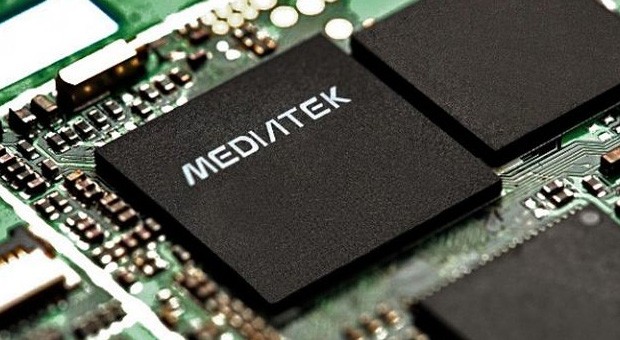
Der Mediatek MT6737 ist ein 2016 vorgestellter ARM-SoC (System-on-a-Chip) der Einstiegsklasse, der primär in Smartphones (hauptsächlich Android) zu finden ist. Er wird in 28 Nanometern gefertigt und verfügt über vier CPU-Kerne auf Basis der 64-Bit-fähigen Cortex-A53-Architektur, die mit maximal 1,35 GHz takten (MT6737T bis zu 1,5 GHz). Als Grafikeinheit kommt eine ARM Mali-T720 MP2 zum Einsatz. Weiterhin integriert sind unter anderem ein Cat.4 LTE-Modem inkl. CDMA2000 sowie ein Video-De- und Encoder für 30fps 1080p Videos (H.264 und H.265).
Prozessor
Der Cortex-A53 kann als Nachfolger des beliebten Cortex-A7-Designs betrachtet werden. Neben der von 32 auf 64 Bit verbreiterten Prozessorarchitektur (ARMv8-ISA), die unter anderem die Adressierung von mehr als 4 GB Arbeitsspeicher erlaubt, wurden auch weitere Details wie die Sprungvorhersage optimiert. Insgesamt steigt die Pro-MHz-Leistung dadurch deutlich an und liegt sogar etwas oberhalb eines Cortex-A9-Kernes. Die vier Kerne des MT6732 takten mit bis zu 1,35 GHz, sodass sich der SoC in etwa auf dem Niveau des Snapdragon 410 (4x Cortex-A53, 1,2 - 1,4 GHz) einordnet. Übliche Alltagsanwendungen wie Browsing bewältigt der Chip mit zufriedenstellender Geschwindigkeit.
Grafikeinheit
Die im SoC integrierte ARM Mali-T720 MP2 GPU ordnet sich in der Einstiegsklasse ein und wird im MT6737 mit 550-650 MHz getaktet (bzw. 600 im MT6737T). Übliche Android-Spiele werden auf Displays geringer bis mittlerer Auflösung zumeist flüssig wiedergegeben.
Features
Neben CPU und Grafikeinheit integriert der Chip auch einen Speichercontroller (1x LPDDR2/3 640 MHz / 733 MHz in MT6737T), diverse Funkmodule (WLAN, Bluetooth, GPS) sowie ein Mobilfunkmodem (GSM, UMTS, GPRS, HSPA+, HSUPA, TD-SCDMA, EVDO, LTE Cat 4). Die integrierte Videoengine bewältigt 1080p HD-Videos mit 30 fps (H.264 und H.265). Kameras werden bis zu einer Auflösung von 13 Megapixeln unterstützt.
- Bereich der Benchmarkergebnisse für diese Grafikkarte - Durchschnittliche Benchmarkergebnisse für diese Grafikkarte * Smaller numbers mean a higher performance 1 This benchmark is not used for the average calculation
v1.35
log 31. 03:38:00
#0 ran 0s before starting gpusingle class +0s ... 0s
#1 checking url part for id 17989 +0s ... 0s
#2 checking url part for id 8196 +0s ... 0s
#3 checking url part for id 18719 +0s ... 0s
#4 redirected to Ajax server, took 1767148680s time from redirect:0 +0s ... 0s
#5 did not recreate cache, as it is less than 5 days old! Created at Mon, 29 Dec 2025 10:37:44 +0100 +0s ... 0s
#6 composed specs +0.006s ... 0.006s
#7 did output specs +0s ... 0.006s
#8 getting avg benchmarks for device 17989 +0.004s ... 0.01s
#9 got single benchmarks 17989 +0.005s ... 0.015s
#10 getting avg benchmarks for device 8196 +0.001s ... 0.016s
#11 got single benchmarks 8196 +0.021s ... 0.037s
#12 getting avg benchmarks for device 18719 +0.003s ... 0.04s
#13 got single benchmarks 18719 +0.004s ... 0.044s
#14 got avg benchmarks for devices +0s ... 0.044s
#15 min, max, avg, median took s +0.048s ... 0.092s
#16 return log +0s ... 0.092s
Teilen Sie diesen Artikel, um uns zu unterstützen. Jeder Link hilft!







 - Durchschnittliche Benchmarkergebnisse für diese Grafikkarte


